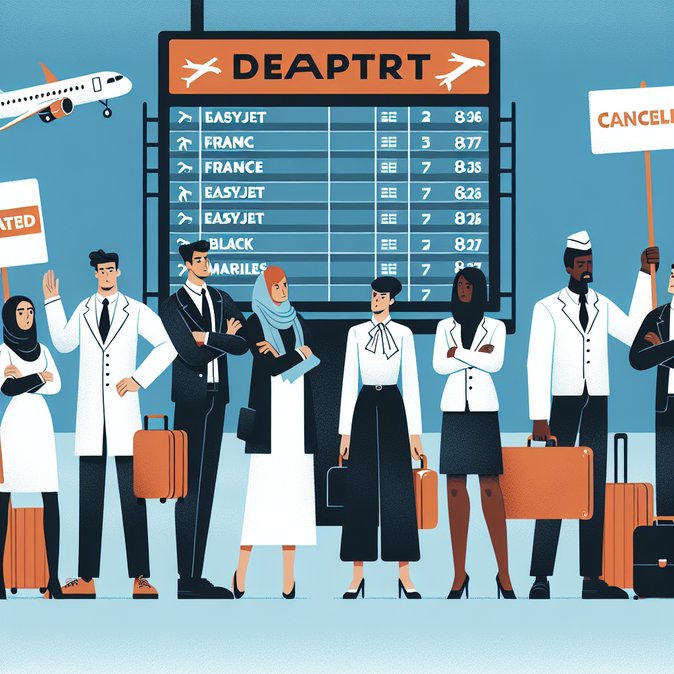
easyJet passengers face significant disruption on **Monday 6 April** after the UNAC cabin-crew union called a 24-hour national strike in France. More than 53 % of crew voted against the carrier’s 2026 labour-agreement offer, citing chronic last-minute roster changes and fatigue . The walk-out covers every French base—including Paris-CDG, Orly, Lyon, Bordeaux, Nice and Toulouse—and coincides with one of the busiest return-travel days of the Easter break. easyJet has so far held back a detailed contingency plan but says it will try to “limit cancellations” by drafting in crew from other EU bases, rerouting aircraft and allowing free rebooking .
![Nation-Wide easyJet Cabin-Crew Strike Set for Easter Monday Threatens French Flight Schedules]()
In situations like this, visa and travel-document requirements can quickly add to the complexity. VisaHQ’s France portal (https://www.visahq.com/france/) provides mobility teams with real-time entry rules, Schengen-stay calculators and expedited processing options, ensuring staff remain compliant while they wait for alternate flights.
For mobility managers the timing is awkward: staff returning from home leave could miss Tuesday customer meetings, trigger right-to-work breaches or out-stay Schengen allowances if connections are lost. HR should therefore monitor flight-status feeds, pre-authorise hotel spend and remind travellers that EU Regulation EC261 may entitle them to compensation if delays exceed three hours. Historically, French cabin-crew strikes achieve participation rates of 60–80 %, a level that would ground up to one-third of easyJet’s French schedule—roughly **250 flights**—with knock-on effects across Europe. Companies with critical travel on 6 April might consider switching to rail or Air France services, which are not impacted. The dispute highlights widening labour unrest in European aviation as carriers push utilisation post-pandemic. If talks remain stalled, UNAC has warned of further one-day strikes around Ascension Day and Pentecost, periods that overlap with key European trade shows.

In situations like this, visa and travel-document requirements can quickly add to the complexity. VisaHQ’s France portal (https://www.visahq.com/france/) provides mobility teams with real-time entry rules, Schengen-stay calculators and expedited processing options, ensuring staff remain compliant while they wait for alternate flights.
For mobility managers the timing is awkward: staff returning from home leave could miss Tuesday customer meetings, trigger right-to-work breaches or out-stay Schengen allowances if connections are lost. HR should therefore monitor flight-status feeds, pre-authorise hotel spend and remind travellers that EU Regulation EC261 may entitle them to compensation if delays exceed three hours. Historically, French cabin-crew strikes achieve participation rates of 60–80 %, a level that would ground up to one-third of easyJet’s French schedule—roughly **250 flights**—with knock-on effects across Europe. Companies with critical travel on 6 April might consider switching to rail or Air France services, which are not impacted. The dispute highlights widening labour unrest in European aviation as carriers push utilisation post-pandemic. If talks remain stalled, UNAC has warned of further one-day strikes around Ascension Day and Pentecost, periods that overlap with key European trade shows.