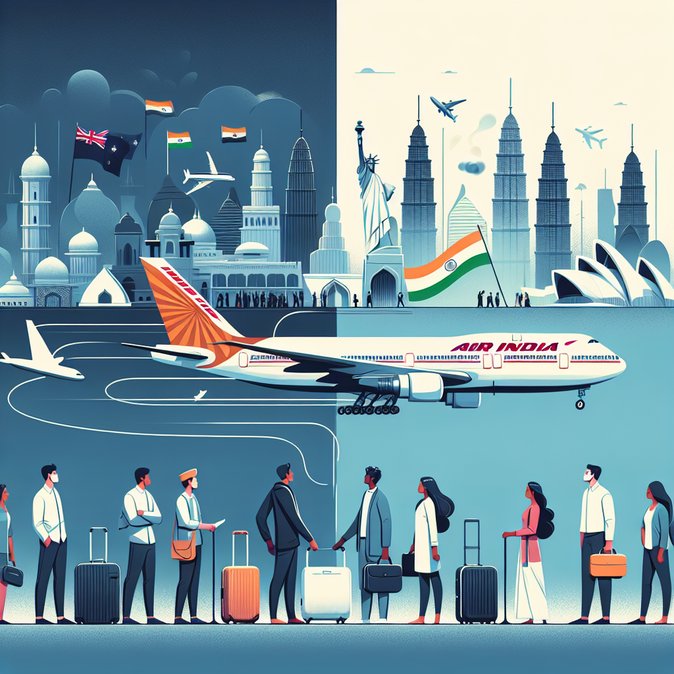
In a late-evening bulletin dated 3 April 2026, Air India and low-cost subsidiary Air India Express detailed a 42-flight special schedule for 4 April covering the United Arab Emirates, Oman and Saudi Arabia as conflict-related airspace restrictions continue to roil Middle-Eastern travel. Crucially for Australian corporates, all Air India and Air India Express services linking Sydney, Melbourne and Perth with Delhi, Mumbai and Kochi will run to timetable, and existing bookings remain valid. The Tata-owned group has cancelled regular UAE rotations but secured ad-hoc slots for 26 repatriation flights, freeing wide-body capacity to keep long-haul markets supplied. Travellers booked on suspended Gulf services can rebook or obtain full refunds online; AI’s WhatsApp chatbot ‘Tia’ is handling fee-free changes.
![Air India confirms Australian flights operate as scheduled amid West-Asia capacity reshuffle]()
For corporates now reassessing contingency routings or considering alternate stopovers, VisaHQ’s Australian portal (https://www.visahq.com/australia/) can streamline any visa or e-visa applications those itinerary shifts may trigger. The platform’s live requirement checker and managed processing service help ensure employees have the correct travel documents when swapping, say, a Dubai layover for Doha or Kuala Lumpur, reducing compliance risk and keeping travel programmes running smoothly.
Australia is one of Air India’s fastest-growing long-haul markets: capacity rose 35 per cent in 2025 and a third Melbourne frequency is slated for July 2026. Travel-management companies say the carrier’s decision to shield Australia from disruption protects critical traffic for the education, ICT-outsourcing and diaspora VFR segments. Nevertheless, mobility planners should note that mainland China and parts of Europe are seeing rolling cancellations as crew legality squeezes fleet utilisation. Air India recommends that travellers keep contact details updated for SMS alerts and arrive early because manual document checks are in force for passengers transiting West-Asian hubs. The episode underlines the operational complexity faced by network carriers that straddle multiple conflict zones; it also highlights why Australia’s Department of Home Affairs continues to advise dual-ticket itineraries be built with minimum four-hour buffers when routing through the Gulf.

For corporates now reassessing contingency routings or considering alternate stopovers, VisaHQ’s Australian portal (https://www.visahq.com/australia/) can streamline any visa or e-visa applications those itinerary shifts may trigger. The platform’s live requirement checker and managed processing service help ensure employees have the correct travel documents when swapping, say, a Dubai layover for Doha or Kuala Lumpur, reducing compliance risk and keeping travel programmes running smoothly.
Australia is one of Air India’s fastest-growing long-haul markets: capacity rose 35 per cent in 2025 and a third Melbourne frequency is slated for July 2026. Travel-management companies say the carrier’s decision to shield Australia from disruption protects critical traffic for the education, ICT-outsourcing and diaspora VFR segments. Nevertheless, mobility planners should note that mainland China and parts of Europe are seeing rolling cancellations as crew legality squeezes fleet utilisation. Air India recommends that travellers keep contact details updated for SMS alerts and arrive early because manual document checks are in force for passengers transiting West-Asian hubs. The episode underlines the operational complexity faced by network carriers that straddle multiple conflict zones; it also highlights why Australia’s Department of Home Affairs continues to advise dual-ticket itineraries be built with minimum four-hour buffers when routing through the Gulf.
More From Australia
View all
ACCC grants interim approval for Qantas-American Airlines joint venture, safeguarding Australia–US business travel
Canberra urges Australians to keep Easter travel plans despite diesel shortages at 300+ service stations