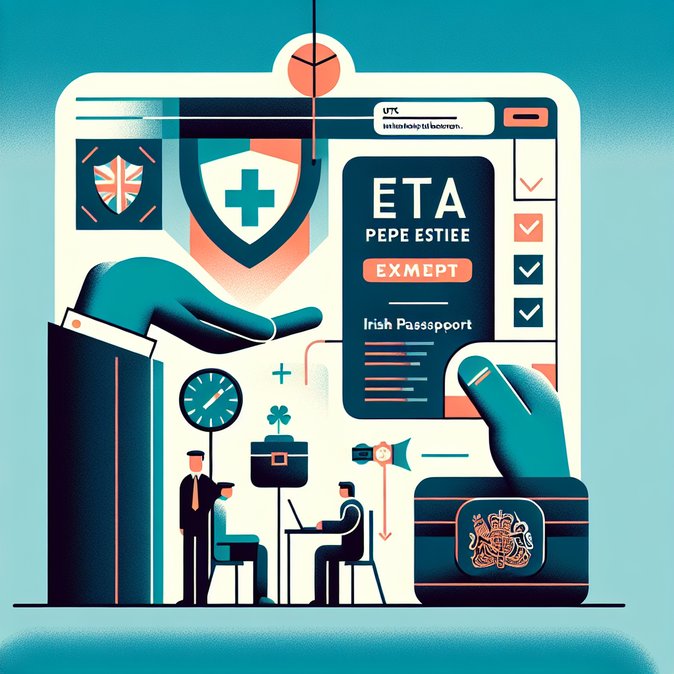
The UK Home Office has confirmed that the fee for its Electronic Travel Authorisation (ETA) will increase from €18 to €23 (£20) on 8 April. The ETA is already mandatory for most non-visa nationals entering the UK, though holders of British or Irish passports remain exempt under Common Travel Area rules. For Ireland-based businesses the price hike is less about direct cost—few employees need an ETA for day-trips to Britain—and more about compliance complexity. Dual nationals who travel on an EU passport but have latent UK citizenship must now either carry a valid UK passport or buy an ETA; the Home Office ended its “tolerance period” for alternative evidence on 25 February. Companies therefore need to audit staff nationality status to avoid denied-boarding scenarios on Dublin–London shuttle flights.
![Cost of UK Electronic Travel Authorisation to rise 25 % on 8 April—what it means for Ireland-UK trips]()
VisaHQ’s Ireland office can streamline this process for employers by verifying each traveller’s documentation requirements in advance and arranging ETAs where necessary. Their online platform (https://www.visahq.com/ireland/) allows HR teams to upload staff manifests, receive instant eligibility checks, and track application status in real time, reducing the risk of last-minute airport surprises.
The change lands just weeks after Aer Lingus enforced a passport-only ID policy on its Ireland–UK routes, eliminating acceptance of driver licences or national ID cards for all passengers. Combined, the two measures tighten documentation requirements on what was once the friction-free spine of Irish-British business travel. Industry bodies including the Irish Business & Employers Confederation (IBEC) warn that any ambiguity over ETA liability could lead to missed meetings and additional costs as carriers turn away non-compliant passengers at the gate. Travel-management companies recommend proactive passport checks during booking and automated prompts in self-booking tools. Looking ahead, the UK plans to link ETA approvals to Advance Passenger Information, creating a “permission-to-travel” ecosystem similar to the U.S. ESTA. Mobility specialists expect real-time carrier compliance checks to become the norm, making accurate data capture at the time of booking even more critical.

VisaHQ’s Ireland office can streamline this process for employers by verifying each traveller’s documentation requirements in advance and arranging ETAs where necessary. Their online platform (https://www.visahq.com/ireland/) allows HR teams to upload staff manifests, receive instant eligibility checks, and track application status in real time, reducing the risk of last-minute airport surprises.
The change lands just weeks after Aer Lingus enforced a passport-only ID policy on its Ireland–UK routes, eliminating acceptance of driver licences or national ID cards for all passengers. Combined, the two measures tighten documentation requirements on what was once the friction-free spine of Irish-British business travel. Industry bodies including the Irish Business & Employers Confederation (IBEC) warn that any ambiguity over ETA liability could lead to missed meetings and additional costs as carriers turn away non-compliant passengers at the gate. Travel-management companies recommend proactive passport checks during booking and automated prompts in self-booking tools. Looking ahead, the UK plans to link ETA approvals to Advance Passenger Information, creating a “permission-to-travel” ecosystem similar to the U.S. ESTA. Mobility specialists expect real-time carrier compliance checks to become the norm, making accurate data capture at the time of booking even more critical.