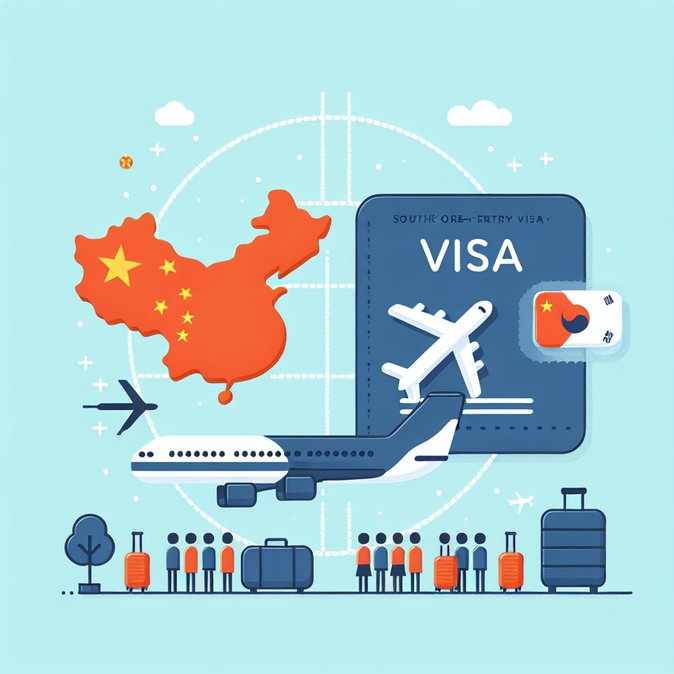
South Korea has significantly relaxed its visa regime for Chinese nationals in a bid to revive two-way tourism and accelerate post-pandemic commercial exchanges. According to the Korean Embassy in China, which issued the notice on 1 April 2026, Chinese applicants with any prior visit record can now obtain a five-year multiple-entry C-3 visa. Moreover, residents of 14 major mainland cities—including Beijing, Shanghai, Guangzhou and Shenzhen—are eligible for a 10-year visa if they meet basic income or employment criteria. Executives of Chinese companies that have invested at least US $1 million in Korea also benefit from the 10-year validity.
![South Korea Extends Multiple-Entry Visas for Chinese Citizens to 5–10 Years]()
Travellers looking to navigate these updated South Korea visa rules quickly can leverage the concierge services offered by VisaHQ. From its China portal (https://www.visahq.com/china/), the platform pre-screens documentation, arranges embassy appointments, and tracks application status in real time, cutting down on the back-and-forth that often delays multi-entry C-3 approvals. Whether you’re an R&D engineer bound for Pangyo or a tour operator bundling cherry-blossom packages, VisaHQ’s specialists streamline each step so you spend less time on paperwork and more time planning your trip.
The change complements Seoul’s ongoing pilot allowing visa-free entry for Chinese tour groups (three or more travellers) until 30 June 2026. By lengthening visa validity, South Korea hopes to entice big-spending repeat visitors, particularly during the upcoming Cherry Blossom season and the Busan World Expo bid year. For Chinese corporates maintaining R&D centres in Pangyo Techno Valley or production lines in the automotive corridor around Ulsan, the new rules simplify rota planning for engineers and executives who previously had to renew entry documents every two or three years. Travel-management companies forecast a 20-25 % uptick in corporate bookings to Seoul and Incheon within the next six months. Airlines are already responding: China Eastern has applied for extra slots at Gimpo Airport, and Korean Air is reinstating double-daily Shanghai-Incheon services from May. However, compliance teams should note that South Korea retains strict overstay penalties and has introduced an automated roster-screening mechanism; travel agencies whose group tourists record a 2 % overstay rate risk suspension. For individual travellers, biometric enrolment is still required at the first visa issuance, but subsequent renewals can be done entirely by mail. The HiKorea portal has published an English-language 'Visa Application Guide by Status', and industry observers expect further digitisation, including potential e-visa trials, before year-end. Taken together, Seoul’s overture strengthens Northeast Asia’s gradual reopening dynamic and provides Chinese businesses with a longer planning horizon for cross-border projects—especially valuable ahead of next year’s RCEP tariff cuts on services trade.

Travellers looking to navigate these updated South Korea visa rules quickly can leverage the concierge services offered by VisaHQ. From its China portal (https://www.visahq.com/china/), the platform pre-screens documentation, arranges embassy appointments, and tracks application status in real time, cutting down on the back-and-forth that often delays multi-entry C-3 approvals. Whether you’re an R&D engineer bound for Pangyo or a tour operator bundling cherry-blossom packages, VisaHQ’s specialists streamline each step so you spend less time on paperwork and more time planning your trip.
The change complements Seoul’s ongoing pilot allowing visa-free entry for Chinese tour groups (three or more travellers) until 30 June 2026. By lengthening visa validity, South Korea hopes to entice big-spending repeat visitors, particularly during the upcoming Cherry Blossom season and the Busan World Expo bid year. For Chinese corporates maintaining R&D centres in Pangyo Techno Valley or production lines in the automotive corridor around Ulsan, the new rules simplify rota planning for engineers and executives who previously had to renew entry documents every two or three years. Travel-management companies forecast a 20-25 % uptick in corporate bookings to Seoul and Incheon within the next six months. Airlines are already responding: China Eastern has applied for extra slots at Gimpo Airport, and Korean Air is reinstating double-daily Shanghai-Incheon services from May. However, compliance teams should note that South Korea retains strict overstay penalties and has introduced an automated roster-screening mechanism; travel agencies whose group tourists record a 2 % overstay rate risk suspension. For individual travellers, biometric enrolment is still required at the first visa issuance, but subsequent renewals can be done entirely by mail. The HiKorea portal has published an English-language 'Visa Application Guide by Status', and industry observers expect further digitisation, including potential e-visa trials, before year-end. Taken together, Seoul’s overture strengthens Northeast Asia’s gradual reopening dynamic and provides Chinese businesses with a longer planning horizon for cross-border projects—especially valuable ahead of next year’s RCEP tariff cuts on services trade.