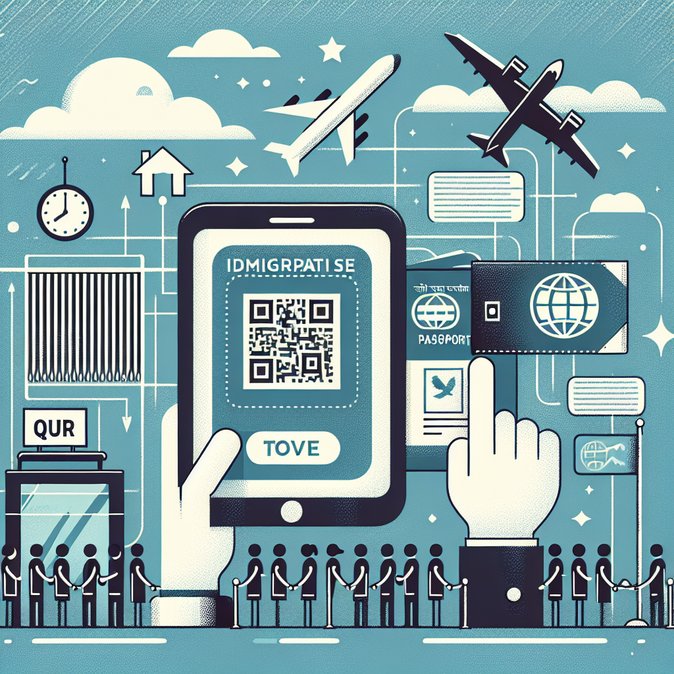
India has quietly switched off the green-and-white paper disembarkation form that foreign passengers have been filling out for decades. From 00:01 IST on 1 April 2026 every foreign national—including Overseas Citizen of India (OCI) card-holders—must complete a digital e-Arrival Card online or via the Su-Swagatam mobile app no later than 72 hours before landing. Immigration officers will scan the QR code generated after submission; travellers who arrive without one will be directed to dedicated kiosks to fill the form on the spot, a step that authorities warn could lengthen clearance times. The change finalises a six-month transition that began in October 2025 and is part of the Ministry of Home Affairs’ IVFRT 2.0 modernisation drive. Officials say digitising the arrival card helps them pre-screen passengers against watch-lists, improves data accuracy, and eliminates 48 million paper forms a year—saving an estimated ₹28 crore in printing and logistics costs.
![India switches off paper disembarkation forms: Digital e-Arrival Card now compulsory]()
Travellers who would rather not tackle these requirements alone can enlist VisaHQ; the service’s India page (https://www.visahq.com/india/) consolidates visa applications and now guides users through the new e-Arrival Card, sending deadline reminders and allowing corporate coordinators to manage multiple employees’ QR codes from a single dashboard.
Airlines have been instructed to send reminders alongside online check-in prompts, and most full-service carriers have updated their apps to embed a direct link to the Bureau of Immigration portal. Business-travel managers welcome the move because it removes one more document to juggle during red-eye flights, but they caution that late-booking executives will need clear internal reminders. Global mobility teams should add the e-Arrival Card to their pre-trip check-lists, alongside e-Visa copies and health-insurance proofs that some companies still collect. Travel-management companies (TMCs) say they are adjusting profiles to flag non-Indian passport holders so automated itineraries include the link. The practical implication is that border queues could bifurcate: seasoned travellers who arrive with the QR code will speed through, while others may be delayed. Airports in Delhi, Mumbai and Bengaluru have added assist desks, yet neither the e-gates under the Fast-Track Immigration – Trusted Traveller Programme nor DigiYatra lanes currently accept the code—something the Bureau of Immigration says will be piloted by July. Crucially, the requirement is separate from a visa. Visa-exempt nationals, crew members and Indian citizens remain exempt. For multinational firms moving talent into India the advice is simple: bake the e-Arrival Card into onboarding packs, ensure assignees receive the link during flight booking, and keep screenshots of the generated QR code together with copies of visas and offer letters. Failure to present the code will not lead to refusal of entry, but it will disrupt the seamless arrival experience that corporations promise their employees and clients.
Travellers who would rather not tackle these requirements alone can enlist VisaHQ; the service’s India page (https://www.visahq.com/india/) consolidates visa applications and now guides users through the new e-Arrival Card, sending deadline reminders and allowing corporate coordinators to manage multiple employees’ QR codes from a single dashboard.
Airlines have been instructed to send reminders alongside online check-in prompts, and most full-service carriers have updated their apps to embed a direct link to the Bureau of Immigration portal. Business-travel managers welcome the move because it removes one more document to juggle during red-eye flights, but they caution that late-booking executives will need clear internal reminders. Global mobility teams should add the e-Arrival Card to their pre-trip check-lists, alongside e-Visa copies and health-insurance proofs that some companies still collect. Travel-management companies (TMCs) say they are adjusting profiles to flag non-Indian passport holders so automated itineraries include the link. The practical implication is that border queues could bifurcate: seasoned travellers who arrive with the QR code will speed through, while others may be delayed. Airports in Delhi, Mumbai and Bengaluru have added assist desks, yet neither the e-gates under the Fast-Track Immigration – Trusted Traveller Programme nor DigiYatra lanes currently accept the code—something the Bureau of Immigration says will be piloted by July. Crucially, the requirement is separate from a visa. Visa-exempt nationals, crew members and Indian citizens remain exempt. For multinational firms moving talent into India the advice is simple: bake the e-Arrival Card into onboarding packs, ensure assignees receive the link during flight booking, and keep screenshots of the generated QR code together with copies of visas and offer letters. Failure to present the code will not lead to refusal of entry, but it will disrupt the seamless arrival experience that corporations promise their employees and clients.