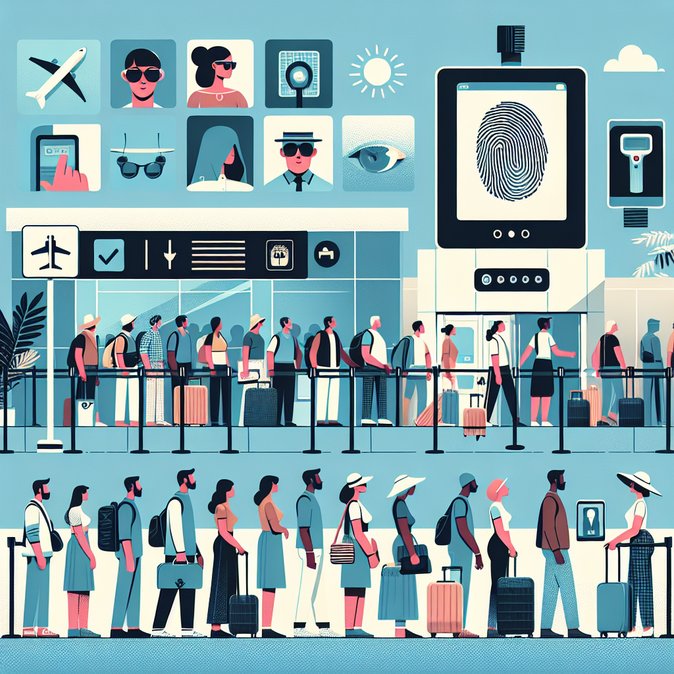
Airports Council International (ACI EUROPE), together with Airlines for Europe and IATA, has asked Brussels to keep open the option of fully suspending the new Entry/Exit System (EES) during the peak summer period. In a statement dated 30 March and reported by CAPA on 31 March, the groups warned of “continued deterioration” in border-crossing times since mandatory biometric registration of half of all third-country nationals began on 10 March.
![Airports urge EU to allow Entry/Exit System suspension after long queues]()
Travellers worried about getting caught out by shifting Schengen entry rules can use VisaHQ to pre-check documentation, book consular appointments and receive live updates; its Switzerland-dedicated portal (https://www.visahq.com/switzerland/) offers step-by-step guidance that reduces the risk of delays at the border.
Fundamental challenges – staff shortages, technical glitches at self-service kiosks and limited automated-gate capacity – remain unsolved, the organisations said. Portugal has already suspended EES at Lisbon Airport for three months after arrivals bottlenecks grew unmanageable. Swiss airports are not exempt. Operators in Zurich and Geneva have told tenant airlines that average processing times for first-time third-country arrivals have doubled to almost six minutes, eating into minimum connection windows. If congestion persists, airlines may have to pad schedules or re-route connecting traffic through non-Schengen hubs, increasing cost and complexity for mobility programmes. ACI EUROPE chief Olivier Jankovec called for “a pragmatic safety-valve” that would let member states pause EES locally when wait times exceed agreed thresholds – a move Swiss business-travel associations have publicly backed.

Travellers worried about getting caught out by shifting Schengen entry rules can use VisaHQ to pre-check documentation, book consular appointments and receive live updates; its Switzerland-dedicated portal (https://www.visahq.com/switzerland/) offers step-by-step guidance that reduces the risk of delays at the border.
Fundamental challenges – staff shortages, technical glitches at self-service kiosks and limited automated-gate capacity – remain unsolved, the organisations said. Portugal has already suspended EES at Lisbon Airport for three months after arrivals bottlenecks grew unmanageable. Swiss airports are not exempt. Operators in Zurich and Geneva have told tenant airlines that average processing times for first-time third-country arrivals have doubled to almost six minutes, eating into minimum connection windows. If congestion persists, airlines may have to pad schedules or re-route connecting traffic through non-Schengen hubs, increasing cost and complexity for mobility programmes. ACI EUROPE chief Olivier Jankovec called for “a pragmatic safety-valve” that would let member states pause EES locally when wait times exceed agreed thresholds – a move Swiss business-travel associations have publicly backed.