
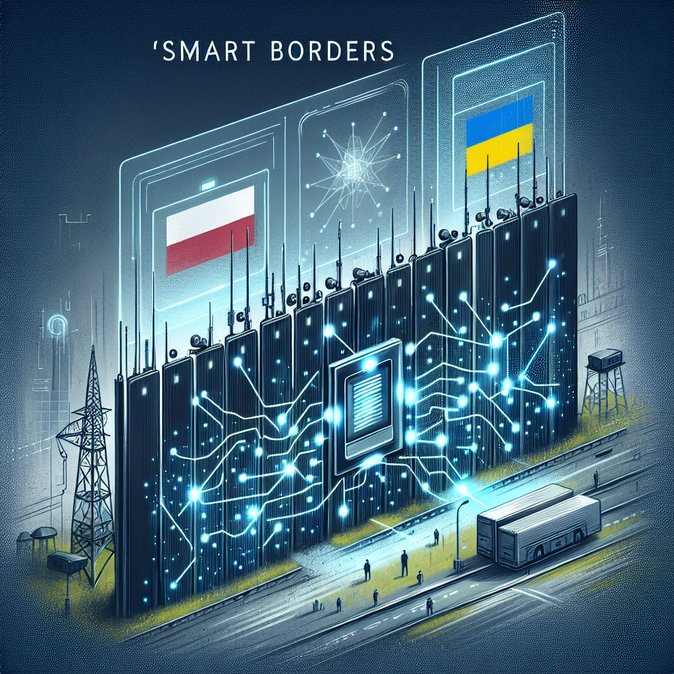
The Polish government plans to build a high-tech “electronic barrier” along key stretches of its 535-km frontier with Ukraine. A story first reported on 30 March details a €105 million (≈ PLN 450 million) project that would lay underground seismic-sensor cables, fibre-optic data lines and power conduits, all feeding real-time footage from thermal-imaging and daylight cameras to a new command centre at the Bug River Border Guard unit. Officials argue that Russia’s war against Ukraine and a rise in cross-border smuggling networks make rapid detection capabilities indispensable. The barrier is expected to be financed through a mix of the EU’s SAFE security fund and the national budget—though the SAFE act still awaits presidential approval, meaning procurement timelines hinge on ongoing political negotiations in Warsaw.
![Warsaw unveils €105 million electronic barrier on Polish-Ukrainian border]()
For travelers, NGO staff, and multinational employees who will continue to cross the Poland-Ukraine frontier, VisaHQ can simplify the administrative side of the journey. The company’s Poland portal (https://www.visahq.com/poland/) offers real-time guidance on visa requirements, invitations, and transit rules, and can notify users of any new entry protocols that may emerge as the electronic barrier comes online.
From a mobility perspective, the barrier will not close checkpoints, but it does signal intensified surveillance. Logistics firms moving goods through Korczowa, Dorohusk or Medyka should anticipate more frequent secondary inspections once the system is operational. Companies that rotate staff between Polish and Ukrainian sites should review privacy disclosures, as biometric and vehicle data may be stored for longer periods. Security consultants note that Poland already operates a physical fence on its Belarusian border; the Ukrainian barrier continues a wider strategy of “smart” frontiers using sensors, drones and AI analytics. Multinationals with supply chains spanning all three eastern neighbours may need to model routing contingencies if heightened security creates sporadic slow-downs, particularly for just-in-time automotive components exported from western Ukraine.
For travelers, NGO staff, and multinational employees who will continue to cross the Poland-Ukraine frontier, VisaHQ can simplify the administrative side of the journey. The company’s Poland portal (https://www.visahq.com/poland/) offers real-time guidance on visa requirements, invitations, and transit rules, and can notify users of any new entry protocols that may emerge as the electronic barrier comes online.
From a mobility perspective, the barrier will not close checkpoints, but it does signal intensified surveillance. Logistics firms moving goods through Korczowa, Dorohusk or Medyka should anticipate more frequent secondary inspections once the system is operational. Companies that rotate staff between Polish and Ukrainian sites should review privacy disclosures, as biometric and vehicle data may be stored for longer periods. Security consultants note that Poland already operates a physical fence on its Belarusian border; the Ukrainian barrier continues a wider strategy of “smart” frontiers using sensors, drones and AI analytics. Multinationals with supply chains spanning all three eastern neighbours may need to model routing contingencies if heightened security creates sporadic slow-downs, particularly for just-in-time automotive components exported from western Ukraine.