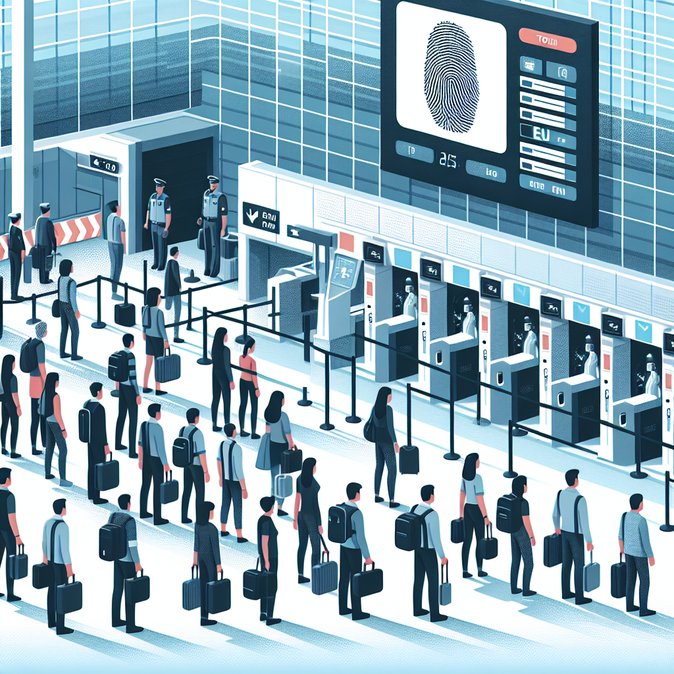
The Brussels Times reports that the European Union’s long-awaited Entry/Exit System (EES) will become fully operational across all external Schengen borders—including Poland’s airports, ports and eastern land crossings—on 10 April 2026. The database replaces passport stamping with an automated register that captures four fingerprints, a facial image and key travel-document data for every non-EU national entering or leaving for short stays. Over 45 million crossings have already been logged during the phased roll-out that began last October.
![EU Entry/Exit System enters final countdown—Polish borders switch to full biometric checks from 10 April]()
At this juncture, many companies and individual travellers are turning to specialist visa partners for guidance. VisaHQ’s Poland portal (https://www.visahq.com/poland/) offers up-to-date briefings on EES implementation, real-time Schengen day counters and automated reminders that help HR teams and frequent flyers stay within the new limits, while its consultants can assist with visa or ETIAS queries that may arise once the system goes live.
Polish Border Guard units at Warsaw Chopin, Gdańsk and Kraków airports have installed e-gates capable of processing up to 800 passengers per hour, while truck lanes at Dorohusk and Terespol now feature mobile fingerprint scanners. The EU says the system has already prevented 24,000 inadmissible entries and flagged more than 600 security-risk travellers. For employers, the immediate impact will be on business visitors from visa-free countries such as the US, UK and Canada. The 90/180-day Schengen allowance will now be calculated automatically; overstays will trigger alerts that could jeopardise future entries. HR teams should verify that assignees’ travel patterns—especially frequent ‘day-trippers’ from London or Zurich—remain compliant. Carriers must upload passenger manifests at least 48 hours before departure to align with the EES pre-clearance window, or risk fines for late data. Companies operating shuttle buses across the German border should brief drivers on the new obligation to channel non-EU riders through staffed lanes if they cannot use e-gates. As Poland also prepares for the related ETIAS permit (now slated for 2027), travel managers should integrate EES checks into trip-approval workflows.

At this juncture, many companies and individual travellers are turning to specialist visa partners for guidance. VisaHQ’s Poland portal (https://www.visahq.com/poland/) offers up-to-date briefings on EES implementation, real-time Schengen day counters and automated reminders that help HR teams and frequent flyers stay within the new limits, while its consultants can assist with visa or ETIAS queries that may arise once the system goes live.
Polish Border Guard units at Warsaw Chopin, Gdańsk and Kraków airports have installed e-gates capable of processing up to 800 passengers per hour, while truck lanes at Dorohusk and Terespol now feature mobile fingerprint scanners. The EU says the system has already prevented 24,000 inadmissible entries and flagged more than 600 security-risk travellers. For employers, the immediate impact will be on business visitors from visa-free countries such as the US, UK and Canada. The 90/180-day Schengen allowance will now be calculated automatically; overstays will trigger alerts that could jeopardise future entries. HR teams should verify that assignees’ travel patterns—especially frequent ‘day-trippers’ from London or Zurich—remain compliant. Carriers must upload passenger manifests at least 48 hours before departure to align with the EES pre-clearance window, or risk fines for late data. Companies operating shuttle buses across the German border should brief drivers on the new obligation to channel non-EU riders through staffed lanes if they cannot use e-gates. As Poland also prepares for the related ETIAS permit (now slated for 2027), travel managers should integrate EES checks into trip-approval workflows.