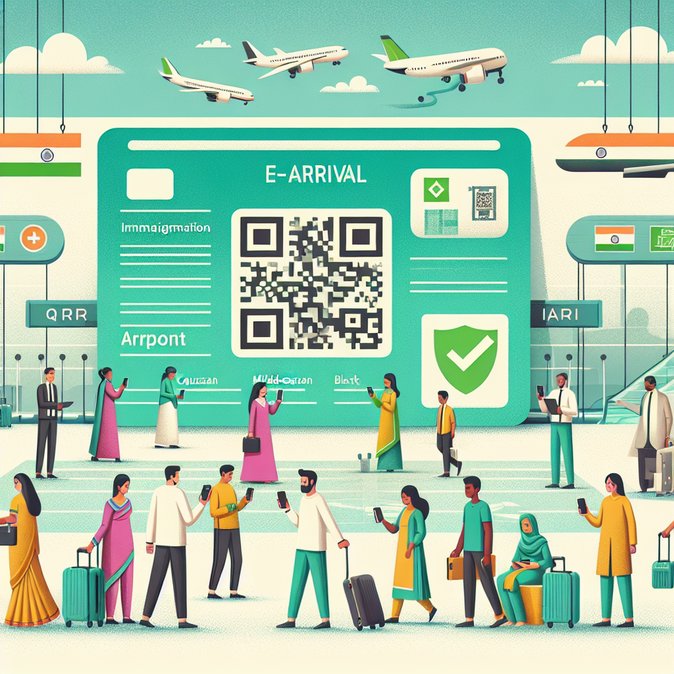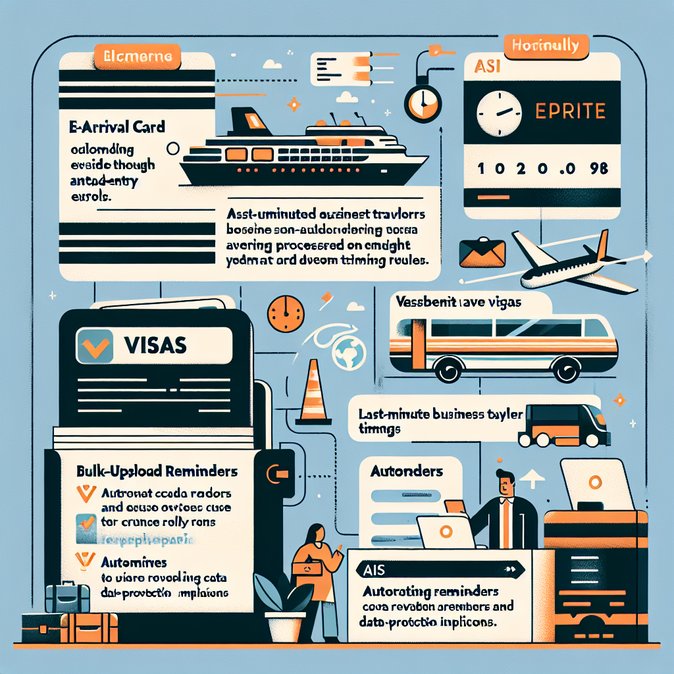
Travel and Tour World’s special advisory for tour operators distils the finer points of India’s e-Arrival Card rollout. Unlike many electronic travel authorisations, the card does not replace the visa; it sits on top of existing e-Visa, sticker-visa or visa-exempt categories.
![Last-Minute Checklist: What International Visitors Need to Know About India’s New e-Arrival Card]()
To make navigating these dual formalities easier, VisaHQ provides a single online platform where travellers and tour operators can secure both an Indian visa and the new e-Arrival Card, complete with deadline reminders, document reviews and bulk-upload options for groups. Full details are available at https://www.visahq.com/india/
Travellers from the UK, EU, United States, Australia, Japan and over 160 other jurisdictions must therefore complete two separate online processes—visa and e-Arrival Card—before departure. The site walks readers through common pitfalls observed during the February pilot. Chief among them: middle names must be entered exactly as they appear in the passport or the QR code will be rejected by the automated gates at Delhi and Hyderabad. In addition, each family member—including infants—requires a separate submission, although parents may use one account to file multiple cards. The article notes that group tour operators can bulk-upload passenger manifests via an API, but access must be requested a week in advance. Cruise lines calling at Cochin and Goa have welcomed the feature, saying that manual card collection added more than two hours to shore-side clearance in the last season. For corporates, the biggest takeaway is timing: the card can only be filed within 120 hours of the scheduled arrival. Travellers on flexible tickets should therefore wait until flights are finalised or risk having to re-enter data if the PNR changes. TMCs are embedding automated email reminders at the T-120 and T-48 hour marks to hedge against this risk. Finally, the piece highlights data-protection questions. India’s Digital Personal Data Protection Act 2025 requires explicit purpose limitation; BoI officials told the magazine that arrival-card data will be purged after 180 days unless linked to an enforcement investigation. Until those assurances are codified, compliance teams may wish to flag the issue in internal privacy registers.
To make navigating these dual formalities easier, VisaHQ provides a single online platform where travellers and tour operators can secure both an Indian visa and the new e-Arrival Card, complete with deadline reminders, document reviews and bulk-upload options for groups. Full details are available at https://www.visahq.com/india/
Travellers from the UK, EU, United States, Australia, Japan and over 160 other jurisdictions must therefore complete two separate online processes—visa and e-Arrival Card—before departure. The site walks readers through common pitfalls observed during the February pilot. Chief among them: middle names must be entered exactly as they appear in the passport or the QR code will be rejected by the automated gates at Delhi and Hyderabad. In addition, each family member—including infants—requires a separate submission, although parents may use one account to file multiple cards. The article notes that group tour operators can bulk-upload passenger manifests via an API, but access must be requested a week in advance. Cruise lines calling at Cochin and Goa have welcomed the feature, saying that manual card collection added more than two hours to shore-side clearance in the last season. For corporates, the biggest takeaway is timing: the card can only be filed within 120 hours of the scheduled arrival. Travellers on flexible tickets should therefore wait until flights are finalised or risk having to re-enter data if the PNR changes. TMCs are embedding automated email reminders at the T-120 and T-48 hour marks to hedge against this risk. Finally, the piece highlights data-protection questions. India’s Digital Personal Data Protection Act 2025 requires explicit purpose limitation; BoI officials told the magazine that arrival-card data will be purged after 180 days unless linked to an enforcement investigation. Until those assurances are codified, compliance teams may wish to flag the issue in internal privacy registers.