Andorra’s government has struck a last-minute deal with the European Union that will allow the micro-state to keep its current open-border regime with neighbouring Spain and France when the bloc’s new Entry/Exit System (EES) goes live later this year. Presenting the accord in Andorra la Vella on 31 March, Prime Minister Xavier Espot and Foreign Minister Imma Tor confirmed that Andorran citizens and legal residents will not be subject to the biometric registration and passport-stamping rules that will soon apply to all third-country nationals entering the Schengen Area.
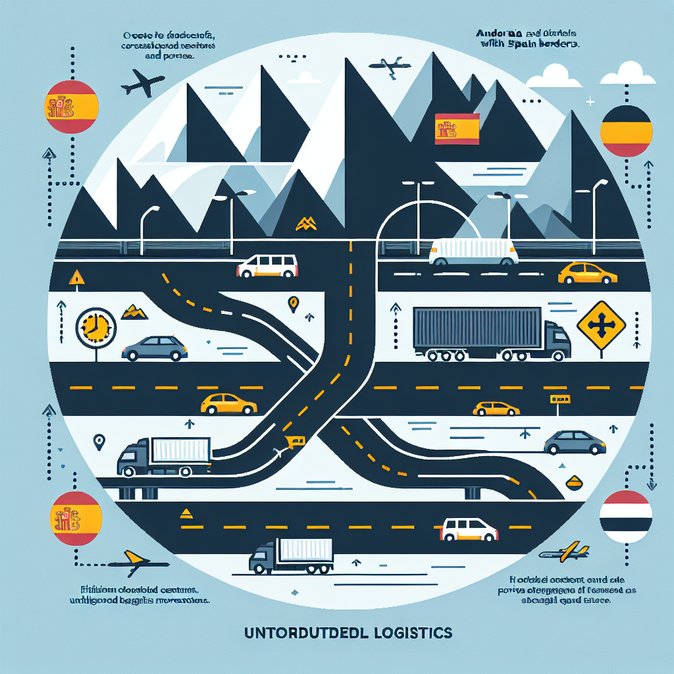
Under the agreement, vehicles will continue to cross freely at the two main motorway checkpoints near La Farga de Moles (ES-AD) and Pas de la Casa (FR-AD). Border police will retain the right to conduct targeted checks, but the systematic scans foreseen by EES will not be required.
The EU accepted the carve-out on the grounds that Andorra is land-locked, depends heavily on daily cross-border commuting, and already cooperates closely with Spanish and French security databases.
For Spain, the deal removes the spectre of traffic bottlenecks in Catalonia’s C-14 and N-145 corridors—vital arteries for freight forwarders serving Barcelona and for retailers in Andorra’s duty-free shopping district. Tourism officials on both sides of the border had warned that coach tours and weekend ski traffic could grind to a halt if every passenger had to exit the vehicle for fingerprinting.
![Andorra secures exemption from EU Entry/Exit System, preserving seamless road links with Spain]()
At a practical level, travellers who fall outside the Andorran exemption—and the HR teams that support them—can simplify compliance by using services such as VisaHQ. Through its Spain portal (https://www.visahq.com/spain/), VisaHQ provides real-time updates on Schengen and EES requirements, facilitates online applications, and offers expert assistance for multi-stop itineraries that include Andorra, Spain or France.
Corporate mobility managers should note that the exemption only covers Andorrans and Andorra-based foreign residents. Non-EU assignees transiting through Andorra en route to Spain will still need their EES profiles to be in order when they re-enter Schengen territory.
The foreign ministry in Madrid said it would issue a practical circular to Spanish immigration officers in April so that coach operators and logistics firms know exactly which travel documents will be accepted at the frontier.
Although small in population, Andorra hosts some 10,000 Spanish cross-border workers and receives more than eight million international visitors a year. Maintaining fluid borders therefore has outsized economic importance for Spain’s Pyrenean regions and for multinationals that rely on the Andorran corridor for just-in-time deliveries between Barcelona and Toulouse.
Under the agreement, vehicles will continue to cross freely at the two main motorway checkpoints near La Farga de Moles (ES-AD) and Pas de la Casa (FR-AD). Border police will retain the right to conduct targeted checks, but the systematic scans foreseen by EES will not be required.
The EU accepted the carve-out on the grounds that Andorra is land-locked, depends heavily on daily cross-border commuting, and already cooperates closely with Spanish and French security databases.
For Spain, the deal removes the spectre of traffic bottlenecks in Catalonia’s C-14 and N-145 corridors—vital arteries for freight forwarders serving Barcelona and for retailers in Andorra’s duty-free shopping district. Tourism officials on both sides of the border had warned that coach tours and weekend ski traffic could grind to a halt if every passenger had to exit the vehicle for fingerprinting.

At a practical level, travellers who fall outside the Andorran exemption—and the HR teams that support them—can simplify compliance by using services such as VisaHQ. Through its Spain portal (https://www.visahq.com/spain/), VisaHQ provides real-time updates on Schengen and EES requirements, facilitates online applications, and offers expert assistance for multi-stop itineraries that include Andorra, Spain or France.
Corporate mobility managers should note that the exemption only covers Andorrans and Andorra-based foreign residents. Non-EU assignees transiting through Andorra en route to Spain will still need their EES profiles to be in order when they re-enter Schengen territory.
The foreign ministry in Madrid said it would issue a practical circular to Spanish immigration officers in April so that coach operators and logistics firms know exactly which travel documents will be accepted at the frontier.
Although small in population, Andorra hosts some 10,000 Spanish cross-border workers and receives more than eight million international visitors a year. Maintaining fluid borders therefore has outsized economic importance for Spain’s Pyrenean regions and for multinationals that rely on the Andorran corridor for just-in-time deliveries between Barcelona and Toulouse.