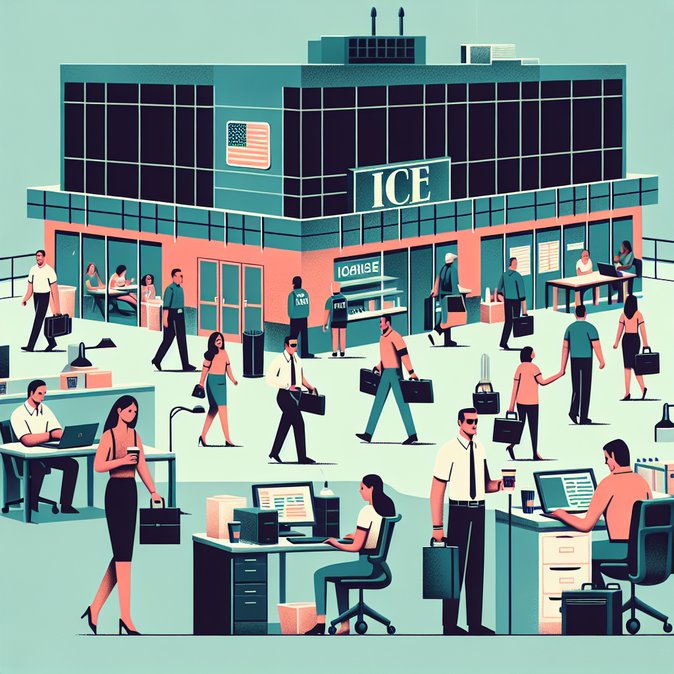
U.S. Immigration and Customs Enforcement (ICE) issued a procurement notice on March 29 seeking flexible co-working space in eleven Florida cities—including Sarasota, Bradenton and Fort Myers—as part of a 90-city nationwide real-estate push that would place 300 federal employees in private shared offices. The request illustrates how the agency is rapidly scaling physical presence in states that have embraced aggressive immigration enforcement partnerships. Florida leads the nation in ICE apprehensions, aided by a $250 million state program that pays local police to detain people on civil immigration violations. By embedding officers in leased workspaces near courthouses, hospitals and business districts, ICE can decentralise field operations and react quickly to tips.
![ICE Seeks Co-Working Offices Across Florida as Part of Nationwide Expansion]()
For employers and individuals trying to stay ahead of these shifting enforcement dynamics, VisaHQ’s online platform (https://www.visahq.com/united-states/) can streamline visa and passport processing, offer real-time compliance guidance and help ensure that international staff maintain lawful status before an ICE audit or site visit ever occurs.
For corporate mobility teams, the expansion means greater enforcement visibility in commercial areas that were previously low-risk. Employees without lawful status—or with paperwork delays—could face more workplace or traffic-stop encounters with ICE, increasing the importance of compliance audits and Know-Your-Rights training. It also signals that scheduled I-9 audits and site visits (for H-1B or L-1 employers) may become more frequent in Florida. The agency’s choice of short-term leases in co-working hubs mirrors a broader federal shift toward flexible real estate, saving money while keeping locations discreet. Critics, however, say the lack of transparency endangers vulnerable populations who may unwittingly seek services near hidden ICE outposts. Human-rights groups are already mapping proposed sites to assess proximity to schools, shelters and medical clinics. Next steps: Contractors have until April 15 to submit bids. If awarded quickly, ICE staff could occupy Florida co-working suites as early as June, ahead of the agency’s summer enforcement surge. Employers with large Hispanic or immigrant workforces in the affected cities should pre-emptively update emergency response plans and employee hotlines.

For employers and individuals trying to stay ahead of these shifting enforcement dynamics, VisaHQ’s online platform (https://www.visahq.com/united-states/) can streamline visa and passport processing, offer real-time compliance guidance and help ensure that international staff maintain lawful status before an ICE audit or site visit ever occurs.
For corporate mobility teams, the expansion means greater enforcement visibility in commercial areas that were previously low-risk. Employees without lawful status—or with paperwork delays—could face more workplace or traffic-stop encounters with ICE, increasing the importance of compliance audits and Know-Your-Rights training. It also signals that scheduled I-9 audits and site visits (for H-1B or L-1 employers) may become more frequent in Florida. The agency’s choice of short-term leases in co-working hubs mirrors a broader federal shift toward flexible real estate, saving money while keeping locations discreet. Critics, however, say the lack of transparency endangers vulnerable populations who may unwittingly seek services near hidden ICE outposts. Human-rights groups are already mapping proposed sites to assess proximity to schools, shelters and medical clinics. Next steps: Contractors have until April 15 to submit bids. If awarded quickly, ICE staff could occupy Florida co-working suites as early as June, ahead of the agency’s summer enforcement surge. Employers with large Hispanic or immigrant workforces in the affected cities should pre-emptively update emergency response plans and employee hotlines.