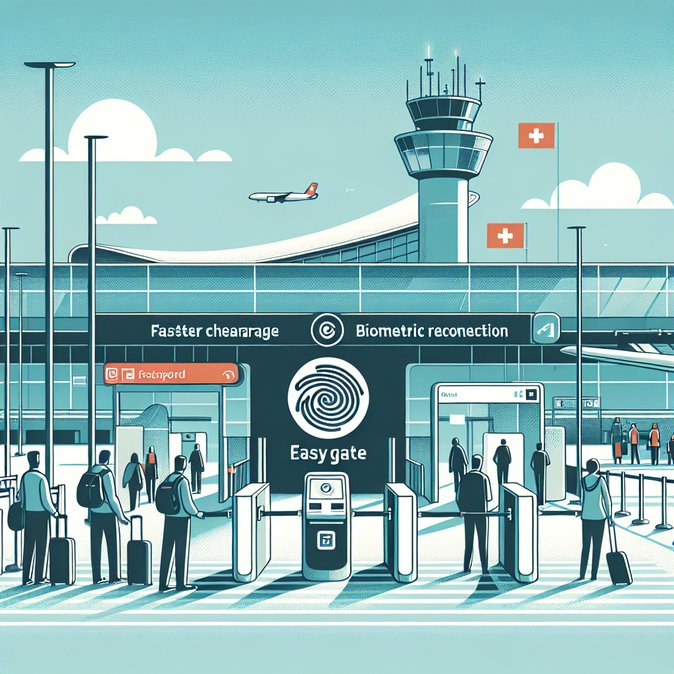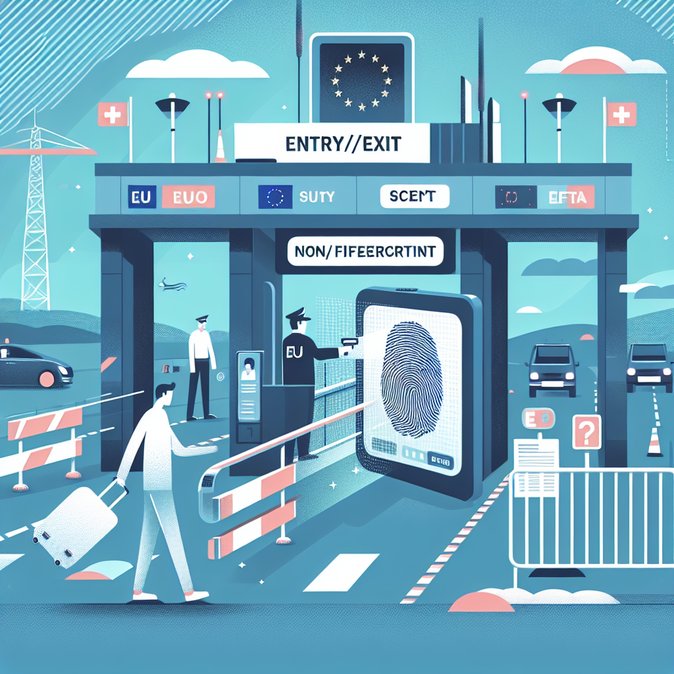
Switzerland is counting down the final days before the European Union’s long-awaited Entry/Exit System (EES) becomes fully compulsory in the first week of April 2026. The six-month pilot phase, which began last October, is ending; from now on all non-EU/-EFTA nationals—including business travellers who normally breeze through Zurich or Geneva—will have their fingerprints, a facial image and passport data captured automatically at the border. Manual stamping of passports will disappear, and the data will feed a central EU database designed to spot overstays and identity fraud more quickly. The EES applies at every external Schengen border, so for Switzerland that means the country’s airports (Zurich, Geneva, Basel-Mulhouse, Bern-Belp, St. Gallen-Altenrhein, Lugano and Sion) plus any international rail or road checkpoints that handle third-country nationals. Carriers flying in foreign assignees must transmit Advance Passenger Information that matches EES records, or risk fines and denied boarding claims. Swiss airports have spent the winter installing self-service kiosks and “easygate” e-barriers to prevent spring queues, yet federal police still warn that the first weeks “may feel slower than usual” while frequent flyers build up their biometric profiles. For globally mobile staff, the practical consequence is time. Companies sending engineers or project managers on 48-hour trips to Switzerland—or across the Swiss-French airport border at Geneva—should schedule at least 30 minutes extra for immigration until the system beds in. HR teams are also being advised to brief travelling colleagues that each set of biometrics is valid for three years; after four short-stay trips the process will speed up because the kiosk only needs to confirm identity. EU citizens face fewer changes: the Swiss Federal Office for Customs and Border Security says the same e-gates will be re-purposed to ease EU queues once third-country flows stabilise.
![Schengen’s New Entry/Exit System Goes Live in April: What Swiss Travellers and Employers Need to Know]()
As the compliance landscape tightens, VisaHQ can help businesses and travellers stay ahead of these new EES obligations. Through its dedicated Switzerland portal (https://www.visahq.com/switzerland/), the platform monitors real-time border policy updates, reminds users when biometric registrations are due to expire and streamlines visa or future ETIAS applications—so HR teams avoid last-minute paperwork and travellers move through the e-gates with confidence.
Longer term, EES is the gateway to ETIAS, the €7 electronic travel authorisation that the EU plans to launch in late 2026. When ETIAS arrives, Swiss-based multinationals will need to check that visiting clients from visa-free markets—think US, UK or Singapore—have an approved authorisation in addition to their biometric registration. The bottom line: automate compliance workflows this year to avoid frantic emails at boarding-time next year.

As the compliance landscape tightens, VisaHQ can help businesses and travellers stay ahead of these new EES obligations. Through its dedicated Switzerland portal (https://www.visahq.com/switzerland/), the platform monitors real-time border policy updates, reminds users when biometric registrations are due to expire and streamlines visa or future ETIAS applications—so HR teams avoid last-minute paperwork and travellers move through the e-gates with confidence.
Longer term, EES is the gateway to ETIAS, the €7 electronic travel authorisation that the EU plans to launch in late 2026. When ETIAS arrives, Swiss-based multinationals will need to check that visiting clients from visa-free markets—think US, UK or Singapore—have an approved authorisation in addition to their biometric registration. The bottom line: automate compliance workflows this year to avoid frantic emails at boarding-time next year.