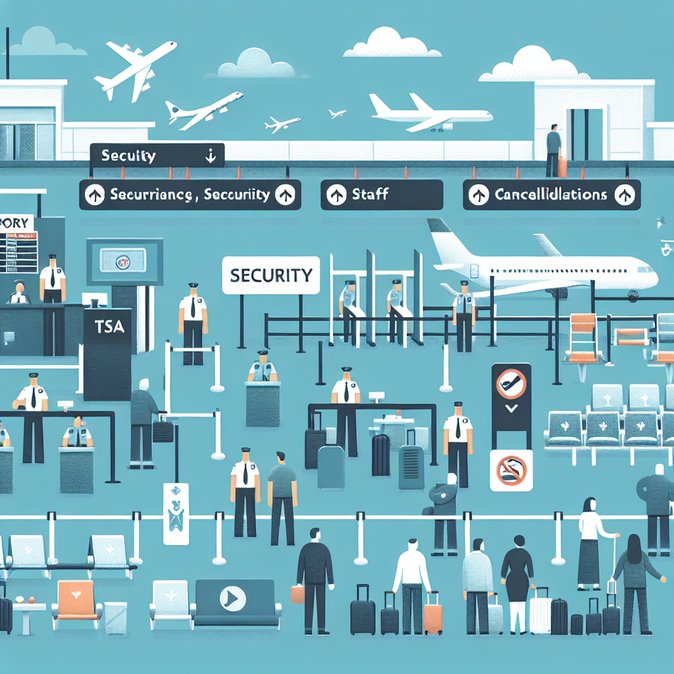
As the DHS shutdown drags on, Transportation Security Administration (TSA) absenteeism has climbed to 13 percent nationwide and above 30 percent at a dozen smaller “Category C” airports. Senior officials confirmed Thursday that if call-outs rise further, TSA may “hibernate” checkpoints at low-volume fields and funnel remaining officers to major hubs. The prospect of airport closures marks the most acute threat yet to domestic connectivity. Travel-industry economist Henry Harteveldt told the Associated Press that suspending security operations at even five regional airports would create “a cascade of missed connections, repositioning flights and diverted cargo.” Airlines would have to reroute aircraft, crew and passengers—bouncing economic pain across hotel, car-rental and conference sectors. Corporate-travel managers are already feeling the strain. Concur data show average U.S. security-wait times hit 42 minutes on March 26, triple the March 2025 level. Companies with project teams in secondary markets such as Des Moines or Charleston risk costly overnight stays if last-minute checkpoint closures strand travelers. The shutdown has also frozen TSA’s enrollment workforce, halting new PreCheck approvals and renewal interviews.
![TSA Staffing Crisis Could Force Temporary Closure of Smaller U.S. Airports, Experts Warn]()
For trips that now must pivot through international gateways—or for travelers suddenly needing travel documents processed outside regular government channels—VisaHQ can provide expedited visa and passport assistance entirely online. Its platform (https://www.visahq.com/united-states/) guides users through requirements, gathers digital paperwork, and monitors applications in real time, easing one more pain point while federal services remain disrupted.
Without intervention, 350,000 memberships will lapse by June—eroding a key business-travel time-saver just as summer peaks. Policy options are narrowing. The Senate-passed DHS bill would inject immediate pay and allow TSA to recall employees, but House inaction keeps contingency planning front-and-center. Mobility teams should: 1. Urge travelers to arrive at least three hours before departure—even for domestic flights. 2. Where possible, book routings through Category X hubs (ATL, DFW, DEN, LAX) that TSA has pledged to keep fully staffed. 3. Notify expatriates and assignees of potential itinerary changes and ensure travel insurance covers delay-related costs. If closures proceed, the Department of Transportation may authorize temporary “sterile-lane” busing, whereby screened passengers are transported by secure coach from an open airport to aircraft waiting at a closed field—an expensive and logistically complex solution last used during the 2019 shutdown.
For trips that now must pivot through international gateways—or for travelers suddenly needing travel documents processed outside regular government channels—VisaHQ can provide expedited visa and passport assistance entirely online. Its platform (https://www.visahq.com/united-states/) guides users through requirements, gathers digital paperwork, and monitors applications in real time, easing one more pain point while federal services remain disrupted.
Without intervention, 350,000 memberships will lapse by June—eroding a key business-travel time-saver just as summer peaks. Policy options are narrowing. The Senate-passed DHS bill would inject immediate pay and allow TSA to recall employees, but House inaction keeps contingency planning front-and-center. Mobility teams should: 1. Urge travelers to arrive at least three hours before departure—even for domestic flights. 2. Where possible, book routings through Category X hubs (ATL, DFW, DEN, LAX) that TSA has pledged to keep fully staffed. 3. Notify expatriates and assignees of potential itinerary changes and ensure travel insurance covers delay-related costs. If closures proceed, the Department of Transportation may authorize temporary “sterile-lane” busing, whereby screened passengers are transported by secure coach from an open airport to aircraft waiting at a closed field—an expensive and logistically complex solution last used during the 2019 shutdown.