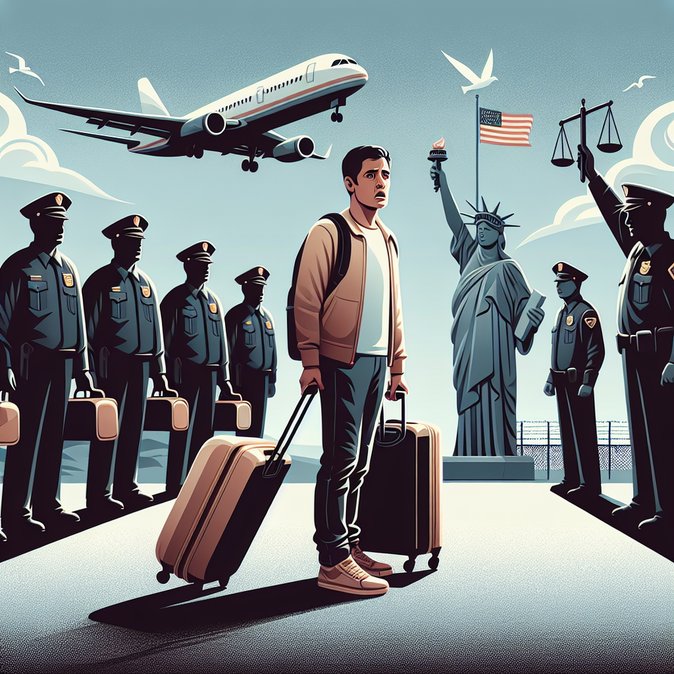
Video posted on social media Monday night showing federal officers dragging a tearful woman away from the arrivals curb at San Francisco International Airport has ignited a war of words between California elected officials and the Department of Homeland Security. The woman—identified only as a 28-year-old college student from Mexico City—had just landed on a tourist visa when plain-clothes agents detained her for secondary inspection and ultimately took her into custody on an outstanding expedited-removal order issued in 2022. Local lawmakers, including State Senator Scott Wiener and San Francisco Supervisor Connie Chan, held an impromptu press conference at the terminal on Tuesday, calling the arrest “performative intimidation” designed to chill international travel during the partial DHS shutdown. They demanded clarity on whether the agents were Customs and Border Protection, Immigration and Customs Enforcement, or one of the “surge” task-forces recently deployed to short-staffed airports.
![San Francisco Airport Arrest Sparks Political Backlash Over Immigration Tactics]()
Amid the confusion over enforcement roles, travelers can remove a lot of guesswork by consulting specialized services before they fly. VisaHQ, an online visa and passport facilitation platform, helps individuals and corporate mobility teams verify entry requirements, flag potential issues like prior overstays, and obtain the right documentation well in advance. Its U.S. resource hub (https://www.visahq.com/united-states/) offers step-by-step application guides, real-time tracking, and live support—valuable safeguards for anyone worried about heightened scrutiny at airports such as SFO.
The incident arrives as wait times at West-Coast airports climb amid staffing shortages and sporadic walkouts by Transportation Security Administration screeners who have missed two paycheques. Travel-management companies report that several Bay-Area tech firms have already rerouted Asia-Pacific executives through Seattle or Vancouver to avoid potential disruption at SFO. For global-mobility teams, the takeaway is two-fold. First, expect heightened identification checks and secondary examinations, particularly for visitors from visa-waiver countries who may have overstayed in the past. Second, prepare crisis-response protocols: ensure travellers know emergency hot-lines, carry a corporate letter of support, and can reach immigration counsel 24/7. While a single arrest does not constitute a new policy, political pressure could push DHS to publish updated guidance—or lead California lawmakers to escalate with state-level counter-measures affecting local cooperation. Airlines, meanwhile, fear reputational fallout if viral videos deter inbound tourism just as trans-Pacific capacity returns to pre-pandemic levels. Some carriers are quietly offering no-fee rebookings for passengers uncomfortable with the current climate at SFO.
Amid the confusion over enforcement roles, travelers can remove a lot of guesswork by consulting specialized services before they fly. VisaHQ, an online visa and passport facilitation platform, helps individuals and corporate mobility teams verify entry requirements, flag potential issues like prior overstays, and obtain the right documentation well in advance. Its U.S. resource hub (https://www.visahq.com/united-states/) offers step-by-step application guides, real-time tracking, and live support—valuable safeguards for anyone worried about heightened scrutiny at airports such as SFO.
The incident arrives as wait times at West-Coast airports climb amid staffing shortages and sporadic walkouts by Transportation Security Administration screeners who have missed two paycheques. Travel-management companies report that several Bay-Area tech firms have already rerouted Asia-Pacific executives through Seattle or Vancouver to avoid potential disruption at SFO. For global-mobility teams, the takeaway is two-fold. First, expect heightened identification checks and secondary examinations, particularly for visitors from visa-waiver countries who may have overstayed in the past. Second, prepare crisis-response protocols: ensure travellers know emergency hot-lines, carry a corporate letter of support, and can reach immigration counsel 24/7. While a single arrest does not constitute a new policy, political pressure could push DHS to publish updated guidance—or lead California lawmakers to escalate with state-level counter-measures affecting local cooperation. Airlines, meanwhile, fear reputational fallout if viral videos deter inbound tourism just as trans-Pacific capacity returns to pre-pandemic levels. Some carriers are quietly offering no-fee rebookings for passengers uncomfortable with the current climate at SFO.