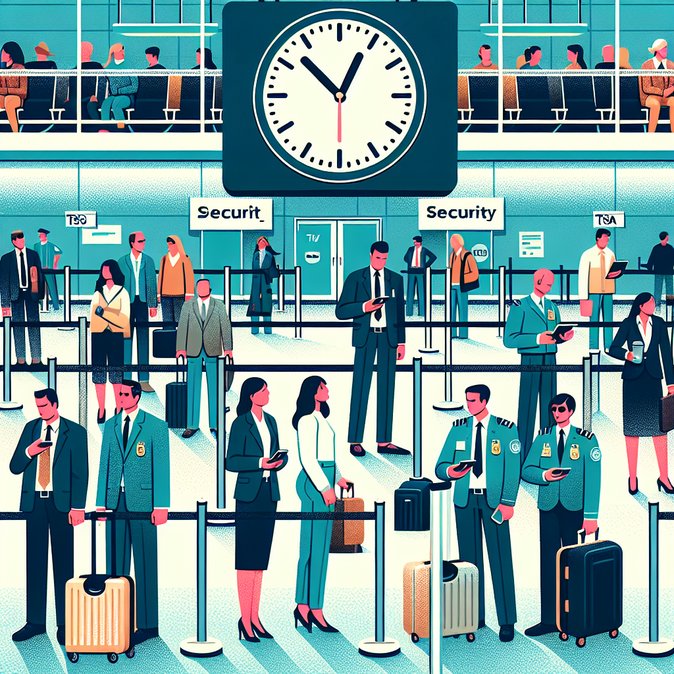
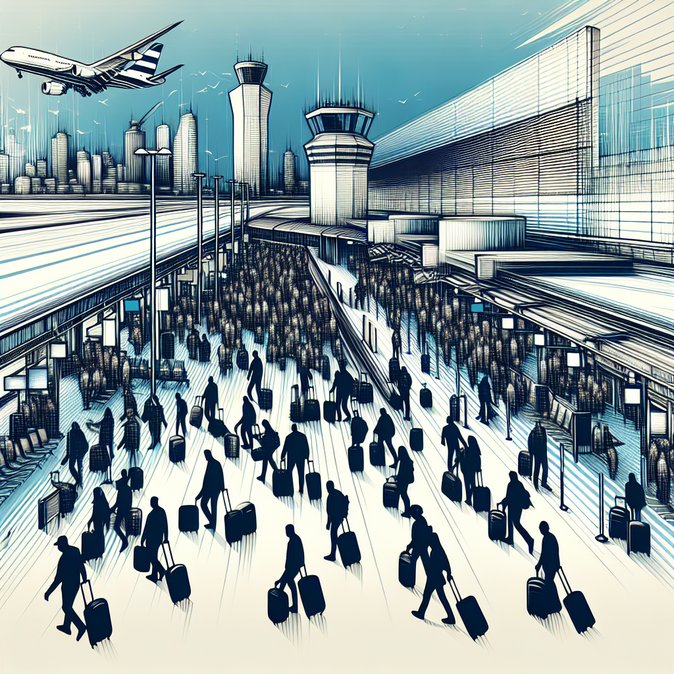
Airports across the United States experienced the roughest travel morning of the year on Friday, March 20, after hundreds of Transportation Security Administration (TSA) officers stopped showing up for work rather than continue to staff checkpoints without pay during the 11-day partial shutdown of the Department of Homeland Security (DHS). From Atlanta’s Hartsfield-Jackson to Houston’s Bush Intercontinental and Chicago O’Hare, security lines routinely topped 90–120 minutes, with some passengers missing flights despite arriving the recommended three hours early. Airlines responded by waiving change fees for same-day travelers, and corporate travel managers scrambled to re-book critical staff on later departures or reroute them through less-congested airports such as St. Louis or San Antonio.
![TSA staffing walk-outs snarl U.S. airport security, forcing two-hour queues at major hubs]()
In the midst of such uncertainty, travelers may also need to confirm that their identification documents and entry visas are fully in order before they even reach the checkpoint. VisaHQ, an online passport and visa expediting service, can streamline this piece of the puzzle by handling renewals, rush processing, and country-specific requirements on behalf of employees or travel departments; more details are available at https://www.visahq.com/united-states/
At the heart of the disruption is the fact that TSA screeners are deemed “essential” and therefore must work through a government shutdown—but unlike air-traffic controllers they earn relatively low wages and receive no back-pay guarantee if Congress fails to pass a funding bill. According to internal agency statistics reviewed by AP, unscheduled absences on 20 March reached 19 percent, more than quadruple the pre-shutdown average. The exodus has forced TSA to consolidate lanes, call in part-time Federal Air Marshals, and request overtime from supervisors who are themselves unpaid. Business-travel organizations such as the Global Business Travel Association warn that even a one-week extension of the shutdown could cost U.S. companies more than US $300 million in lost productivity and re-ticketing fees. Multinationals with tightly choreographed rotational assignments are advising assignees to build overnight buffers into domestic connections or, where possible, drive to meetings within a 300-mile radius. Travel-risk providers are also reminding employers that TSA PreCheck and CLEAR do not exempt travelers from standard ID checks when staffing shortages turn dedicated lanes into general use. Practically, companies should 1) monitor TSA’s daily throughput dashboard, 2) alert mobile employees through duty-of-care apps if projected wait times exceed 60 minutes, and 3) encourage staff to carry physical boarding passes and passports, which have been accepted as alternative IDs when Real ID-compliant driver’s licenses cannot be verified. Failure to plan for prolonged queues could mean missed client commitments, cargo delays (because flight crews are also stuck in line) and cascading hotel costs for stranded employees.
In the midst of such uncertainty, travelers may also need to confirm that their identification documents and entry visas are fully in order before they even reach the checkpoint. VisaHQ, an online passport and visa expediting service, can streamline this piece of the puzzle by handling renewals, rush processing, and country-specific requirements on behalf of employees or travel departments; more details are available at https://www.visahq.com/united-states/
At the heart of the disruption is the fact that TSA screeners are deemed “essential” and therefore must work through a government shutdown—but unlike air-traffic controllers they earn relatively low wages and receive no back-pay guarantee if Congress fails to pass a funding bill. According to internal agency statistics reviewed by AP, unscheduled absences on 20 March reached 19 percent, more than quadruple the pre-shutdown average. The exodus has forced TSA to consolidate lanes, call in part-time Federal Air Marshals, and request overtime from supervisors who are themselves unpaid. Business-travel organizations such as the Global Business Travel Association warn that even a one-week extension of the shutdown could cost U.S. companies more than US $300 million in lost productivity and re-ticketing fees. Multinationals with tightly choreographed rotational assignments are advising assignees to build overnight buffers into domestic connections or, where possible, drive to meetings within a 300-mile radius. Travel-risk providers are also reminding employers that TSA PreCheck and CLEAR do not exempt travelers from standard ID checks when staffing shortages turn dedicated lanes into general use. Practically, companies should 1) monitor TSA’s daily throughput dashboard, 2) alert mobile employees through duty-of-care apps if projected wait times exceed 60 minutes, and 3) encourage staff to carry physical boarding passes and passports, which have been accepted as alternative IDs when Real ID-compliant driver’s licenses cannot be verified. Failure to plan for prolonged queues could mean missed client commitments, cargo delays (because flight crews are also stuck in line) and cascading hotel costs for stranded employees.