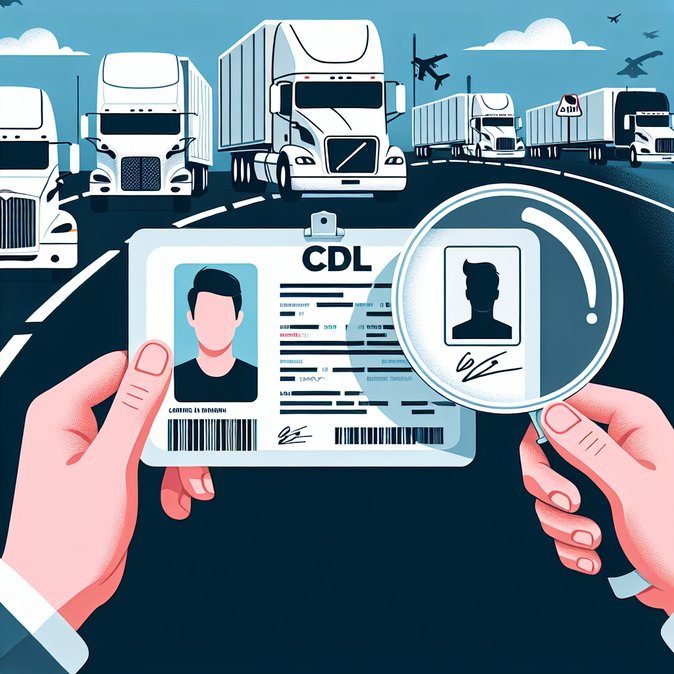
The Federal Motor Carrier Safety Administration’s long-awaited non-domiciled Commercial Driver’s Licence (CDL) rule became effective on 16 March, introducing tougher identity-verification and immigration-status checks for foreign Nationals who drive commercial vehicles in the United States. States that cannot meet the rule’s security benchmarks must pause issuance of non-domiciled CDLs until they demonstrate compliance. Key changes include mandatory electronic verification of employment authorisation against DHS databases and a 180-day limit on licence validity tied to visa expiration dates. The rule also bars states from issuing learner’s permits to applicants without evidence of lawful presence. Motor carriers employing cross-border drivers—particularly from Mexico and Canada—face new record-keeping obligations and potential service disruptions if licences lapse.
![Federal rule on non-domiciled Commercial Driver’s Licences takes effect, impacting foreign truck drivers]()
For carriers that suddenly find themselves juggling visa renewals, licence expirations, and complex documentation, VisaHQ can streamline the process by handling U.S. work permits and immigration paperwork from start to finish. Their online platform (https://www.visahq.com/united-states/) lets fleet managers track the status of each driver’s application in real time, reducing the risk of unexpected downtime and helping companies stay compliant with the new FMCSA requirements.
Industry groups such as the American Trucking Associations say the timing is problematic, pointing to a driver shortage that already exceeds 80,000 positions nationwide. Companies hauling time-sensitive freight from Mexican maquiladoras report that some drivers have been sidelined while waiting for updated Employment Authorisation Documents, forcing costly rerouting through U.S. domiciled drivers. Legal advisers recommend auditing driver files immediately and scheduling early renewals of H-2B or TN visas where possible. Firms that rely on temporary seasonal drivers for agricultural exports may need to use third-party logistics providers or shift loads to rail until states clear their backlogs. Longer term, the rule could accelerate adoption of autonomous trucking pilot programmes as carriers seek to reduce reliance on human drivers subject to immigration constraints. Because CDL holders often travel interstate, global mobility and corporate travel departments should coordinate with fleet operations to ensure stranded drivers have valid housing and medical coverage while awaiting documentation. Failure to plan could expose companies to penalties under DOT safety regulations and DHS worksite-enforcement audits.

For carriers that suddenly find themselves juggling visa renewals, licence expirations, and complex documentation, VisaHQ can streamline the process by handling U.S. work permits and immigration paperwork from start to finish. Their online platform (https://www.visahq.com/united-states/) lets fleet managers track the status of each driver’s application in real time, reducing the risk of unexpected downtime and helping companies stay compliant with the new FMCSA requirements.
Industry groups such as the American Trucking Associations say the timing is problematic, pointing to a driver shortage that already exceeds 80,000 positions nationwide. Companies hauling time-sensitive freight from Mexican maquiladoras report that some drivers have been sidelined while waiting for updated Employment Authorisation Documents, forcing costly rerouting through U.S. domiciled drivers. Legal advisers recommend auditing driver files immediately and scheduling early renewals of H-2B or TN visas where possible. Firms that rely on temporary seasonal drivers for agricultural exports may need to use third-party logistics providers or shift loads to rail until states clear their backlogs. Longer term, the rule could accelerate adoption of autonomous trucking pilot programmes as carriers seek to reduce reliance on human drivers subject to immigration constraints. Because CDL holders often travel interstate, global mobility and corporate travel departments should coordinate with fleet operations to ensure stranded drivers have valid housing and medical coverage while awaiting documentation. Failure to plan could expose companies to penalties under DOT safety regulations and DHS worksite-enforcement audits.