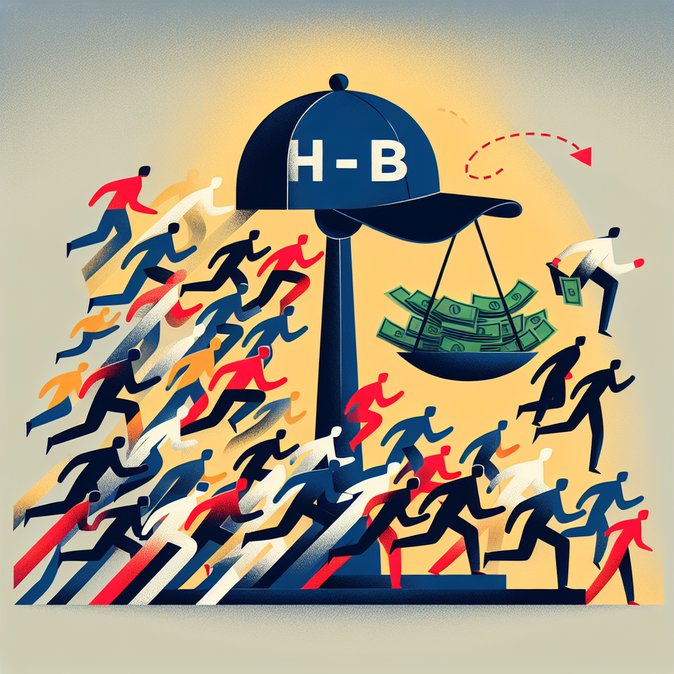
U.S. employers are half-way through the two-week filing window for the Fiscal Year 2027 H-1B cap, the first to be governed by the Department of Homeland Security’s new wage-weighted selection rule that replaced the long-standing random lottery on 27 February 2026. Early anecdotal reports posted Monday on practitioner forums indicate that demand remains strong despite higher compliance burdens: large technology consultancies say they have already uploaded thousands of registrations, while smaller biotech and fintech firms are still assessing how the new wage-tier multipliers will affect their odds. Under the final rule, each electronic registration is assigned selection “weights” tied to the OES wage level offered. A Level IV position, for example, receives four chances in the draw, versus a single chance for a Level I role. DHS argues the change will curb fraud and better align the program with congressional intent by rewarding higher-paid, presumably higher-skilled petitions. Critics contend it disadvantages start-ups and universities, which often use lower wage levels for bona-fide reasons unrelated to skill. The 2026 registration season also introduces sharply higher costs. Effective 1 March, USCIS raised the optional Premium Processing fee for Form I-129 H-1B petitions from US$2,805 to US$2,890—a 3 percent increase pegged to inflation.
![FY 2027 H-1B Cap Registration Hits Mid-Point as Wage-Weighted System Debuts]()
For employers juggling these shifting fee schedules and documentation demands, VisaHQ’s business-immigration portal can serve as a real-time compliance dashboard, offering step-by-step H-1B checklists, deadline alerts, and concierge filing support. Companies can explore these resources or request a tailored quote at https://www.visahq.com/united-states/
While Premium Processing is not available at the registration stage, employers budgeting for spring filing must factor the new fee into cost forecasts. From a mobility perspective, multinational companies should monitor registration tallies daily; if lower-tier roles appear under-represented once USCIS publishes preliminary counts, HR may wish to re-classify some candidates at higher wage levels—provided the underlying wage is adjusted accordingly—to boost selection likelihood. Employers must also prepare public-access files earlier than in past years, because the wage-weighted system has shortened the petition-filing window for selected cases to 60 days. Failure to file on time negates the cap number, a risk that looms larger given continuing delays at some Department of Labor prevailing-wage determination units. USCIS will close the registration site at noon ET on 19 March and is expected to notify selected employers by 22 March. Unselected cases will move to a reserve list for possible second-round draws later in the year if the agency does not receive enough complete petitions. Companies should therefore keep attorney G-28 notices active in their email filters well beyond the initial notification burst.

For employers juggling these shifting fee schedules and documentation demands, VisaHQ’s business-immigration portal can serve as a real-time compliance dashboard, offering step-by-step H-1B checklists, deadline alerts, and concierge filing support. Companies can explore these resources or request a tailored quote at https://www.visahq.com/united-states/
While Premium Processing is not available at the registration stage, employers budgeting for spring filing must factor the new fee into cost forecasts. From a mobility perspective, multinational companies should monitor registration tallies daily; if lower-tier roles appear under-represented once USCIS publishes preliminary counts, HR may wish to re-classify some candidates at higher wage levels—provided the underlying wage is adjusted accordingly—to boost selection likelihood. Employers must also prepare public-access files earlier than in past years, because the wage-weighted system has shortened the petition-filing window for selected cases to 60 days. Failure to file on time negates the cap number, a risk that looms larger given continuing delays at some Department of Labor prevailing-wage determination units. USCIS will close the registration site at noon ET on 19 March and is expected to notify selected employers by 22 March. Unselected cases will move to a reserve list for possible second-round draws later in the year if the agency does not receive enough complete petitions. Companies should therefore keep attorney G-28 notices active in their email filters well beyond the initial notification burst.