The security situation in the Gulf deteriorated further overnight as the UAE’s Interior Ministry issued an emergency alert shortly after midnight on 15 March warning residents of “a credible incoming-missile threat.” The notice followed almost two weeks of Iranian drone and missile attacks that have repeatedly forced temporary closures of Dubai International Airport (DXB) and other key hubs. According to open-source flight-tracking data and airport NOTAMs, runway operations at DXB were halted for 43 minutes in the early morning wave of alerts before gradually resuming on a single runway under low-visibility procedures.
![UAE warns of fresh missile threat; India-bound flights from Dubai face day-of-departure disruptions]()
For travelers scrambling to adjust itineraries, VisaHQ can quickly clarify visa and transit rules for alternative routings through Muscat, Jeddah or Doha, and even arrange emergency e-visas for Indian passport holders on short notice. Its online platform (https://www.visahq.com/india/) lets users compare entry requirements across more than 200 destinations and submit applications without visiting a consulate, a useful hedge when airport disruptions leave only hours to switch flights.
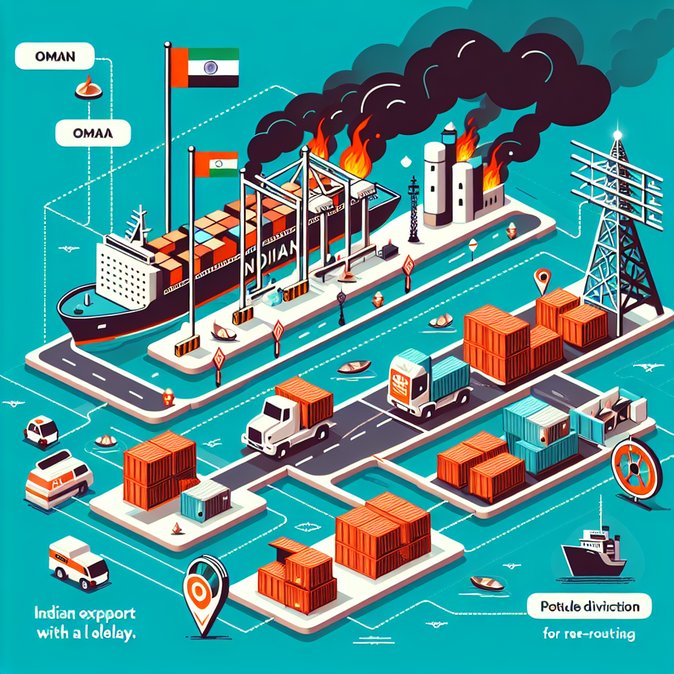
Although the UAE reopened its airspace before dawn, Indian carriers opted for a cautious approach. Multiple Air India and IndiGo rotations to Delhi, Mumbai and Kochi were rescheduled, and at least one Air India Express departure (IX 384 to Thiruvananthapuram) was cancelled outright, triggering a cascade of missed domestic connections inside India. Travellers reported receiving rebooking messages only after reaching the airport; a passenger forum post at 01:40 GST noted that “Air India Express just scrubbed our midnight flight to India with no alternate shown.” Indian corporate-travel managers are advising clients headed to the Gulf to build 8-to-12-hour buffers into itineraries or re-route via Muscat or Jeddah, both of which remain operational. Travel-risk consultancies also recommend activating emergency-tracking protocols for assignees in Dubai and Abu Dhabi, given the missile-defence advisories now being pushed to residents’ phones. Organisations with time-critical cargo have begun re-routing high-value shipments through Doha and Salalah, adding significant surface-transfer costs but reducing exposure to last-minute airport closures. For mobility programmes, the immediate priority is duty-of-care: ensuring expatriates have updated contact information, shelter-in-place instructions, and access to evacuation flights if the security picture worsens. Longer term, sustained interruptions at the world’s busiest international airport could force Indian multinationals to revisit assignment packages that rely on weekly commutes into Dubai for regional client work. Insurance underwriters have already signalled war-risk premium surcharges for flights transiting Emirati airspace, a cost that could soon find its way into corporate travel budgets.

For travelers scrambling to adjust itineraries, VisaHQ can quickly clarify visa and transit rules for alternative routings through Muscat, Jeddah or Doha, and even arrange emergency e-visas for Indian passport holders on short notice. Its online platform (https://www.visahq.com/india/) lets users compare entry requirements across more than 200 destinations and submit applications without visiting a consulate, a useful hedge when airport disruptions leave only hours to switch flights.
Although the UAE reopened its airspace before dawn, Indian carriers opted for a cautious approach. Multiple Air India and IndiGo rotations to Delhi, Mumbai and Kochi were rescheduled, and at least one Air India Express departure (IX 384 to Thiruvananthapuram) was cancelled outright, triggering a cascade of missed domestic connections inside India. Travellers reported receiving rebooking messages only after reaching the airport; a passenger forum post at 01:40 GST noted that “Air India Express just scrubbed our midnight flight to India with no alternate shown.” Indian corporate-travel managers are advising clients headed to the Gulf to build 8-to-12-hour buffers into itineraries or re-route via Muscat or Jeddah, both of which remain operational. Travel-risk consultancies also recommend activating emergency-tracking protocols for assignees in Dubai and Abu Dhabi, given the missile-defence advisories now being pushed to residents’ phones. Organisations with time-critical cargo have begun re-routing high-value shipments through Doha and Salalah, adding significant surface-transfer costs but reducing exposure to last-minute airport closures. For mobility programmes, the immediate priority is duty-of-care: ensuring expatriates have updated contact information, shelter-in-place instructions, and access to evacuation flights if the security picture worsens. Longer term, sustained interruptions at the world’s busiest international airport could force Indian multinationals to revisit assignment packages that rely on weekly commutes into Dubai for regional client work. Insurance underwriters have already signalled war-risk premium surcharges for flights transiting Emirati airspace, a cost that could soon find its way into corporate travel budgets.