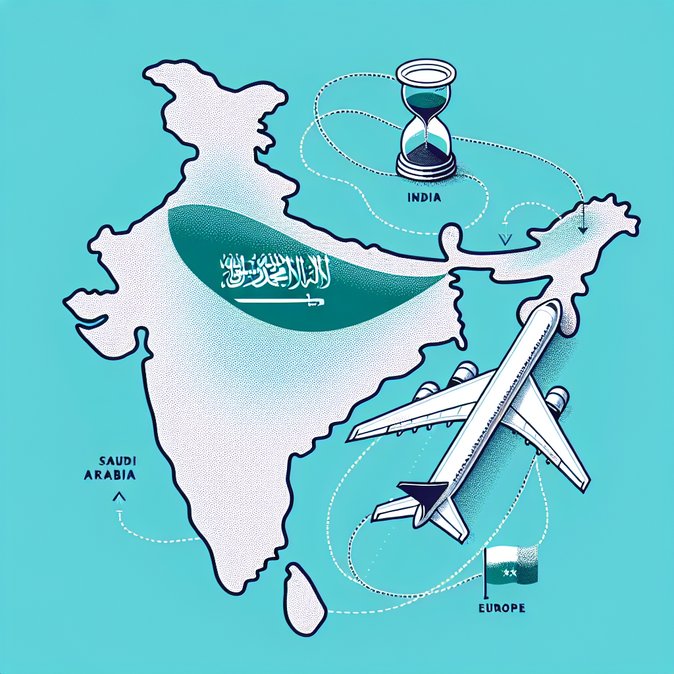
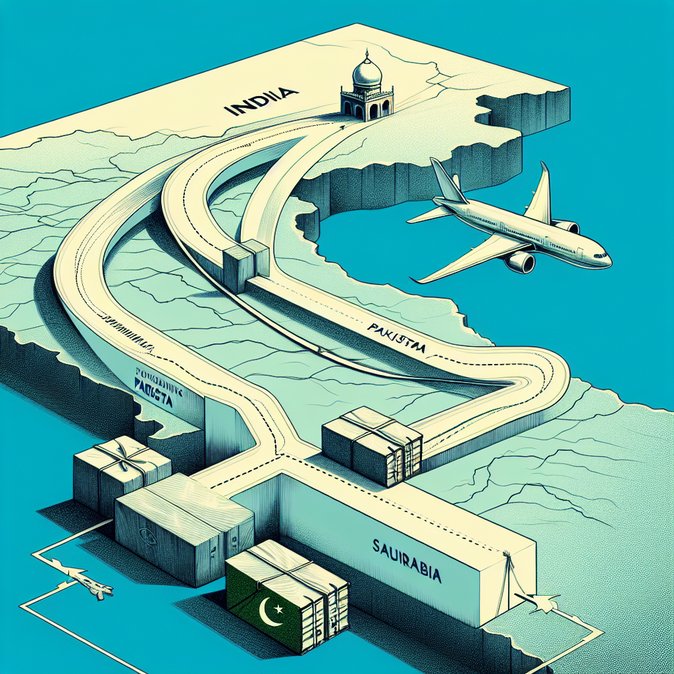
IndiGo, India’s largest carrier by market share, quietly began using Saudi Arabian airspace on 14 March 2026 for several west-bound services to Europe. Passengers and aviation watchers noticed that the day’s Mumbai–Istanbul and Delhi–Frankfurt rotations were tracked on Flightradar24 taking a more southerly dog-leg over Riyadh before turning north-west, a routing that has recently been unavailable to Indian airlines because of over-flight permissions and the ongoing closure of Pakistani airspace. The change matters because, since Pakistan shut its skies to Indian carriers in February 2025 and re-extended the ban most recently on 1 March 2026, airlines have been forced to route via the Arabian Sea and the Red Sea, adding 35-60 minutes and, in some cases, a technical fuel stop. A limited humanitarian air-corridor opened by Saudi Arabia on 11 March has now been widened to commercial over-flights, industry sources told Mint, allowing IndiGo to shave roughly 25 minutes and up to 1.2 tonnes of fuel burn on the Mumbai–Amsterdam sector. For corporate mobility managers the immediate benefit is tighter block times and improved on-time performance at European hubs, important when crews and business travellers are trying to protect onward connections.
![IndiGo Re-routes Europe Flights Over Saudi Airspace, Cutting Journey Times For Indian Travelers]()
Business travellers juggling revised routings often have to secure transit or entry documents on short notice—something VisaHQ can simplify. Through its India portal (https://www.visahq.com/india/), the firm processes visas for more than 200 countries, offers door-to-door document collection, and provides status alerts, helping travel teams lock in the necessary paperwork while flight plans are still being finalised.
Lower fuel burn also offsets the elevated insurance premia airlines have been paying since the Iran conflict escalated, reducing pressure on international fare levels that have risen 28 percent year-on-year, according to data from the Indian Association of Tour Operators. Operationally, the new routing is possible because Saudi regulators activated temporary Flight Information Region (FIR) corridors at FL330 and above for Indian-registered aircraft, something Air India had already been granted on a limited basis for its Jeddah relief flights. IndiGo’s long-haul A321XLR wet-leases now enjoy the same dispensation, and the airline is expected to update its summer-schedule flight times later this week. Travel-risk advisers still urge caution; should the Middle-East security picture deteriorate, Riyadh could rescind over-flight approvals with minimal notice and force carriers back onto longer routings. Mobility teams are advised to monitor NOTAM OEDD FIR/014-26 and build extra contingency time into itineraries until the corridor is formalised.
Business travellers juggling revised routings often have to secure transit or entry documents on short notice—something VisaHQ can simplify. Through its India portal (https://www.visahq.com/india/), the firm processes visas for more than 200 countries, offers door-to-door document collection, and provides status alerts, helping travel teams lock in the necessary paperwork while flight plans are still being finalised.
Lower fuel burn also offsets the elevated insurance premia airlines have been paying since the Iran conflict escalated, reducing pressure on international fare levels that have risen 28 percent year-on-year, according to data from the Indian Association of Tour Operators. Operationally, the new routing is possible because Saudi regulators activated temporary Flight Information Region (FIR) corridors at FL330 and above for Indian-registered aircraft, something Air India had already been granted on a limited basis for its Jeddah relief flights. IndiGo’s long-haul A321XLR wet-leases now enjoy the same dispensation, and the airline is expected to update its summer-schedule flight times later this week. Travel-risk advisers still urge caution; should the Middle-East security picture deteriorate, Riyadh could rescind over-flight approvals with minimal notice and force carriers back onto longer routings. Mobility teams are advised to monitor NOTAM OEDD FIR/014-26 and build extra contingency time into itineraries until the corridor is formalised.