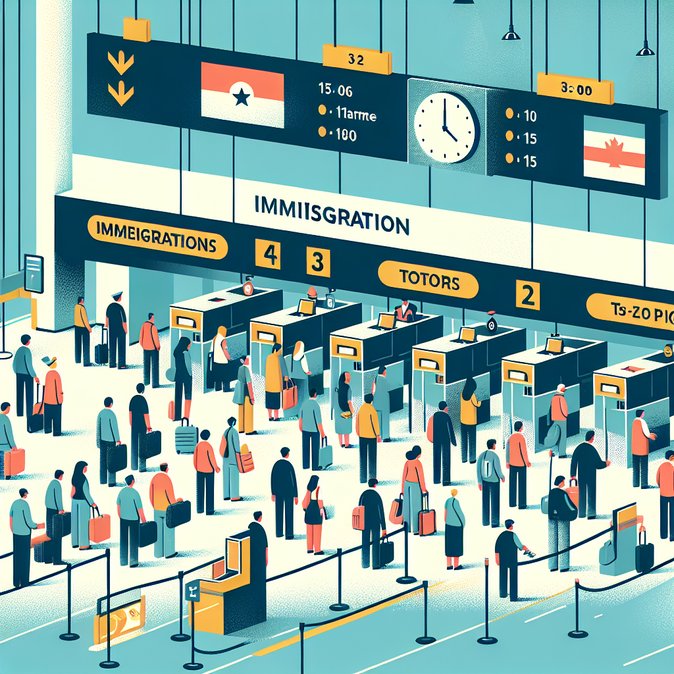
At a bilateral summit in Cork on 13 March 2026, UK Prime Minister Keir Starmer and Taoiseach Micheál Martin devoted a large part of their three-hour meeting to mobility across the Common Travel Area (CTA). Officials from both sides told reporters that the Iran war’s economic fallout—particularly volatile energy prices and shipping disruptions—has underscored how dependent the two islands are on friction-free movement of talent, goods and services. According to a joint communiqué, both governments have agreed to “accelerate technical work” on four practical projects that will matter to globally-mobile employers. First, an automatic data-matching system between the Irish Immigration Service Delivery (ISD) and the UK Home Office will be piloted this summer to cut duplicate security checks for frequent business travellers. Second, the two Governments will publish a shared “Trusted Employer” list allowing multinationals with clean compliance records to fast-track short-term assignments of up to 90 days. Third, both tax authorities will develop a single digital certificate so that cross-border commuters do not have to carry paper A1 or P45 forms. Finally, the parties have tasked their transport ministries with producing, by September, a contingency plan to keep air and ferry links operating if Middle-East tensions further disrupt global aviation fuel supply.
The summit is the most substantive CTA review since the UK’s exit from the EU. Employers welcomed the tone: Ibec’s head of global mobility, Niamh Healy, said the announcement “signals real political will to future-proof the CTA for the post-Brexit era.” BritishIrish Chamber CEO Paul Larkin noted that 14,000 people currently commute weekly between the two jurisdictions; smoothing documentary requirements is “a productivity boost we can bank immediately.” For mobility managers the practical takeaway is that, once the pilot launches, employees travelling between Dublin and London for short projects should see border-control processing drop from today’s ten-minute average to “well under two minutes,” according to Irish officials. However, companies are advised to audit employee data quality—passport details, home addresses and sponsor numbers must align exactly in both jurisdictions’ systems, or staff will be diverted to manual inspection. Immigration lawyers caution that the Trusted Employer scheme may come with stricter compliance audits and higher penalties for errant sponsors.
![UK–Ireland summit puts Common Travel Area resilience at centre stage amid Middle-East crisis]()
Companies looking for hands-on assistance with the evolving travel rules can tap specialist providers such as VisaHQ. The firm helps both multinationals and individual travellers determine whether non-CTA employees still need visas, residence permits or transit documents for Ireland and the UK, and can fast-track the paperwork when deadlines are tight. More information on its Irish services is available at https://www.visahq.com/ireland/
The Department of Justice is expected to publish draft eligibility criteria within weeks. Multinationals with large intra-company transfer volumes should therefore review their historical visa refusal and late-registration records now.
In the medium term, the summit’s signal that Dublin and London want to insulate labour mobility from geopolitical shocks is positive news for international assignees. But observers also warn that deeper data-sharing means mistakes on either side of the Irish Sea will surface faster. Global mobility teams should prepare staff for a more frictionless—but also more transparent—operating environment.
The summit is the most substantive CTA review since the UK’s exit from the EU. Employers welcomed the tone: Ibec’s head of global mobility, Niamh Healy, said the announcement “signals real political will to future-proof the CTA for the post-Brexit era.” BritishIrish Chamber CEO Paul Larkin noted that 14,000 people currently commute weekly between the two jurisdictions; smoothing documentary requirements is “a productivity boost we can bank immediately.” For mobility managers the practical takeaway is that, once the pilot launches, employees travelling between Dublin and London for short projects should see border-control processing drop from today’s ten-minute average to “well under two minutes,” according to Irish officials. However, companies are advised to audit employee data quality—passport details, home addresses and sponsor numbers must align exactly in both jurisdictions’ systems, or staff will be diverted to manual inspection. Immigration lawyers caution that the Trusted Employer scheme may come with stricter compliance audits and higher penalties for errant sponsors.

Companies looking for hands-on assistance with the evolving travel rules can tap specialist providers such as VisaHQ. The firm helps both multinationals and individual travellers determine whether non-CTA employees still need visas, residence permits or transit documents for Ireland and the UK, and can fast-track the paperwork when deadlines are tight. More information on its Irish services is available at https://www.visahq.com/ireland/
The Department of Justice is expected to publish draft eligibility criteria within weeks. Multinationals with large intra-company transfer volumes should therefore review their historical visa refusal and late-registration records now.
In the medium term, the summit’s signal that Dublin and London want to insulate labour mobility from geopolitical shocks is positive news for international assignees. But observers also warn that deeper data-sharing means mistakes on either side of the Irish Sea will surface faster. Global mobility teams should prepare staff for a more frictionless—but also more transparent—operating environment.