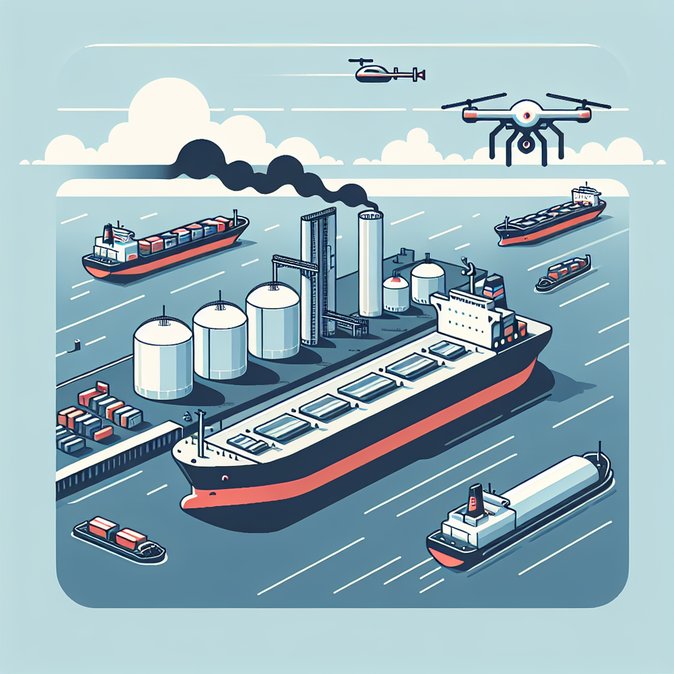
A pre-dawn Iranian drone strike on 14 March ignited storage tanks inside the Fujairah Oil Industry Zone, the UAE’s critical bunkering hub just outside the Strait of Hormuz. Satellite imagery reviewed by Reuters shows at least two tanks still ablaze, sending black plumes across the Gulf of Oman and forcing authorities to suspend ship-to-ship transfers and crew launches. The attack comes after a week of near-misses in which falling debris repeatedly disrupted bunkering ops. According to the updated Wikipedia incident log—cross-checked against port-agent circulars—refuelling volumes have fallen by more than 60 percent since 9 March as tanker owners reroute via Salalah (Oman) and Duqm. Marine insurers now quote ‘war-risk’ surcharges of up to USD 3.50 per dead-weight tonne for calls at UAE ports east of Dubai. Crew-mobility specialists are scrambling to rearrange sign-off rotations.
![Drone Damage Shuts Fujairah Oil Terminal, Diverts Crew Changes and Supply Vessels]()
In this fluid security environment, VisaHQ can ease some of the administrative burden: its dedicated UAE portal (https://www.visahq.com/united-arab-emirates/) offers rapid processing of emergency visas, passport renewals, and work permits for relief crews, engineers, and dependants who may need to exit or re-enter the country on short notice, backed by real-time alerts on embassy closures and changing documentation rules.
Launch services to offshore anchorage have been halted, meaning seafarers must stay on board beyond contract limits or be helicopter-lifted to Dubai—a service currently rationed to one slot per hour due to restricted airspace. Several energy majors have triggered ‘force majeure’ clauses allowing remote monitoring of cargo operations from onshore control rooms. For companies moving expatriate project managers to Fujairah’s refinery expansion site, the practical impact is immediate: landlords report a wave of lease cancellations, while security consultants recommend daily movement approvals and hardened accommodation for essential staff. Airlines have not yet restored the short-lived DXB–FJR shuttle introduced last year, leaving managers to rely on a four-hour road transfer that now requires military convoy clearance. If the shutdown persists, analysts warn it could squeeze the already-tight global supply of low-sulphur fuel oil and raise voyage costs for container lines re-routing around the Cape. Mobility teams should prepare contingency hardship allowances and review evacuation protocols for dependants living in the northern emirates.

In this fluid security environment, VisaHQ can ease some of the administrative burden: its dedicated UAE portal (https://www.visahq.com/united-arab-emirates/) offers rapid processing of emergency visas, passport renewals, and work permits for relief crews, engineers, and dependants who may need to exit or re-enter the country on short notice, backed by real-time alerts on embassy closures and changing documentation rules.
Launch services to offshore anchorage have been halted, meaning seafarers must stay on board beyond contract limits or be helicopter-lifted to Dubai—a service currently rationed to one slot per hour due to restricted airspace. Several energy majors have triggered ‘force majeure’ clauses allowing remote monitoring of cargo operations from onshore control rooms. For companies moving expatriate project managers to Fujairah’s refinery expansion site, the practical impact is immediate: landlords report a wave of lease cancellations, while security consultants recommend daily movement approvals and hardened accommodation for essential staff. Airlines have not yet restored the short-lived DXB–FJR shuttle introduced last year, leaving managers to rely on a four-hour road transfer that now requires military convoy clearance. If the shutdown persists, analysts warn it could squeeze the already-tight global supply of low-sulphur fuel oil and raise voyage costs for container lines re-routing around the Cape. Mobility teams should prepare contingency hardship allowances and review evacuation protocols for dependants living in the northern emirates.