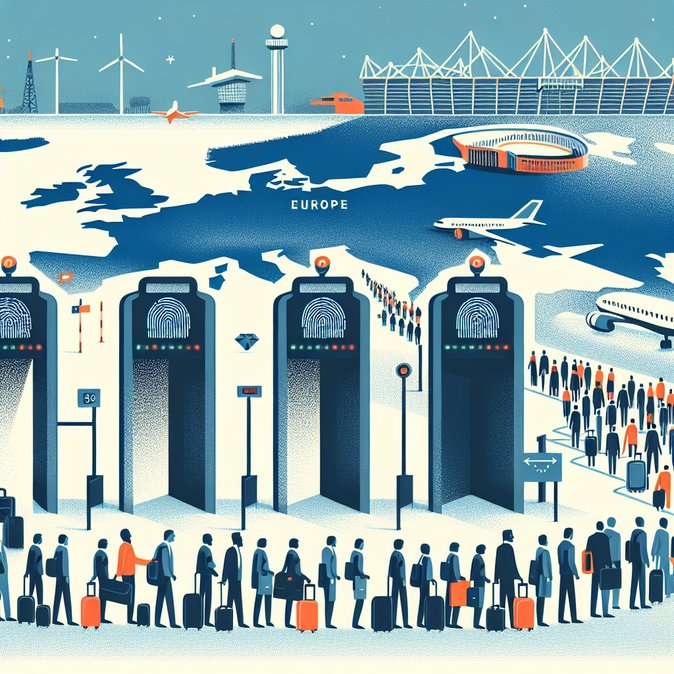
With less than a month before passport stamping is due to disappear across the Schengen Area, France has conceded it may miss key milestones for full deployment of the EU’s biometric Entry/Exit System (EES). Officials told Connexion France that kiosk and tablet malfunctions mean only around half of eligible travellers are being processed digitally – well short of the 100 percent target set for 30 March. EES, launched in October 2025, requires fingerprints and facial images from non-EU visitors at the bloc’s external borders. France’s plan hinged on hundreds of self-service kiosks at CDG, Orly, ferry ports and Eurostar terminals, but users report frequent outages that force a return to manual inspection booths. Ports de Normandie confirmed they are still waiting for state-supplied hardware, while Eurotunnel terminals remain in partial test mode.
![France Admits Technical Glitches Could Derail Entry/Exit System Deadline]()
As uncertainty builds, VisaHQ can step in to streamline the formalities for both corporate mobility teams and holidaymakers. Its dedicated France portal (https://www.visahq.com/france/) tracks the latest EES implementation bulletins, provides visa pre-checks, and arranges expedited document handling, helping travellers avoid last-minute surprises and companies keep projects on schedule.
Failure to meet the phased-start thresholds could see the European Commission open infringement proceedings or impose contingency queuing measures during Easter and the July Olympics. Long lines would hit airlines with crew-duty knock-ons and jeopardise France’s reputation for hosting mega-events. Companies relocating employees or rotating project teams should brace for unpredictability at air and sea borders. Immigration counsel recommend scheduling arrivals outside morning banks, preparing contingency accommodation budgets, and ensuring staff have proof of prior EES enrolment to speed secondary checks. Meanwhile, airports are racing to integrate EES with PARAFE e-gates so that foreign residents and frequent business travellers can again use automated lanes by summer.
As uncertainty builds, VisaHQ can step in to streamline the formalities for both corporate mobility teams and holidaymakers. Its dedicated France portal (https://www.visahq.com/france/) tracks the latest EES implementation bulletins, provides visa pre-checks, and arranges expedited document handling, helping travellers avoid last-minute surprises and companies keep projects on schedule.
Failure to meet the phased-start thresholds could see the European Commission open infringement proceedings or impose contingency queuing measures during Easter and the July Olympics. Long lines would hit airlines with crew-duty knock-ons and jeopardise France’s reputation for hosting mega-events. Companies relocating employees or rotating project teams should brace for unpredictability at air and sea borders. Immigration counsel recommend scheduling arrivals outside morning banks, preparing contingency accommodation budgets, and ensuring staff have proof of prior EES enrolment to speed secondary checks. Meanwhile, airports are racing to integrate EES with PARAFE e-gates so that foreign residents and frequent business travellers can again use automated lanes by summer.