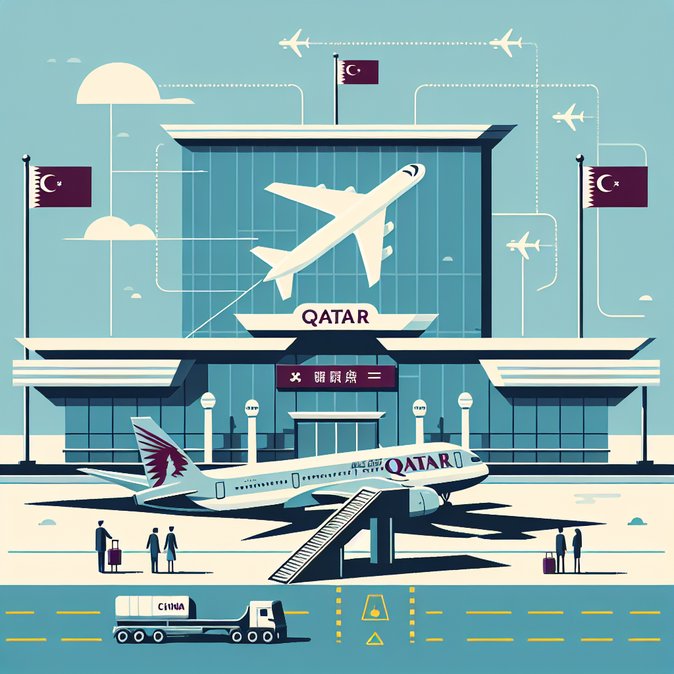
Qatar Airways confirmed on March 12 that it has secured temporary regulatory clearance to operate 29 international flights, including a Doha–Beijing (PKX) rotation, while much of Qatari airspace remains restricted due to regional tensions. The one-day schedule, published by Travel And Tour World, reconnects Doha with key commercial hubs such as London, Frankfurt, New York and Johannesburg, and reinstates the carrier’s sole Mainland China service.
![Qatar Airways Adds Beijing to Restricted 29-Flight Schedule Amid Gulf Airspace Closure]()
For business travelers suddenly needing to adjust itineraries, securing the right visas can be as challenging as finding an available seat. VisaHQ’s online platform (https://www.visahq.com/china/) streamlines China visa applications with digital forms, door-to-door courier service and real-time status tracking, helping Qatar-based managers keep mobility plans on track even when flight schedules are in flux.
Since early March, widespread missile alerts and conflict-driven flight bans over parts of the Gulf have forced Qatar Airways to slash capacity and reroute traffic via Iranian and Saudi corridors. The inclusion of Beijing underscores the economic priority China represents: bilateral trade topped US$ 21 billion in 2025 and more than 450 Chinese firms maintain Middle-East operations managed from Doha. Travel managers should note that only passengers with confirmed bookings for the limited flights may enter Hamad International Airport; standby and staff travel are suspended. Flexible rebooking and refund policies remain in place, but seat availability is tight. Cargo shippers moving high-tech components and perishables on the Doha–Beijing lane face similar capacity constraints and premium yield surcharges. Industry observers expect further ad-hoc authorisations in the coming days as Gulf regulators reassess risk levels. Multinationals are advised to maintain contingency routings via Muscat or Riyadh for China-bound staff and to monitor insurance clauses related to ‘war-risk’ surcharges, which some carriers have reinstated for flights transiting the broader Middle-East region.

For business travelers suddenly needing to adjust itineraries, securing the right visas can be as challenging as finding an available seat. VisaHQ’s online platform (https://www.visahq.com/china/) streamlines China visa applications with digital forms, door-to-door courier service and real-time status tracking, helping Qatar-based managers keep mobility plans on track even when flight schedules are in flux.
Since early March, widespread missile alerts and conflict-driven flight bans over parts of the Gulf have forced Qatar Airways to slash capacity and reroute traffic via Iranian and Saudi corridors. The inclusion of Beijing underscores the economic priority China represents: bilateral trade topped US$ 21 billion in 2025 and more than 450 Chinese firms maintain Middle-East operations managed from Doha. Travel managers should note that only passengers with confirmed bookings for the limited flights may enter Hamad International Airport; standby and staff travel are suspended. Flexible rebooking and refund policies remain in place, but seat availability is tight. Cargo shippers moving high-tech components and perishables on the Doha–Beijing lane face similar capacity constraints and premium yield surcharges. Industry observers expect further ad-hoc authorisations in the coming days as Gulf regulators reassess risk levels. Multinationals are advised to maintain contingency routings via Muscat or Riyadh for China-bound staff and to monitor insurance clauses related to ‘war-risk’ surcharges, which some carriers have reinstated for flights transiting the broader Middle-East region.