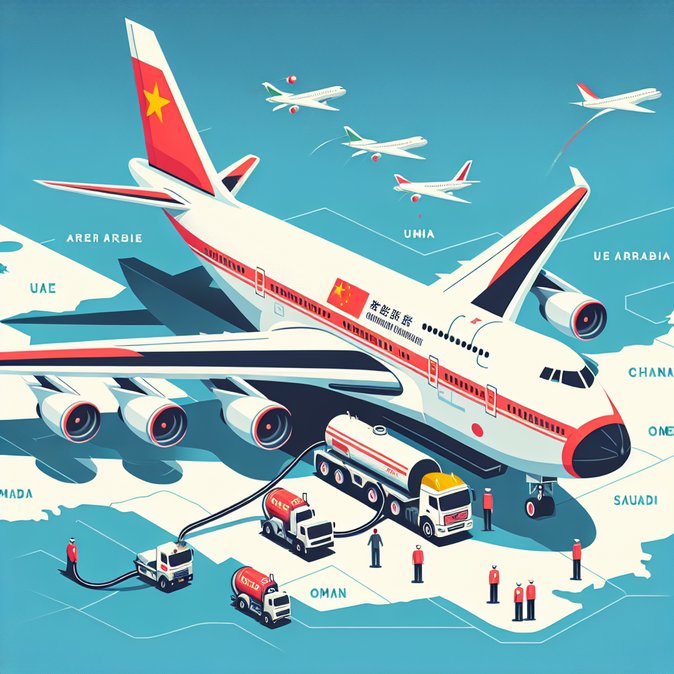
At a 10 March press briefing Foreign Ministry spokesperson Guo Jiakun confirmed that more than 10,000 Chinese citizens have been flown home from the United Arab Emirates, Oman and Saudi Arabia after regional conflict disrupted commercial flight schedules. The Foreign Ministry coordinated with the Civil Aviation Administration of China (CAAC) to authorise extra-section flights operated by Air China, China Eastern and Hainan Airlines.
Diplomatic missions in Abu Dhabi, Muscat and Riyadh negotiated air-traffic clearances and arranged airport transit passes in record time. Chinese carriers mounted 28 relief flights over six days, prioritising travellers whose visas were expiring or whose employers had suspended projects. Consular staff provided temporary lodging and chartered buses to move groups from closed regional airports to operational hubs.
The evacuation showcases China’s increasingly agile consular-protection system, which was revamped in 2024 after the Sudan crisis. Mobile notification apps pushed real-time security alerts and seat-reservation links in Mandarin, English and Arabic, reducing over-the-counter workload at embassies.
![China repatriates 10,000 nationals stranded in Gulf amid regional conflict]()
For organisations that need to keep personnel mobile even during uncertain times, services like VisaHQ can prove invaluable. VisaHQ’s China portal (https://www.visahq.com/china/) helps travellers secure visas, track document status and receive country-specific alerts, giving companies an extra layer of assurance when flight schedules or entry rules change without warning.
For global-mobility teams the episode is a reminder that contingency planning must cover sudden airspace closures and that China expects employers to enrol staff in the MFA’s free “Trip Registration” programme. Failure to do so can delay consular assistance and complicate insurance claims.
Guo urged Chinese nationals to postpone non-essential travel to conflict-affected Middle-East states until airports have fully reopened, signalling that risk ratings in corporate travel-approval platforms should remain at “no-go” for the immediate future.
Diplomatic missions in Abu Dhabi, Muscat and Riyadh negotiated air-traffic clearances and arranged airport transit passes in record time. Chinese carriers mounted 28 relief flights over six days, prioritising travellers whose visas were expiring or whose employers had suspended projects. Consular staff provided temporary lodging and chartered buses to move groups from closed regional airports to operational hubs.
The evacuation showcases China’s increasingly agile consular-protection system, which was revamped in 2024 after the Sudan crisis. Mobile notification apps pushed real-time security alerts and seat-reservation links in Mandarin, English and Arabic, reducing over-the-counter workload at embassies.

For organisations that need to keep personnel mobile even during uncertain times, services like VisaHQ can prove invaluable. VisaHQ’s China portal (https://www.visahq.com/china/) helps travellers secure visas, track document status and receive country-specific alerts, giving companies an extra layer of assurance when flight schedules or entry rules change without warning.
For global-mobility teams the episode is a reminder that contingency planning must cover sudden airspace closures and that China expects employers to enrol staff in the MFA’s free “Trip Registration” programme. Failure to do so can delay consular assistance and complicate insurance claims.
Guo urged Chinese nationals to postpone non-essential travel to conflict-affected Middle-East states until airports have fully reopened, signalling that risk ratings in corporate travel-approval platforms should remain at “no-go” for the immediate future.