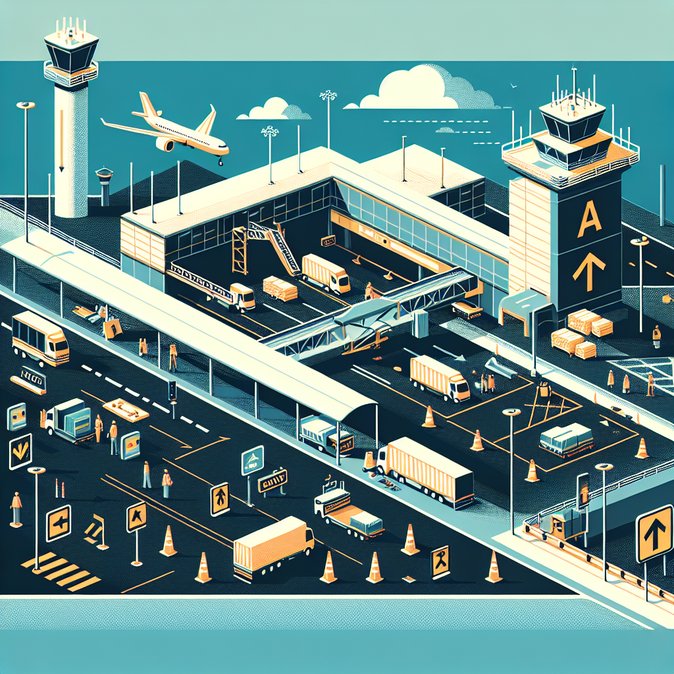
In a separate early-morning release on 10 March, Zurich Airport AG reported its best financial performance ever: a consolidated profit of CHF 346 million for fiscal 2025, up from CHF 327 million the previous year. Revenue reached CHF 1.361 billion, driven by surging passenger demand (32.6 million pax, +4.5 %). EBITDA climbed 4 % to CHF 762 million despite inflationary headwinds. Management said the healthy balance sheet allows the company to fast-track major infrastructure upgrades. Top of the list is the CHF 503 million replacement of 35-year-old Dock A—including a new air-traffic-control tower—and a full overhaul of the baggage-sorting system.
![Record CHF 346 m profit lets Zurich Airport accelerate Dock A rebuild and logistics revamp]()
Whether you’re a corporate travel planner or an individual assignee, managing the paperwork behind international journeys through Zurich just became easier: VisaHQ’s online portal (https://www.visahq.com/switzerland/) lets users check Swiss entry rules in seconds, complete visa applications digitally, and track approvals in real time. The service covers more than 200 destinations, making it a one-stop solution for multinationals that need to keep staff mobile while the airport undergoes its ambitious rebuild.
Additional spend is earmarked for a new cargo facility (Rächtenwisen) and expansion of the landside passenger area to absorb projected growth beyond 35 million travellers a year. For mobility and relocation teams the announcements translate into two practical realities. First, sustained capital expenditure should safeguard Zurich’s network of long-haul flights, keeping direct links to the United States and key Asian markets attractive for assignees. Second, the works themselves will generate intermittent disruption: bussing to remote stands, temporary gate closures and detours through construction zones could add 10-15 minutes to connection times through 2027. The airport will partly offset the inconvenience by cutting regulated airport charges about 10 % from 1 October 2026—savings that airlines say they will pass on to high-volume corporate clients through lower fuel surcharges or additional inventory in corporate booking classes. Shareholders are poised to vote on an ordinary dividend of CHF 8.50 per share at the AGM on 17 April. Kuehne + Nagel CEO Stefan Paul has been nominated to join the Board, a move that underlines Zurich Airport’s ambition to grow its international logistics footprint—an area closely watched by multinationals running regional distribution hubs out of Switzerland.

Whether you’re a corporate travel planner or an individual assignee, managing the paperwork behind international journeys through Zurich just became easier: VisaHQ’s online portal (https://www.visahq.com/switzerland/) lets users check Swiss entry rules in seconds, complete visa applications digitally, and track approvals in real time. The service covers more than 200 destinations, making it a one-stop solution for multinationals that need to keep staff mobile while the airport undergoes its ambitious rebuild.
Additional spend is earmarked for a new cargo facility (Rächtenwisen) and expansion of the landside passenger area to absorb projected growth beyond 35 million travellers a year. For mobility and relocation teams the announcements translate into two practical realities. First, sustained capital expenditure should safeguard Zurich’s network of long-haul flights, keeping direct links to the United States and key Asian markets attractive for assignees. Second, the works themselves will generate intermittent disruption: bussing to remote stands, temporary gate closures and detours through construction zones could add 10-15 minutes to connection times through 2027. The airport will partly offset the inconvenience by cutting regulated airport charges about 10 % from 1 October 2026—savings that airlines say they will pass on to high-volume corporate clients through lower fuel surcharges or additional inventory in corporate booking classes. Shareholders are poised to vote on an ordinary dividend of CHF 8.50 per share at the AGM on 17 April. Kuehne + Nagel CEO Stefan Paul has been nominated to join the Board, a move that underlines Zurich Airport’s ambition to grow its international logistics footprint—an area closely watched by multinationals running regional distribution hubs out of Switzerland.