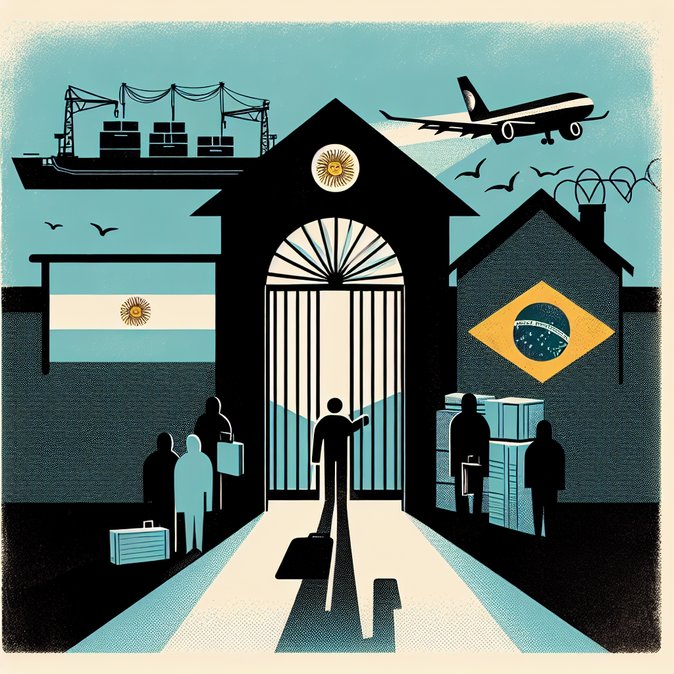
Argentina’s refugee commission (Conare) has approved political-asylum status for Joel Borges Corrêa, a Brazilian truck driver sentenced to 13 years for taking part in the 8 January 2023 riots in Brasília. The decision, confirmed on 11 March 2026, means Borges Corrêa will receive Argentine ID papers and be shielded from Brazil’s extradition request. The move jars bilateral legal-co-operation agreements and could complicate mobility for officials and business travellers if Brasília responds by tightening land-border controls. Brazil’s justice ministry called the ruling “incomprehensible”, noting that Interpol Red Notices remain active.
![Argentina Grants Asylum to Brazilian January-8 Rioter, Testing Extradition Channel]()
For organisations that suddenly find themselves navigating shifting entry rules and heightened scrutiny at Brazil’s land borders, VisaHQ can provide up-to-date guidance and fast-track processing of the visas and travel documents staff may need; see https://www.visahq.com/brazil/ for details on how the service works.
Analysts say other Bolsonaro-era fugitives—dozens of whom fled to Argentina in 2024—are now likelier to gain refugee status, creating a pipeline of politically charged asylum cases. For mobility managers the immediate impact is limited to a niche population, but the episode underscores a growing fragmentation of extradition and asylum policy in South America. Companies relocating staff between MERCOSUR countries may face longer background-check timelines as authorities scrutinise political-risk flags. Immigration lawyers advise screening transferees for any pending judicial matters that could trigger detention at border crossings. Diplomatically, the case lands in the middle of Brazil’s presidential campaign, with opposition candidate Flávio Bolsonaro praising Argentina’s libertarian president Javier Milei for the “freedom victory”. Should tensions escalate, observers do not rule out retaliatory inspection measures at the Paso de los Libres–Uruguaiana bridge, a major trucking artery for regional supply chains.

For organisations that suddenly find themselves navigating shifting entry rules and heightened scrutiny at Brazil’s land borders, VisaHQ can provide up-to-date guidance and fast-track processing of the visas and travel documents staff may need; see https://www.visahq.com/brazil/ for details on how the service works.
Analysts say other Bolsonaro-era fugitives—dozens of whom fled to Argentina in 2024—are now likelier to gain refugee status, creating a pipeline of politically charged asylum cases. For mobility managers the immediate impact is limited to a niche population, but the episode underscores a growing fragmentation of extradition and asylum policy in South America. Companies relocating staff between MERCOSUR countries may face longer background-check timelines as authorities scrutinise political-risk flags. Immigration lawyers advise screening transferees for any pending judicial matters that could trigger detention at border crossings. Diplomatically, the case lands in the middle of Brazil’s presidential campaign, with opposition candidate Flávio Bolsonaro praising Argentina’s libertarian president Javier Milei for the “freedom victory”. Should tensions escalate, observers do not rule out retaliatory inspection measures at the Paso de los Libres–Uruguaiana bridge, a major trucking artery for regional supply chains.