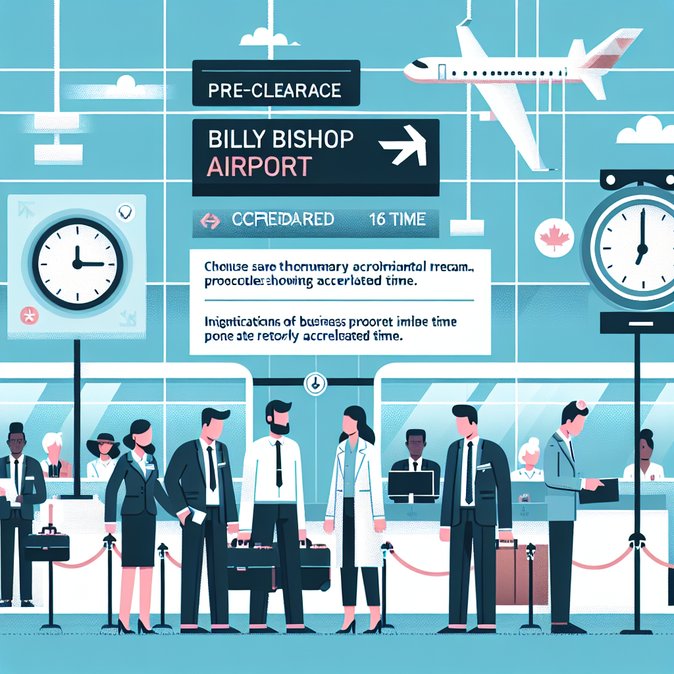
Frequent flyers shuttling between downtown Toronto and the United States woke up to shorter lines today: As of March 10, U.S. Customs and Border Protection officers are now carrying out full immigration, customs and agriculture inspections inside Billy Bishop Toronto City Airport (YTZ) before passengers board their flights south. The launch makes Billy Bishop the ninth Canadian airport—and the first since 2016—to host a U.S. pre-clearance facility. For American companies with Canadian operations the upgrade is a major convenience play. YTZ, a five-minute ferry or pedestrian-tunnel ride from Toronto’s financial district, is the airport of choice for bankers, consultants and tech workers who commute regularly to the Northeast corridor. Previously, these travellers landed at small U.S. terminals without Global Entry kiosks and queued for primary inspection alongside leisure traffic. Starting today, they will arrive domestically, pick up a rideshare and head straight to meetings, shaving an estimated 45-60 minutes off door-to-door journey times.
![U.S. Pre-clearance Begins at Toronto’s Billy Bishop Airport, Streamlining Cross-Border Business Travel]()
For travelers who still need help navigating U.S. visa rules—or securing TN and L-1 documentation now that those applications can be filed on the spot—VisaHQ offers an end-to-end online service that gathers the required forms, checks them for accuracy and submits them to the proper authorities. The platform’s clear, step-by-step interface removes the guesswork and speeds approvals, whether you’re applying for a simple B-1/B-2 visitor visa or a specialized work permit. Learn more at https://www.visahq.com/united-states/
Immigration practitioners also point to an under-the-radar benefit: Pre-clearance sites are one of the few venues where Canadian citizens can apply on the spot for NAFTA/USMCA professional (TN) status or renew L-1 intra-company transfer visas. The ability to process those applications at Billy Bishop rather than at congested land crossings in Buffalo or Detroit should reduce wait times and enable companies to deploy staff on short notice. The Law Office of Brian Zuccaro in Buffalo, which first flagged the opening in an online alert, says it has already scheduled multiple TN filings for later this week. From a security perspective, CBP says the expansion advances its goal of pushing the “border outward,” allowing officers to vet passengers and luggage before they ever set foot on U.S. soil. Canada, for its part, gains a competitive edge: airports with pre-clearance historically attract new airline service because carriers can route passengers to less-busy domestic terminals in the States. Travel-program managers should update booking policies: Porter Airlines and Air Canada’s regional affiliate Jazz have both confirmed that flights from YTZ to Boston (BOS), Chicago Midway (MDW) and Newark (EWR) will now arrive at domestic gates. That means no secondary screening for duty-free liquids and a smoother experience for travellers connecting onward within the U.S. Global Entry members can still use their Mobile Passport Control app at YTZ pre-clearance, further reducing time in line. The joint U.S.–Canadian announcement did not specify staffing numbers, but CBP typically fields 40-60 officers at new pre-clearance airports. Capacity is expected to ramp up ahead of the FIFA World Cup 2026 matches taking place in Toronto, when demand for cross-border charter flights is forecast to spike.
For travelers who still need help navigating U.S. visa rules—or securing TN and L-1 documentation now that those applications can be filed on the spot—VisaHQ offers an end-to-end online service that gathers the required forms, checks them for accuracy and submits them to the proper authorities. The platform’s clear, step-by-step interface removes the guesswork and speeds approvals, whether you’re applying for a simple B-1/B-2 visitor visa or a specialized work permit. Learn more at https://www.visahq.com/united-states/
Immigration practitioners also point to an under-the-radar benefit: Pre-clearance sites are one of the few venues where Canadian citizens can apply on the spot for NAFTA/USMCA professional (TN) status or renew L-1 intra-company transfer visas. The ability to process those applications at Billy Bishop rather than at congested land crossings in Buffalo or Detroit should reduce wait times and enable companies to deploy staff on short notice. The Law Office of Brian Zuccaro in Buffalo, which first flagged the opening in an online alert, says it has already scheduled multiple TN filings for later this week. From a security perspective, CBP says the expansion advances its goal of pushing the “border outward,” allowing officers to vet passengers and luggage before they ever set foot on U.S. soil. Canada, for its part, gains a competitive edge: airports with pre-clearance historically attract new airline service because carriers can route passengers to less-busy domestic terminals in the States. Travel-program managers should update booking policies: Porter Airlines and Air Canada’s regional affiliate Jazz have both confirmed that flights from YTZ to Boston (BOS), Chicago Midway (MDW) and Newark (EWR) will now arrive at domestic gates. That means no secondary screening for duty-free liquids and a smoother experience for travellers connecting onward within the U.S. Global Entry members can still use their Mobile Passport Control app at YTZ pre-clearance, further reducing time in line. The joint U.S.–Canadian announcement did not specify staffing numbers, but CBP typically fields 40-60 officers at new pre-clearance airports. Capacity is expected to ramp up ahead of the FIFA World Cup 2026 matches taking place in Toronto, when demand for cross-border charter flights is forecast to spike.