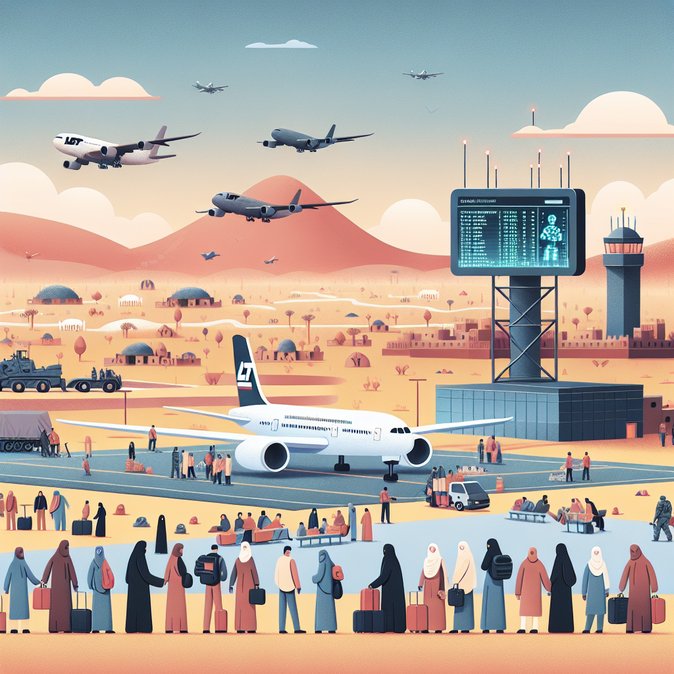
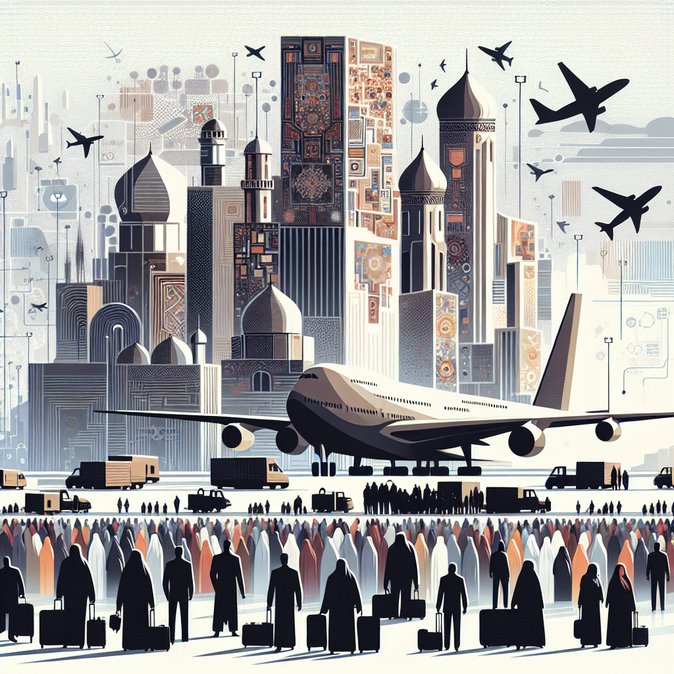
Poland’s foreign-ministry spokesman Maciej Wewiór confirmed on Tuesday morning that 9 772 citizens have now been repatriated from the Gulf and Levant following the escalation of the US-Israeli conflict with Iran. The unprecedented extraction—completed on 55 military and charter rotations—has drawn on Boeing 737s from the Polish Air Force as well as wide-bodies leased from LOT Polish Airlines.
Two further government aircraft touched down in Warsaw before dawn on 10 March, bringing home passengers who had been bussed from Dubai and Abu Dhabi to Muscat in Oman, where Polish diplomats established a staging hub. Deputy Prime-Minister and foreign-minister Radosław Sikorski said the airlift would continue “for as long as necessary” and hinted that Wednesday flights may carry other stranded EU nationals under the bloc’s civil-protection mechanism.
The operation is being run from an inter-agency coordination cell that includes the Armed Forces’ Operational Command (DORSZ), the Ministry of Infrastructure, and consular posts across the Gulf. Warsaw has also opened a hotline and urged citizens still in the region to register their whereabouts—data that now feeds straight into a new AI-driven manifest-planning tool that pairs passengers with available flights on an hour-by-hour basis.
![Nearly 10,000 Poles Airlifted Home as Government Expands Middle-East Evacuation]()
Amid this fast-moving situation, many evacuees and employers are finding that visas and entry permits can change just as quickly as flight schedules. VisaHQ’s Poland portal (https://www.visahq.com/poland/) streamlines those bureaucratic hurdles by providing up-to-date requirements, digital applications and courier support for everything from Gulf transit visas to Schengen renewals, ensuring travellers can focus on safety while experts handle the paperwork.
Corporate-mobility managers have welcomed the transparent metrics: they can log into a dashboard that shows seat availability and estimated departure times from Muscat, Riyadh and Bahrain. HR teams with staff in the UAE report that commercial links are gradually being restored, but warn that first inbound trips after 1 April will trigger mandatory biometric capture under the EU’s Entry/Exit System, adding further complexity.
Key lesson for business-travel programmes: Poland expects travellers to heed “Level 4 – Do Not Travel” advisories; last-minute state airlifts will, in future, be fee-based. Firms should therefore revisit their insurance wording and define evacuation trigger points long before the next regional flare-up.
Two further government aircraft touched down in Warsaw before dawn on 10 March, bringing home passengers who had been bussed from Dubai and Abu Dhabi to Muscat in Oman, where Polish diplomats established a staging hub. Deputy Prime-Minister and foreign-minister Radosław Sikorski said the airlift would continue “for as long as necessary” and hinted that Wednesday flights may carry other stranded EU nationals under the bloc’s civil-protection mechanism.
The operation is being run from an inter-agency coordination cell that includes the Armed Forces’ Operational Command (DORSZ), the Ministry of Infrastructure, and consular posts across the Gulf. Warsaw has also opened a hotline and urged citizens still in the region to register their whereabouts—data that now feeds straight into a new AI-driven manifest-planning tool that pairs passengers with available flights on an hour-by-hour basis.
Amid this fast-moving situation, many evacuees and employers are finding that visas and entry permits can change just as quickly as flight schedules. VisaHQ’s Poland portal (https://www.visahq.com/poland/) streamlines those bureaucratic hurdles by providing up-to-date requirements, digital applications and courier support for everything from Gulf transit visas to Schengen renewals, ensuring travellers can focus on safety while experts handle the paperwork.
Corporate-mobility managers have welcomed the transparent metrics: they can log into a dashboard that shows seat availability and estimated departure times from Muscat, Riyadh and Bahrain. HR teams with staff in the UAE report that commercial links are gradually being restored, but warn that first inbound trips after 1 April will trigger mandatory biometric capture under the EU’s Entry/Exit System, adding further complexity.
Key lesson for business-travel programmes: Poland expects travellers to heed “Level 4 – Do Not Travel” advisories; last-minute state airlifts will, in future, be fee-based. Firms should therefore revisit their insurance wording and define evacuation trigger points long before the next regional flare-up.