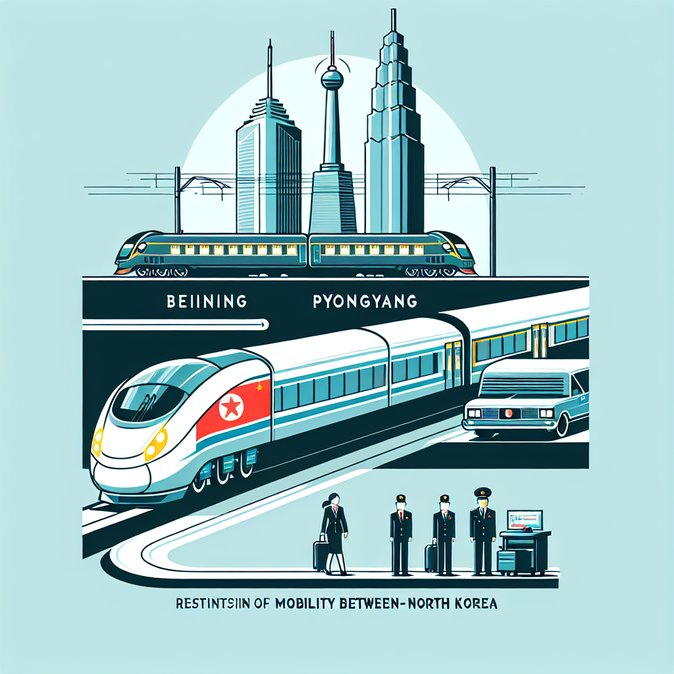
China’s national railway operator has confirmed that regular passenger services between Beijing and Pyongyang—and between the border city of Dandong and Pyongyang—will resume this Thursday, ending a suspension that has lasted since early 2020. The flagship Beijing–Pyongyang train will run four times a week, while the short-haul Dandong shuttle will operate daily. Timetables, ticketing channels and fare levels have been restored to their pre-pandemic settings, although seats can currently be purchased only at designated ticket counters on the Chinese side.
The move follows months of quiet technical inspections of track, signalling and rolling stock along the 817-kilometre Sino-DPRK corridor. Officials from China’s National Immigration Administration (NIA) told reporters that reopening the line will “revitalise people-to-people exchange” and support cross-border trade, which is still mostly conducted by rail. Prior to COVID-19, more than 80 percent of Chinese tourists and virtually all small-package traders entered North Korea by train, making rail links a critical artery for the North’s heavily sanctioned economy.
For Chinese businesses with longstanding contracts in the DPRK—most notably mining, construction and logistics firms—the resumption means technicians can again travel with spare parts and heavy equipment that are difficult or impossible to ship by air. Travel-management companies expect a modest revival of niche sightseeing tours from Beijing and Shenyang, though group permits remain subject to North Korean approval. Because Pyongyang is still restricting non-Chinese foreign visitors, analysts believe the initial capacity will be filled mainly by Chinese nationals, North Korean traders returning home, and embassy personnel.
![China to Restart Beijing–Pyongyang Passenger Trains After Four-Year Pause]()
Corporations planning short-term assignments should note that North Korea continues to require an invitation letter authorised by its State Affairs Commission, and that same-day visa issuance at the Pyongyang Railways Station border office remains suspended. Travellers must therefore secure visas through the DPRK embassy in Beijing at least seven working days in advance. Health-declaration cards are still mandatory; however, PCR test certificates are no longer required.
If your team would rather outsource those visa logistics, VisaHQ’s China portal (https://www.visahq.com/china/) can assemble the DPRK paperwork, coordinate Chinese re-entry permits, and provide door-to-door passport courier service. The platform’s real-time tracking and deadline alerts help companies compress lead times and avoid repeat embassy visits as cross-border demand ramps back up.
Practically, the restored rail option offers cost savings of 30-50 percent versus the limited Air Koryo flights now operating. It also eases capacity pressure at Beijing Capital Airport, where North-bound travellers previously competed for scarce seats. Companies that had postponed in-person due diligence trips can now restart site visits, provided they build in extra buffer time for visa formalities and potential schedule adjustments as the service scales up.
The move follows months of quiet technical inspections of track, signalling and rolling stock along the 817-kilometre Sino-DPRK corridor. Officials from China’s National Immigration Administration (NIA) told reporters that reopening the line will “revitalise people-to-people exchange” and support cross-border trade, which is still mostly conducted by rail. Prior to COVID-19, more than 80 percent of Chinese tourists and virtually all small-package traders entered North Korea by train, making rail links a critical artery for the North’s heavily sanctioned economy.
For Chinese businesses with longstanding contracts in the DPRK—most notably mining, construction and logistics firms—the resumption means technicians can again travel with spare parts and heavy equipment that are difficult or impossible to ship by air. Travel-management companies expect a modest revival of niche sightseeing tours from Beijing and Shenyang, though group permits remain subject to North Korean approval. Because Pyongyang is still restricting non-Chinese foreign visitors, analysts believe the initial capacity will be filled mainly by Chinese nationals, North Korean traders returning home, and embassy personnel.

Corporations planning short-term assignments should note that North Korea continues to require an invitation letter authorised by its State Affairs Commission, and that same-day visa issuance at the Pyongyang Railways Station border office remains suspended. Travellers must therefore secure visas through the DPRK embassy in Beijing at least seven working days in advance. Health-declaration cards are still mandatory; however, PCR test certificates are no longer required.
If your team would rather outsource those visa logistics, VisaHQ’s China portal (https://www.visahq.com/china/) can assemble the DPRK paperwork, coordinate Chinese re-entry permits, and provide door-to-door passport courier service. The platform’s real-time tracking and deadline alerts help companies compress lead times and avoid repeat embassy visits as cross-border demand ramps back up.
Practically, the restored rail option offers cost savings of 30-50 percent versus the limited Air Koryo flights now operating. It also eases capacity pressure at Beijing Capital Airport, where North-bound travellers previously competed for scarce seats. Companies that had postponed in-person due diligence trips can now restart site visits, provided they build in extra buffer time for visa formalities and potential schedule adjustments as the service scales up.