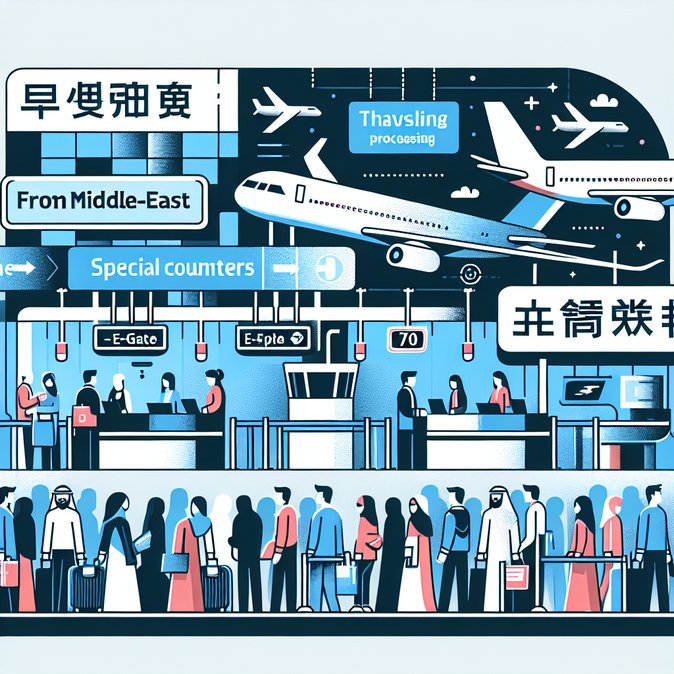
With large parts of Middle-East airspace still restricted after the latest U.S.–Israeli strikes on Iran, China has mounted one of its fastest peacetime evacuation operations in years. Foreign-ministry spokesman Guo Jiakun told a 10 March press conference that more than 10,000 Chinese nationals had been flown home from the United Arab Emirates, Oman, Saudi Arabia and Turkey in the past ten days. The operation involves extra-section flights by Air China, China Eastern and China Southern, as well as diplomatic coordination to secure landing slots and overflight permits. Border-control agencies were ordered to open dedicated channels at Beijing Capital, Guangzhou Baiyun and Shanghai Pudong airports so that evacuees could clear immigration in under 30 minutes.
In Shanghai, where the largest contingent arrived, immigration officers pre-checked passenger manifests and deployed multilingual volunteers to help travellers re-book onward tickets or quarantine hotels.
Among the returnees were more than 70 Taiwan compatriots who had been stranded in Istanbul after their Abu Dhabi connection was cancelled. They landed at 04:03 on flight MU704, the biggest Taiwan group to transit the mainland since the crisis began, and were re-ticketed onto morning flights to Taipei.
![China Airlifts 10,000 Citizens Home as Middle-East Conflict Disrupts Flights]()
Separately, for evacuees and companies scrambling to secure emergency travel documents or plot alternative routings, VisaHQ’s online portal offers real-time visa requirements, expedited processing and 24/7 customer support. Chinese nationals—as well as travellers of other nationalities—can review destination rules, submit applications and track their status at https://www.visahq.com/china/ making it a valuable one-stop resource amid the current disruptions.
The speed of the response highlights how much China’s crisis-mobility toolkit has matured since the Libya evacuation of 2011. Airlines were able to re-activate dormant fifth-freedom permissions within 48 hours, while consular teams pushed real-time safety alerts through the "Consular Express" WeChat mini-program, which now has 31 million users.
For employers, the episode underscores the importance of updated traveller tracking. Several multinational firms told the Global Mobility Alliance that they lost visibility over short-term assignees who had booked side-trips through personal channels. Consultants recommend integrating HR, security and travel-booking data to ensure rapid head-counts when conditions deteriorate.
Meanwhile, the foreign ministry has urged Chinese citizens to avoid non-essential travel to Iran and its neighbours until commercial schedules stabilise.
In Shanghai, where the largest contingent arrived, immigration officers pre-checked passenger manifests and deployed multilingual volunteers to help travellers re-book onward tickets or quarantine hotels.
Among the returnees were more than 70 Taiwan compatriots who had been stranded in Istanbul after their Abu Dhabi connection was cancelled. They landed at 04:03 on flight MU704, the biggest Taiwan group to transit the mainland since the crisis began, and were re-ticketed onto morning flights to Taipei.
Separately, for evacuees and companies scrambling to secure emergency travel documents or plot alternative routings, VisaHQ’s online portal offers real-time visa requirements, expedited processing and 24/7 customer support. Chinese nationals—as well as travellers of other nationalities—can review destination rules, submit applications and track their status at https://www.visahq.com/china/ making it a valuable one-stop resource amid the current disruptions.
The speed of the response highlights how much China’s crisis-mobility toolkit has matured since the Libya evacuation of 2011. Airlines were able to re-activate dormant fifth-freedom permissions within 48 hours, while consular teams pushed real-time safety alerts through the "Consular Express" WeChat mini-program, which now has 31 million users.
For employers, the episode underscores the importance of updated traveller tracking. Several multinational firms told the Global Mobility Alliance that they lost visibility over short-term assignees who had booked side-trips through personal channels. Consultants recommend integrating HR, security and travel-booking data to ensure rapid head-counts when conditions deteriorate.
Meanwhile, the foreign ministry has urged Chinese citizens to avoid non-essential travel to Iran and its neighbours until commercial schedules stabilise.