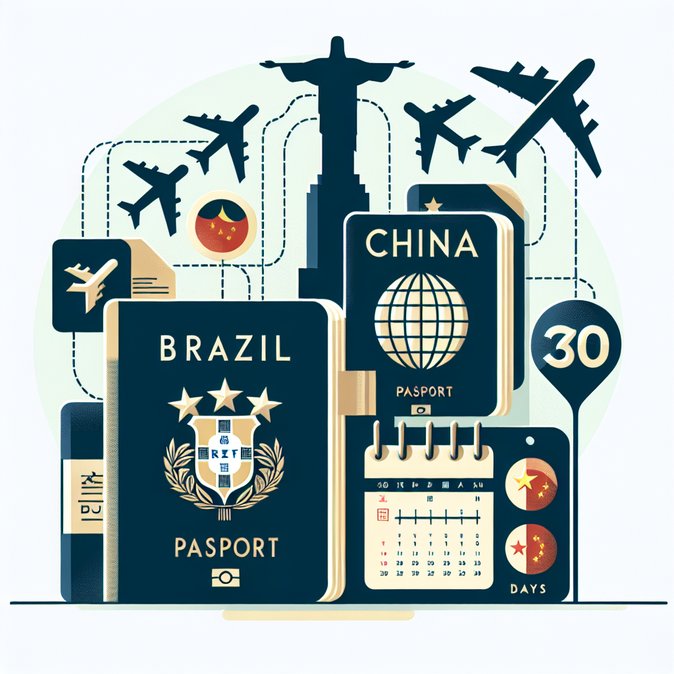
In its most ambitious border-opening since 2016, Brazil has granted ordinary passport holders from China, Denmark, France, Hungary, Ireland, Jamaica, Saint Lucia and the Bahamas visa-free entry for stays of up to 30 days—renewable locally to 90 days within any 12-month period. The measure took legal effect on 24 February 2026 and was publicly confirmed by the Itamaraty on 28 February. Brazilian officials say reciprocity is no longer a pre-condition; only China currently extends matching privileges after waiving visas for Brazilians in mid-2025.
The government hopes easier entry will help Brazil surpass last year’s record 9 million foreign arrivals and capture a larger slice of high-spending meetings-and-events traffic, whose daily outlay is triple that of leisure tourists. Airlines including LATAM, Air France-KLM and JetBlue have already requested additional northern-summer slots for São Paulo and Rio. Travel-management companies are bracing for shorter booking windows from Northern Europe and the Caribbean as clients test the new flexibility.
![Brazil Waives Short-Stay Visas for China, Europe and Caribbean Markets in Biggest Liberalisation in a Decade]()
Travellers who still need documentation—such as those engaging in remunerated work or nationals from countries not yet covered by the waiver—can simplify their paperwork through VisaHQ. The online platform keeps real-time track of Brazil’s evolving entry rules, offers step-by-step application assistance and provides secure courier options for passport processing, making compliance easier for both individuals and corporate mobility teams. Learn more at https://www.visahq.com/brazil/
For multinationals the change lowers friction for site visits, project kick-offs and technical interventions that rarely exceed a few weeks. But legal advisers remind firms that work activities still require the appropriate temporary work visa; border agents can deny entry if travellers cannot prove the purpose is purely business meetings or tourism. Companies are updating invitation-letter templates and mobility policies to reflect the 30-/90-day cap and to monitor cumulative days in Brazil to avoid inadvertent overstays.
Analysts view the move as a bellwether for Brazil’s courtship of OECD partners ahead of accession talks. Officials hint that further one-sided waivers for the United States, UK and Australia are under study, signalling a strategic pivot from strict reciprocity to targeted market-access plays aimed at boosting inbound spend and air-connectivity. (itij.com)
The government hopes easier entry will help Brazil surpass last year’s record 9 million foreign arrivals and capture a larger slice of high-spending meetings-and-events traffic, whose daily outlay is triple that of leisure tourists. Airlines including LATAM, Air France-KLM and JetBlue have already requested additional northern-summer slots for São Paulo and Rio. Travel-management companies are bracing for shorter booking windows from Northern Europe and the Caribbean as clients test the new flexibility.

Travellers who still need documentation—such as those engaging in remunerated work or nationals from countries not yet covered by the waiver—can simplify their paperwork through VisaHQ. The online platform keeps real-time track of Brazil’s evolving entry rules, offers step-by-step application assistance and provides secure courier options for passport processing, making compliance easier for both individuals and corporate mobility teams. Learn more at https://www.visahq.com/brazil/
For multinationals the change lowers friction for site visits, project kick-offs and technical interventions that rarely exceed a few weeks. But legal advisers remind firms that work activities still require the appropriate temporary work visa; border agents can deny entry if travellers cannot prove the purpose is purely business meetings or tourism. Companies are updating invitation-letter templates and mobility policies to reflect the 30-/90-day cap and to monitor cumulative days in Brazil to avoid inadvertent overstays.
Analysts view the move as a bellwether for Brazil’s courtship of OECD partners ahead of accession talks. Officials hint that further one-sided waivers for the United States, UK and Australia are under study, signalling a strategic pivot from strict reciprocity to targeted market-access plays aimed at boosting inbound spend and air-connectivity. (itij.com)