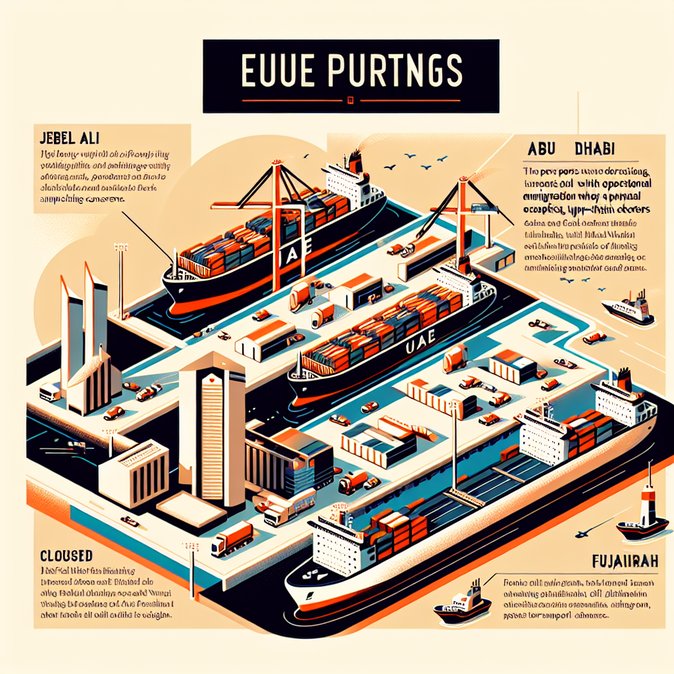
Lloyd’s List’s 10 March Middle East operational update confirms that all major commercial ports in the United Arab Emirates—including Jebel Ali, Khor Fakkan and Abu Dhabi facilities—are open and working at International Ship & Port Facility Security (ISPS) Level 1. The notable exception is the Fujairah Oil Tanker Terminal, where operations were suspended in the early hours of 9 March following debris damage linked to regional missile activity.
While cargo loading for ADNOC’s Murban crude continues via the Single-Point Mooring facility, shipowners are rerouting some bunker calls to Sohar (Oman) and Jebel Ali to avoid potential delays. Inchcape Shipping Services has also issued a navigational warning about intermittent GPS jamming off Fujairah, advising masters to switch to radar overlay and celestial fallback as necessary.
For global mobility managers moving project crews, the key takeaway is that crew changes at Fujairah remain restricted until the terminal reopens. However, Abu Dhabi and Dubai immigration checkpoints are processing seafarer visas as normal, provided agents submit negative security-screening certificates 48 hours in advance.
![Fujairah tanker terminal still offline as UAE ports otherwise operate normally]()
If your organisation needs rapid, reliable support with UAE seafarer or short-term business visas, VisaHQ can streamline the entire process online—submitting applications, tracking approvals and coordinating passport logistics worldwide. Explore service options at https://www.visahq.com/united-arab-emirates/
Shippers moving time-sensitive pharmaceuticals and electronics through Jebel Ali report no berth congestion; average dwell time is just under 1.2 days, according to port community-system data. Nevertheless, insurance underwriters continue to classify the Strait of Hormuz as "high risk," and war-risk premiums for tankers have risen by 20 % week-on-week.
Port authorities say further advisories will be issued if missile debris recovery hampers navigation channels or if additional cyber disruptions are detected on ECDIS networks.
While cargo loading for ADNOC’s Murban crude continues via the Single-Point Mooring facility, shipowners are rerouting some bunker calls to Sohar (Oman) and Jebel Ali to avoid potential delays. Inchcape Shipping Services has also issued a navigational warning about intermittent GPS jamming off Fujairah, advising masters to switch to radar overlay and celestial fallback as necessary.
For global mobility managers moving project crews, the key takeaway is that crew changes at Fujairah remain restricted until the terminal reopens. However, Abu Dhabi and Dubai immigration checkpoints are processing seafarer visas as normal, provided agents submit negative security-screening certificates 48 hours in advance.

If your organisation needs rapid, reliable support with UAE seafarer or short-term business visas, VisaHQ can streamline the entire process online—submitting applications, tracking approvals and coordinating passport logistics worldwide. Explore service options at https://www.visahq.com/united-arab-emirates/
Shippers moving time-sensitive pharmaceuticals and electronics through Jebel Ali report no berth congestion; average dwell time is just under 1.2 days, according to port community-system data. Nevertheless, insurance underwriters continue to classify the Strait of Hormuz as "high risk," and war-risk premiums for tankers have risen by 20 % week-on-week.
Port authorities say further advisories will be issued if missile debris recovery hampers navigation channels or if additional cyber disruptions are detected on ECDIS networks.