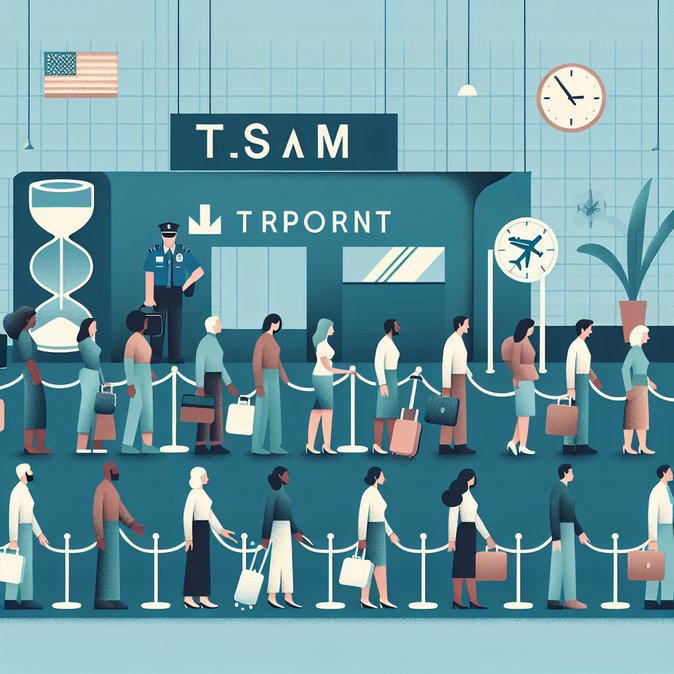
Ballooning security queues snarled spring-break travel across the United States on Sunday and Monday, March 8–9, as the month-old Department of Homeland Security funding lapse forced thousands of Transportation Security Administration officers to work without pay—or to call in sick. At Hartsfield-Jackson Atlanta and New Orleans Armstrong airports, average wait times hit 60 minutes, with peak lines stretching well beyond two hours, according to TSA checkpoint-throughput data released March 9.
![Partial DHS Shutdown Triggers Hours-Long TSA Lines at Major U.S. Airports]()
Amid such uncertainty, travelers can gain peace of mind by ensuring their travel documents are in perfect order. VisaHQ’s online platform (https://www.visahq.com/united-states/) can expedite visa and passport processing, deliver real-time status updates, and offer personalized alerts—resources that become invaluable when last-minute itinerary changes are triggered by TSA or CBP slowdowns.
Dallas/Fort Worth, Orlando, and Denver also reported significant delays, leading airlines to waive same-day change fees and urge passengers to arrive three hours early. The shutdown stems from an impasse over immigration funding riders: the House passed a DHS bill that preserves Border Patrol overtime and ICE detention funding, but the Senate has yet to vote. Until appropriations pass, TSA officers remain unpaid, and Customs and Border Protection faces overtime caps that could slow international arrivals processing. Corporate-travel managers should build extra buffer time into March and early-April itineraries and remind travelers that TSA PreCheck lanes may close unexpectedly when staffing falls below minimums. Companies with high-volume road-warrior populations are also encouraged to monitor MyTSA and CBP’s airport wait-time dashboards in real time. If the shutdown persists, experts warn that CBP Global Entry enrollment centers could suspend interviews, compounding the backlog for trusted-traveler renewals—a knock-on effect that would ripple well beyond the funding stalemate’s eventual resolution.

Amid such uncertainty, travelers can gain peace of mind by ensuring their travel documents are in perfect order. VisaHQ’s online platform (https://www.visahq.com/united-states/) can expedite visa and passport processing, deliver real-time status updates, and offer personalized alerts—resources that become invaluable when last-minute itinerary changes are triggered by TSA or CBP slowdowns.
Dallas/Fort Worth, Orlando, and Denver also reported significant delays, leading airlines to waive same-day change fees and urge passengers to arrive three hours early. The shutdown stems from an impasse over immigration funding riders: the House passed a DHS bill that preserves Border Patrol overtime and ICE detention funding, but the Senate has yet to vote. Until appropriations pass, TSA officers remain unpaid, and Customs and Border Protection faces overtime caps that could slow international arrivals processing. Corporate-travel managers should build extra buffer time into March and early-April itineraries and remind travelers that TSA PreCheck lanes may close unexpectedly when staffing falls below minimums. Companies with high-volume road-warrior populations are also encouraged to monitor MyTSA and CBP’s airport wait-time dashboards in real time. If the shutdown persists, experts warn that CBP Global Entry enrollment centers could suspend interviews, compounding the backlog for trusted-traveler renewals—a knock-on effect that would ripple well beyond the funding stalemate’s eventual resolution.