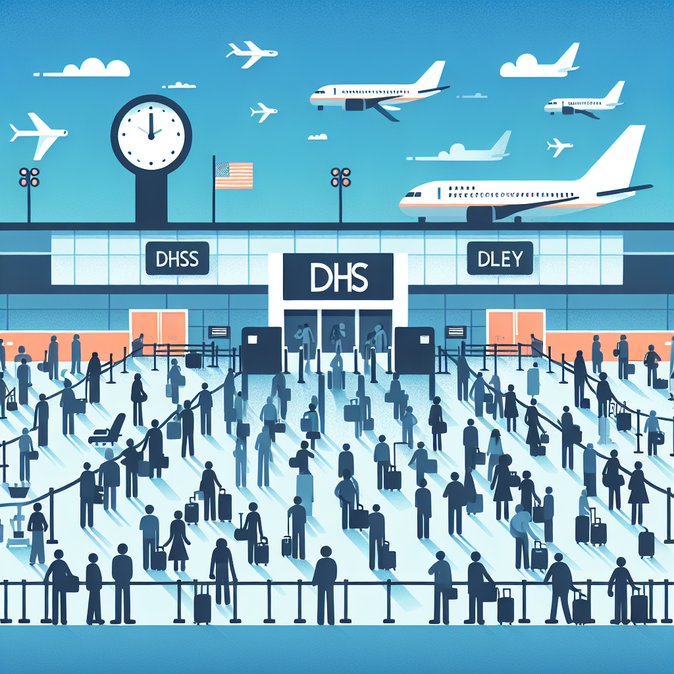
Airports across the United States experienced three- to five-hour security lines on 8-9 March as the partial shutdown of the Department of Homeland Security entered its fourth week. CNN footage from Houston Hobby and New Orleans Louis Armstrong airports showed queues snaking into parking garages, while Atlanta and Charlotte urged passengers to arrive “no less than four hours before departure.”(abc17news.com)
The staffing crunch stems from unpaid Transportation Security Administration (TSA) officers calling in sick after missing their first full paycheck. Although TSA Pre-Check lanes remain open, DHS has suspended Global Entry and other trusted-traveler enrollment and re-entry kiosks to redeploy officers to standard checkpoints. Airlines for America warned that the slowdown could cost carriers millions in re-booking fees and threaten on-time performance metrics during the busy spring-break period.
While DHS programs like Global Entry are paused, travelers can still take proactive steps on the documentation side. VisaHQ’s online platform (https://www.visahq.com/united-states/) provides expedited visa and passport services for more than 200 destinations, allowing road-warriors to secure the papers they need even when government channels are backlogged. The company’s specialists monitor embassy alerts in real time, so customers can re-route itineraries or swap passports seamlessly if shutdown turbulence spreads internationally.
![Hours-Long TSA Lines and Global Entry Shutdown Disrupt Spring-Break Travel as DHS Funding Lapses]()
Business travelers face two major pain points. First, missed connections jeopardize tight meeting schedules and could incur additional hotel costs. Second, the Global Entry suspension negates a key perk for frequent international flyers, forcing them into regular CBP queues on arrival. Companies with heavy cross-border traffic should advise employees to build extra layover buffers and carry portable hotspots so work can continue while waiting in line.
From a policy perspective, the episode highlights how immigration funding fights spill into travel operations. Industry groups are lobbying Congress for an immediate continuing-resolution carve-out for TSA salaries, arguing that the travel economy—contributing an estimated $1.9 trillion to U.S. GDP—should not be collateral damage in a border-security standoff.
Unless lawmakers reach agreement before 14 March, TSA agents will forgo yet another paycheck, raising the risk of broader absenteeism and prompting contingency discussions about National Guard support. Mobility managers should monitor airport-specific wait-time dashboards and consider shifting critical trips to less-congested hubs or videoconference alternatives until DHS is funded.
The staffing crunch stems from unpaid Transportation Security Administration (TSA) officers calling in sick after missing their first full paycheck. Although TSA Pre-Check lanes remain open, DHS has suspended Global Entry and other trusted-traveler enrollment and re-entry kiosks to redeploy officers to standard checkpoints. Airlines for America warned that the slowdown could cost carriers millions in re-booking fees and threaten on-time performance metrics during the busy spring-break period.
While DHS programs like Global Entry are paused, travelers can still take proactive steps on the documentation side. VisaHQ’s online platform (https://www.visahq.com/united-states/) provides expedited visa and passport services for more than 200 destinations, allowing road-warriors to secure the papers they need even when government channels are backlogged. The company’s specialists monitor embassy alerts in real time, so customers can re-route itineraries or swap passports seamlessly if shutdown turbulence spreads internationally.

Business travelers face two major pain points. First, missed connections jeopardize tight meeting schedules and could incur additional hotel costs. Second, the Global Entry suspension negates a key perk for frequent international flyers, forcing them into regular CBP queues on arrival. Companies with heavy cross-border traffic should advise employees to build extra layover buffers and carry portable hotspots so work can continue while waiting in line.
From a policy perspective, the episode highlights how immigration funding fights spill into travel operations. Industry groups are lobbying Congress for an immediate continuing-resolution carve-out for TSA salaries, arguing that the travel economy—contributing an estimated $1.9 trillion to U.S. GDP—should not be collateral damage in a border-security standoff.
Unless lawmakers reach agreement before 14 March, TSA agents will forgo yet another paycheck, raising the risk of broader absenteeism and prompting contingency discussions about National Guard support. Mobility managers should monitor airport-specific wait-time dashboards and consider shifting critical trips to less-congested hubs or videoconference alternatives until DHS is funded.