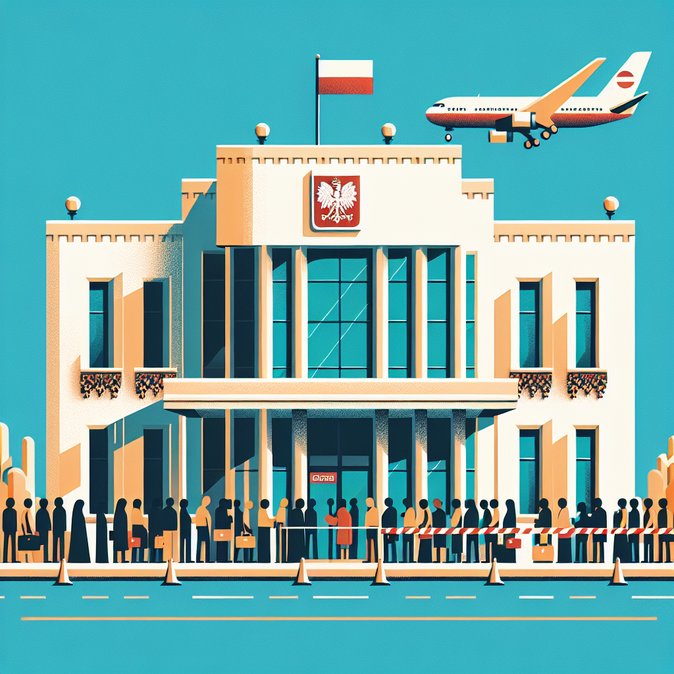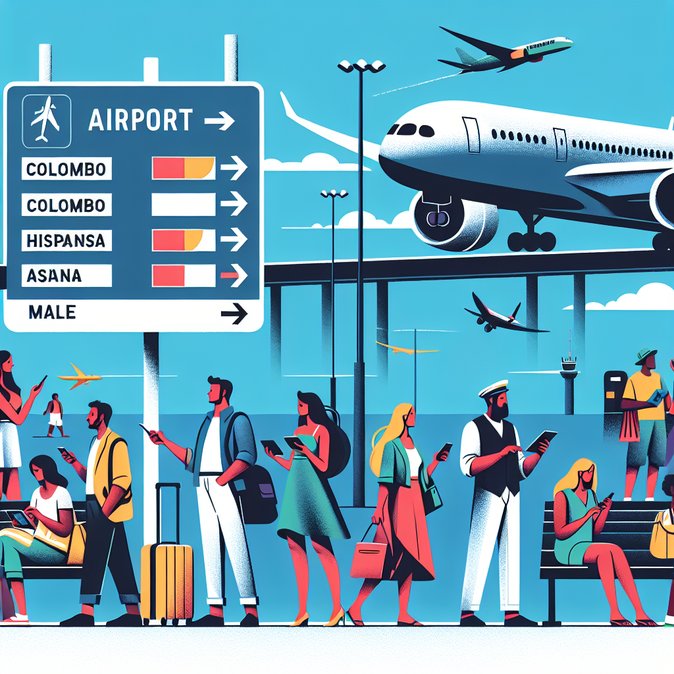
Poland’s flag-carrier LOT Polish Airlines has added two one-off Dreamliner rotations from Sri Lanka’s Bandaranaike International Airport and the Maldives’ Velana International Airport to Warsaw Chopin on 10 March after hundreds of Polish package-holiday tourists found themselves stranded when Middle-East airspace closures forced widespread schedule cancellations over the weekend.
According to aviation portal Aviation.Direct, the ad-hoc services were put together overnight on 9 March in coordination with the Polish Foreign Ministry and several large outbound tour operators. Seat allocation is being prioritised for travellers whose packages were booked through partner agencies such as Itaka, Rainbow and TUI; any residual capacity will be released to independent travellers via LOT Travel.
LOT is expected to deploy 294-seat Boeing 787-8 aircraft on both sectors, allowing the carrier to keep operations outside the Persian Gulf’s conflict zone while still providing nonstop lift to Warsaw. Travellers will be issued emergency one-way tickets that include a checked-baggage waiver and humanitarian re-routing protection should the regional security picture deteriorate further.
![LOT sets up special Colombo–Warsaw and Malé–Warsaw repatriation flights for 10 March]()
Travellers scrambling to adjust documentation at short notice can also turn to VisaHQ, which offers rapid visa and passport services worldwide. Its Poland-dedicated portal (https://www.visahq.com/poland/) enables quick extensions, replacements, or fresh e-visa applications, providing stranded tourists and corporate mobility teams with 24/7 support when flight plans change suddenly.
The operation is part of Warsaw’s wider evacuation effort from the broader Middle East, where hostilities between Iran and Israel have caused multiple Gulf states to shut or severely curtail their airspace. Polish consular staff in Colombo and Malé will escort passengers through airport formalities, and the airline says further rescue flights may follow if demand or the security situation requires.
For global-mobility managers the episode is a reminder to map secondary evacuation hubs for assignees vacationing outside Europe’s traditional business corridors. Companies are being urged to check that their travel-risk providers can trigger “lift-and-shift” options via charter or government-backed flights when scheduled capacity evaporates overnight.
According to aviation portal Aviation.Direct, the ad-hoc services were put together overnight on 9 March in coordination with the Polish Foreign Ministry and several large outbound tour operators. Seat allocation is being prioritised for travellers whose packages were booked through partner agencies such as Itaka, Rainbow and TUI; any residual capacity will be released to independent travellers via LOT Travel.
LOT is expected to deploy 294-seat Boeing 787-8 aircraft on both sectors, allowing the carrier to keep operations outside the Persian Gulf’s conflict zone while still providing nonstop lift to Warsaw. Travellers will be issued emergency one-way tickets that include a checked-baggage waiver and humanitarian re-routing protection should the regional security picture deteriorate further.

Travellers scrambling to adjust documentation at short notice can also turn to VisaHQ, which offers rapid visa and passport services worldwide. Its Poland-dedicated portal (https://www.visahq.com/poland/) enables quick extensions, replacements, or fresh e-visa applications, providing stranded tourists and corporate mobility teams with 24/7 support when flight plans change suddenly.
The operation is part of Warsaw’s wider evacuation effort from the broader Middle East, where hostilities between Iran and Israel have caused multiple Gulf states to shut or severely curtail their airspace. Polish consular staff in Colombo and Malé will escort passengers through airport formalities, and the airline says further rescue flights may follow if demand or the security situation requires.
For global-mobility managers the episode is a reminder to map secondary evacuation hubs for assignees vacationing outside Europe’s traditional business corridors. Companies are being urged to check that their travel-risk providers can trigger “lift-and-shift” options via charter or government-backed flights when scheduled capacity evaporates overnight.