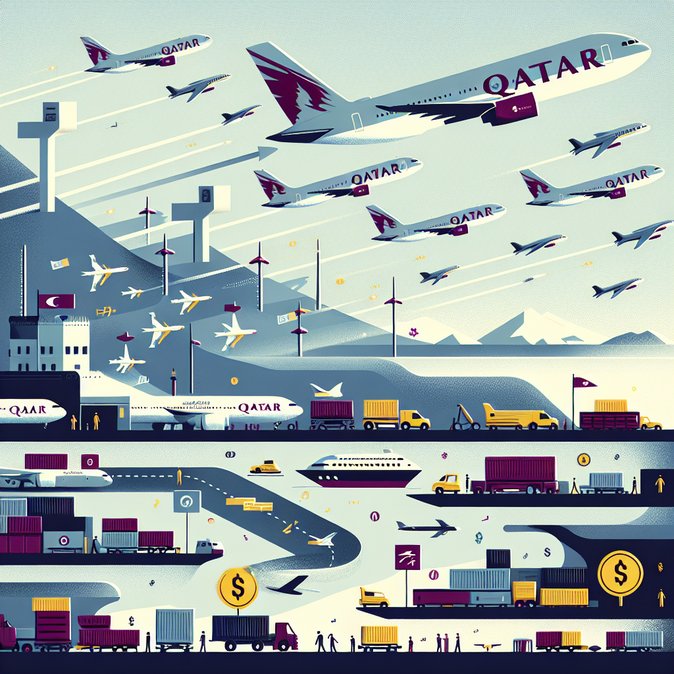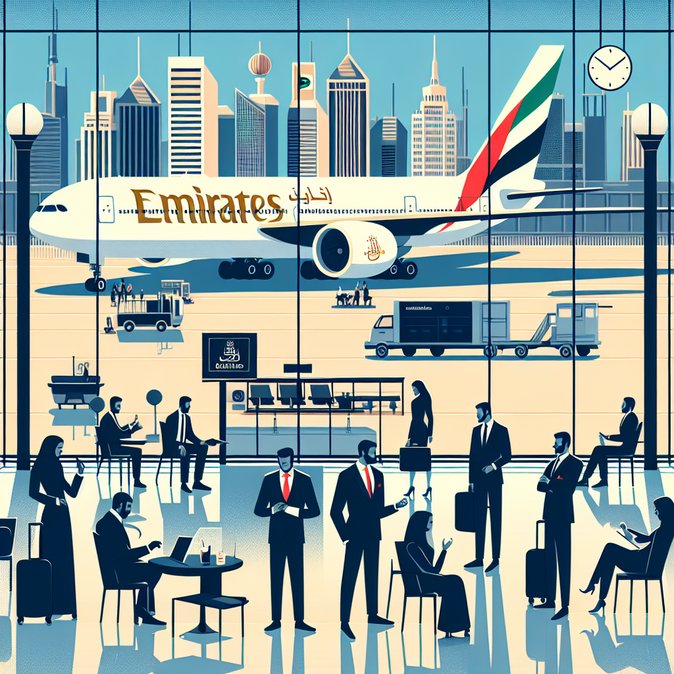
São Paulo/Guarulhos International Airport (GRU) confirmed on 8 March 2026 that operations to the Middle East are slowly resuming following a week-long suspension caused by the Iran–US/Israel escalation. The first Emirates rotation to Dubai touched down without incident on 7 March, providing a critical bridge for stranded leisure and corporate travellers. Qatar Airways, by contrast, continues to keep its Doha schedule on hold pending clearance from the Qatar Civil Aviation Authority, which is assessing ballistic-missile risks over the Gulf.
Airport authorities report that 57 departures and arrivals were cancelled between 28 February and 6 March, affecting roughly 14,000 passengers. Airlines have set up temporary rebooking desks in Terminal 3, while GRU has extended free Wi-Fi and opened additional lounge space for disrupted premium-class travellers. The Brazilian National Civil Aviation Agency (ANAC) has reminded carriers of their statutory obligation to offer refunds or complete re-routing at no extra cost when delays exceed four hours.
Security briefings issued jointly by ANAC and the Federal Police instruct passengers to remain within designated landside zones and to monitor official channels for updates. Travellers connecting onward to North Africa and Asia have been advised to check visa requirements, as rerouting via Europe could trigger transit-visa obligations not previously planned for.
![Guarulhos Airport begins partial restart of Middle-East flights after 57 cancellations]()
For travellers unsure whether a last-minute itinerary change will now require a Schengen, UK, or other transit visa, VisaHQ can provide rapid, country-specific guidance and online application processing. The service’s Brazil portal (https://www.visahq.com/brazil/) lets passengers compare requirements, upload documents, and track approvals in real time—potentially avoiding costly missed connections while regional flight schedules remain fluid.
Corporate mobility teams should proactively contact travellers ticketed on QR and EK services through the end of the week, verify accommodation arrangements, and update travel-approval systems so that any itinerary touching the Middle East triggers enhanced review. Insurance providers have confirmed that standard corporate travel policies remain valid as the conflict has not yet been classified as “war” under most policy wordings.
While aviation analysts expect Qatar Airways to restore a limited schedule within days, full network normalisation may take several weeks. Capacity shortfalls could drive a temporary fare spike of 15-20 per cent on Brazil–Middle East sectors, a cost that businesses should factor into second-quarter travel budgets.
Airport authorities report that 57 departures and arrivals were cancelled between 28 February and 6 March, affecting roughly 14,000 passengers. Airlines have set up temporary rebooking desks in Terminal 3, while GRU has extended free Wi-Fi and opened additional lounge space for disrupted premium-class travellers. The Brazilian National Civil Aviation Agency (ANAC) has reminded carriers of their statutory obligation to offer refunds or complete re-routing at no extra cost when delays exceed four hours.
Security briefings issued jointly by ANAC and the Federal Police instruct passengers to remain within designated landside zones and to monitor official channels for updates. Travellers connecting onward to North Africa and Asia have been advised to check visa requirements, as rerouting via Europe could trigger transit-visa obligations not previously planned for.

For travellers unsure whether a last-minute itinerary change will now require a Schengen, UK, or other transit visa, VisaHQ can provide rapid, country-specific guidance and online application processing. The service’s Brazil portal (https://www.visahq.com/brazil/) lets passengers compare requirements, upload documents, and track approvals in real time—potentially avoiding costly missed connections while regional flight schedules remain fluid.
Corporate mobility teams should proactively contact travellers ticketed on QR and EK services through the end of the week, verify accommodation arrangements, and update travel-approval systems so that any itinerary touching the Middle East triggers enhanced review. Insurance providers have confirmed that standard corporate travel policies remain valid as the conflict has not yet been classified as “war” under most policy wordings.
While aviation analysts expect Qatar Airways to restore a limited schedule within days, full network normalisation may take several weeks. Capacity shortfalls could drive a temporary fare spike of 15-20 per cent on Brazil–Middle East sectors, a cost that businesses should factor into second-quarter travel budgets.