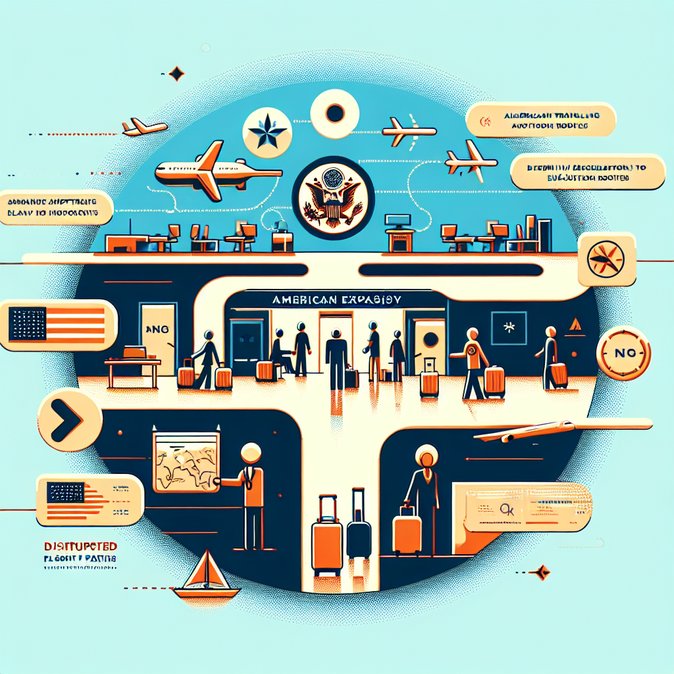
On March 8 the U.S. Embassy in Amman issued an after-hours security alert advising Americans in Jordan to “remain vigilant and consider departing the Middle East.” The embassy cited unspecified credible threats linked to the widening conflict with Iran and noted that protests could erupt with little warning near diplomatic compounds and tourist sites.
The advisory is particularly significant for global mobility programs because Jordan is a key location for regional project staging and refugee-response work. Thousands of U.S. employees for defense contractors, humanitarian NGOs and tech firms rotate through Amman each month under short-term work permits. The embassy’s alert states that routine consular services remain available but warns that staff capacity could be reduced without notice.
Travel suppliers report that one-way fares from Amman to European hubs have doubled in 24 hours as expatriates scramble to book seats.
![Jordan Becomes Latest Hotspot as U.S. Embassy Urges Americans to Depart]()
For travelers who suddenly need to change routes or extend their paperwork, VisaHQ can streamline emergency visa processing, renewals and exit permits entirely online. Its U.S. portal (https://www.visahq.com/united-states/) offers real-time document checklists and country alerts, allowing mobility managers to secure compliant travel documentation even when local embassies reduce in-person services.
The State Department says it is working with Royal Jordanian and U.S. carriers to keep commercial options open, but contingency charter flights may be authorized if conditions deteriorate.
Companies should immediately confirm the whereabouts of all travelers and assignees, update emergency contact details, and verify that local employees can access cash and secure internet in the event of curfews. HR teams should also remind U.S. citizens to enroll in STEP and maintain digital copies of immigration documents in case embassy access is curtailed.
Longer term, assignment planners will need to factor Jordan’s elevated risk rating into cost-of-living allowances and insurance coverages, potentially diverting regional meetings to safer hubs such as Doha or Riyadh once conditions stabilize.
The advisory is particularly significant for global mobility programs because Jordan is a key location for regional project staging and refugee-response work. Thousands of U.S. employees for defense contractors, humanitarian NGOs and tech firms rotate through Amman each month under short-term work permits. The embassy’s alert states that routine consular services remain available but warns that staff capacity could be reduced without notice.
Travel suppliers report that one-way fares from Amman to European hubs have doubled in 24 hours as expatriates scramble to book seats.

For travelers who suddenly need to change routes or extend their paperwork, VisaHQ can streamline emergency visa processing, renewals and exit permits entirely online. Its U.S. portal (https://www.visahq.com/united-states/) offers real-time document checklists and country alerts, allowing mobility managers to secure compliant travel documentation even when local embassies reduce in-person services.
The State Department says it is working with Royal Jordanian and U.S. carriers to keep commercial options open, but contingency charter flights may be authorized if conditions deteriorate.
Companies should immediately confirm the whereabouts of all travelers and assignees, update emergency contact details, and verify that local employees can access cash and secure internet in the event of curfews. HR teams should also remind U.S. citizens to enroll in STEP and maintain digital copies of immigration documents in case embassy access is curtailed.
Longer term, assignment planners will need to factor Jordan’s elevated risk rating into cost-of-living allowances and insurance coverages, potentially diverting regional meetings to safer hubs such as Doha or Riyadh once conditions stabilize.