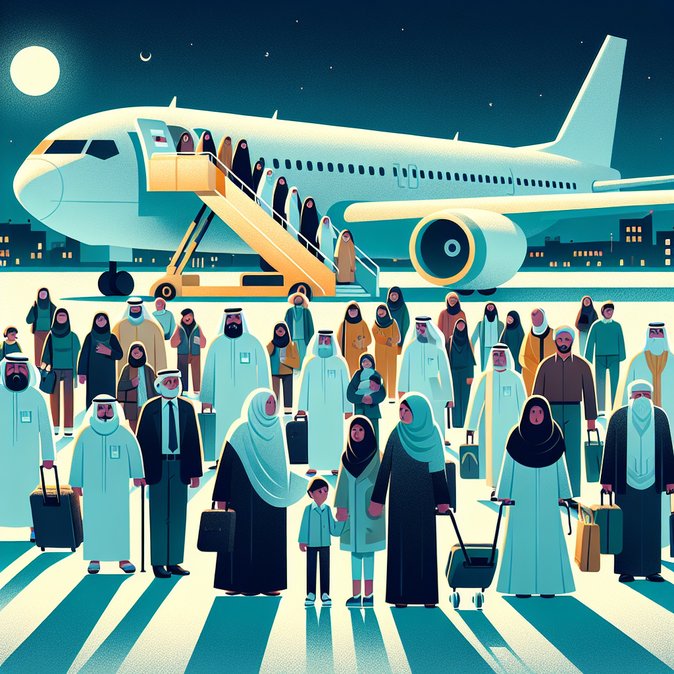
Families filled the arrivals hall of Dublin Airport with cheers and tears on Sunday night, 8 March 2026, as a special charter flight from Muscat finally touched down. The Airbus A330—leased by the Department of Foreign Affairs (DFA) after a week of war-related air-space closures across the Gulf—carried 189 Irish citizens and permanent residents, including 34 children and six infants. The aircraft routed Muscat-Cairo-Dublin to avoid conflict zones and to allow an additional fuel stop that kept it clear of Iranian and Iraqi FIRs. Foreign Affairs Minister Helen McEntee said the operation was mounted after more than 24,000 Irish nationals used the DFA’s TravelWise portal to register their presence in the region. Priority was given to people with medical needs, young families, and those who had lost onward flight options when Emirates, Etihad and Qatar Airways suspended most services on 28 February. DFA staff phoned every vulnerable traveller individually to confirm bus transfers across the desert from Dubai and Abu Dhabi to Muscat, where Omani authorities waived visa fees for the evacuees. The crisis flight underlines how quickly corporate mobility plans can unravel when a hub closes.
Irish multinationals with staff in the Gulf were forced to re-route via Istanbul, Delhi or European points, often at double the usual fare and with duty-of-care implications. Employment-law specialists Mason Hayes & Curran note that employers must reimburse reasonable costs when repatriating staff from a conflict zone, and should update travel-risk policies to cover charter options and emergency cash advances. In parallel, the Department has activated a dedicated Consular Crisis Team reachable 24/7, and urged citizens still in the Gulf to register online. While commercial flights are gradually resuming, the DFA warns that airspace restrictions can change without notice.
![First Government Evacuation Flight From Oman Brings 189 Irish Citizens Safely Home]()
Mobility managers are advised to keep travellers on flexible tickets, monitor NOTAMs, and remind employees that overstaying a UAE tourist visa incurs daily fines even during force-majeure events.
For individuals and corporate travel teams seeking real-time visa advice and application support amid such fluid situations, specialist platforms like VisaHQ can be invaluable. The service’s Ireland portal (https://www.visahq.com/ireland/) consolidates the latest entry rules, processes online applications, and offers expedited handling—providing travellers and mobility managers with a single point of truth when embassy counters are closed or airlines demand proof of onward permissions.
The successful mission, the first of several planned if demand persists, demonstrates Ireland’s growing capacity to mount complex airlifts. It also highlights a wider trend: governments are increasingly judged on how swiftly they can move people across borders when geopolitical shocks hit. For mobility professionals, charter evacuations are no longer rare exceptions but a scenario that must be built into contingency playbooks.
Irish multinationals with staff in the Gulf were forced to re-route via Istanbul, Delhi or European points, often at double the usual fare and with duty-of-care implications. Employment-law specialists Mason Hayes & Curran note that employers must reimburse reasonable costs when repatriating staff from a conflict zone, and should update travel-risk policies to cover charter options and emergency cash advances. In parallel, the Department has activated a dedicated Consular Crisis Team reachable 24/7, and urged citizens still in the Gulf to register online. While commercial flights are gradually resuming, the DFA warns that airspace restrictions can change without notice.

Mobility managers are advised to keep travellers on flexible tickets, monitor NOTAMs, and remind employees that overstaying a UAE tourist visa incurs daily fines even during force-majeure events.
For individuals and corporate travel teams seeking real-time visa advice and application support amid such fluid situations, specialist platforms like VisaHQ can be invaluable. The service’s Ireland portal (https://www.visahq.com/ireland/) consolidates the latest entry rules, processes online applications, and offers expedited handling—providing travellers and mobility managers with a single point of truth when embassy counters are closed or airlines demand proof of onward permissions.
The successful mission, the first of several planned if demand persists, demonstrates Ireland’s growing capacity to mount complex airlifts. It also highlights a wider trend: governments are increasingly judged on how swiftly they can move people across borders when geopolitical shocks hit. For mobility professionals, charter evacuations are no longer rare exceptions but a scenario that must be built into contingency playbooks.