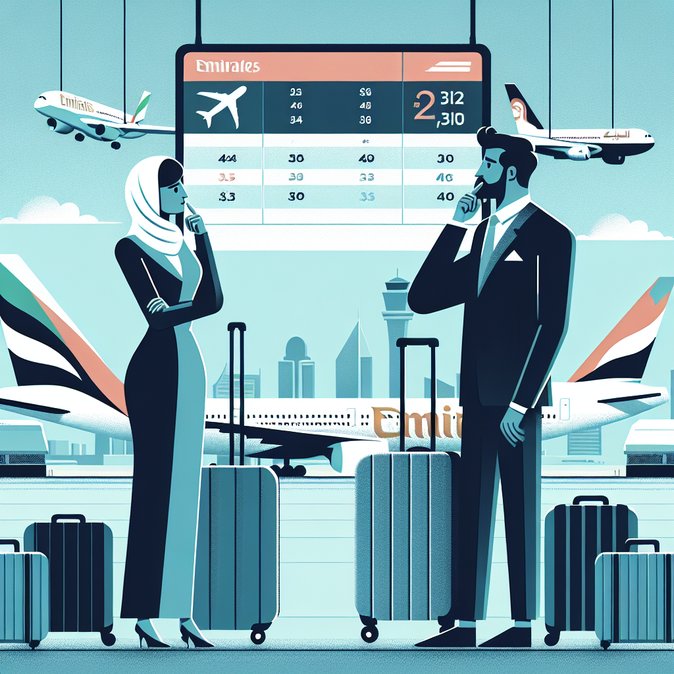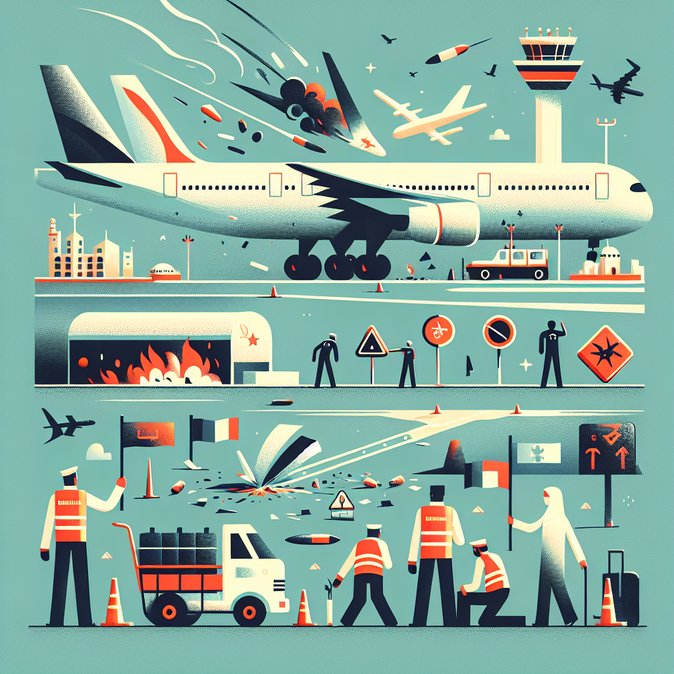
Dubai-based Emirates Airline temporarily halted all services for 30 minutes on March 7 after falling missile debris—shot down by UAE air-defence systems—was detected close to one of its standard approach paths. According to The National, the carrier quickly resumed operations once runways were inspected, but warned customers that aircraft may hold in stacks and that boarding queues will be controlled to avoid terminal congestion.
Dubai International (DXB) and Al Maktoum International (DWC) had themselves paused departures earlier in the morning while emergency teams verified no explosive remnants lay on taxiways. The joint incident illustrated the razor-thin margin between national security measures and aviation continuity as the region’s conflict spills over.
Industry analysts note that Emirates’ cautious communication—first halting check-in “until further notice”, then restarting within the hour—shows the value of real-time crisis SOPs. Corporates with mobility programmes can draw three lessons: keep automated SMS alerting activated for travellers, insist on live flight-status checks before dispatching ground transport, and maintain alternative accommodation near both Dubai airports should last-minute holds be re-imposed.
![Emirates Lifts Brief Suspension After Debris Incident, Dubai Airports Partially Reopen]()
For travellers suddenly rerouting through the UAE, streamlined paperwork can be just as vital as updated flight information. VisaHQ’s dedicated UAE page (https://www.visahq.com/united-arab-emirates/) lets individuals and corporate travel desks arrange visas, passport renewals, and document translations in one dashboard, with real-time status alerts that slot neatly into duty-of-care protocols when itineraries change at the last minute.
Despite the scare, Emirates reiterated its projection of returning to 100 per cent network coverage “within days,” subject to airspace availability. Forward bookings remain strong on evacuated sectors such as Dubai–London and Dubai–Sydney, underscoring the airline’s pivotal role in global staff rotations and supply-chain belly cargo.
The resumption also enabled freight forwarders to clear a backlog of temperature-sensitive pharmaceuticals routed through Dubai’s dedicated cold-chain facilities, averting costly spoilage for life-sciences multinationals.
Dubai International (DXB) and Al Maktoum International (DWC) had themselves paused departures earlier in the morning while emergency teams verified no explosive remnants lay on taxiways. The joint incident illustrated the razor-thin margin between national security measures and aviation continuity as the region’s conflict spills over.
Industry analysts note that Emirates’ cautious communication—first halting check-in “until further notice”, then restarting within the hour—shows the value of real-time crisis SOPs. Corporates with mobility programmes can draw three lessons: keep automated SMS alerting activated for travellers, insist on live flight-status checks before dispatching ground transport, and maintain alternative accommodation near both Dubai airports should last-minute holds be re-imposed.

For travellers suddenly rerouting through the UAE, streamlined paperwork can be just as vital as updated flight information. VisaHQ’s dedicated UAE page (https://www.visahq.com/united-arab-emirates/) lets individuals and corporate travel desks arrange visas, passport renewals, and document translations in one dashboard, with real-time status alerts that slot neatly into duty-of-care protocols when itineraries change at the last minute.
Despite the scare, Emirates reiterated its projection of returning to 100 per cent network coverage “within days,” subject to airspace availability. Forward bookings remain strong on evacuated sectors such as Dubai–London and Dubai–Sydney, underscoring the airline’s pivotal role in global staff rotations and supply-chain belly cargo.
The resumption also enabled freight forwarders to clear a backlog of temperature-sensitive pharmaceuticals routed through Dubai’s dedicated cold-chain facilities, averting costly spoilage for life-sciences multinationals.