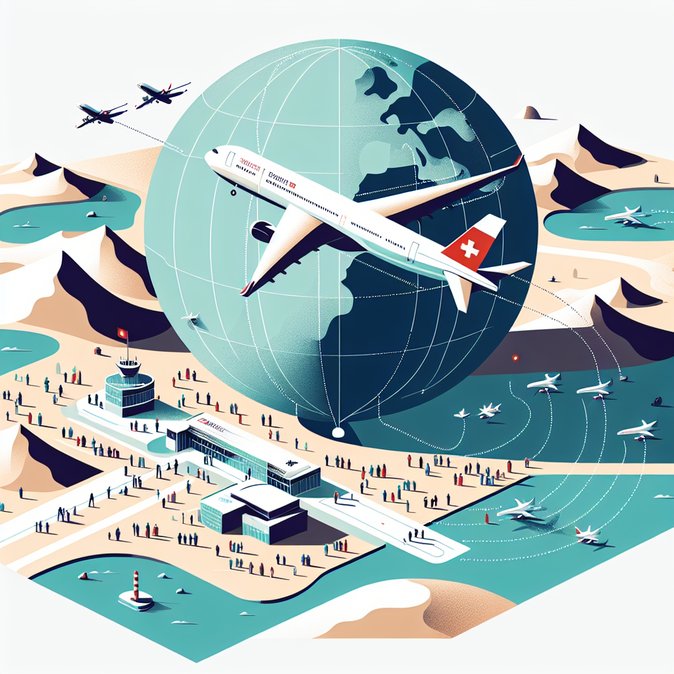
Just hours after two Edelweiss evacuation flights left Oman, Switzerland’s Federal Department of Foreign Affairs (FDFA) signalled on the evening of 7 March that it saw “no current need” for further special rotations – a decision that has angered many of the estimated 4,039 Swiss citizens and residents still scattered across Gulf airports. In a statement quoted by news portal Blue News, the FDFA explained that seats on Saturday’s repatriation services were not fully taken up and that airlines Emirates and Etihad were resuming limited commercial links to Zurich. SWISS had offered to dispatch a second dedicated aircraft but cannot do so without an official request, because evacuation flights require government-to-government permits for over-flight and landing in restricted airspace. Travel-management companies say the mismatch between perceived demand and actual bookings reflects chaotic ground conditions: curfews in Dubai and Abu Dhabi, patchy fuel supplies and rapidly evolving NOTAMs mean travellers often learn of available seats too late to reach departure points.
![Swiss authorities halt additional evacuation flights despite 4,000 still stranded]()
For travellers racing to secure last-minute permissions, VisaHQ’s Swiss portal (https://www.visahq.com/switzerland/) can simplify the paperwork. The service provides up-to-date visa requirements, expedited processing options and live support, helping individuals and corporate mobility teams move quickly when departure windows suddenly open.
Some corporates have begun to charter regional jets into Muscat or Jeddah to position staff for onward evacuation, adding cost and complexity. Airline executives warn that demand could surge again if hostilities intensify or neighbouring airspaces close. Crisis-response consultants therefore recommend that multinational firms keep evacuation decisions under constant review, maintain up-to-date passport scans for employees on assignment and pre-authorise emergency ticket purchases above normal fare caps. From a policy perspective, the FDFA’s stance is consistent with the Swiss Abroad Act, which places the primary onus for safety on the traveller. Nevertheless, political pressure is mounting: the centrist Centre Party called on the Federal Council to “use every diplomatic channel” to secure additional departure windows, while the Swiss People’s Party accused the government of “abdicating its duty of care”. Parliament’s foreign-affairs committees are expected to debate the issue next week.
For travellers racing to secure last-minute permissions, VisaHQ’s Swiss portal (https://www.visahq.com/switzerland/) can simplify the paperwork. The service provides up-to-date visa requirements, expedited processing options and live support, helping individuals and corporate mobility teams move quickly when departure windows suddenly open.
Some corporates have begun to charter regional jets into Muscat or Jeddah to position staff for onward evacuation, adding cost and complexity. Airline executives warn that demand could surge again if hostilities intensify or neighbouring airspaces close. Crisis-response consultants therefore recommend that multinational firms keep evacuation decisions under constant review, maintain up-to-date passport scans for employees on assignment and pre-authorise emergency ticket purchases above normal fare caps. From a policy perspective, the FDFA’s stance is consistent with the Swiss Abroad Act, which places the primary onus for safety on the traveller. Nevertheless, political pressure is mounting: the centrist Centre Party called on the Federal Council to “use every diplomatic channel” to secure additional departure windows, while the Swiss People’s Party accused the government of “abdicating its duty of care”. Parliament’s foreign-affairs committees are expected to debate the issue next week.