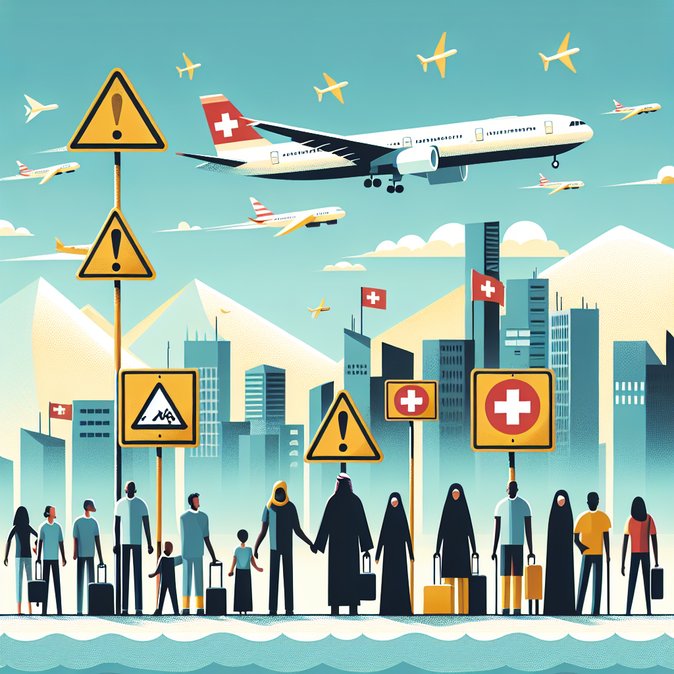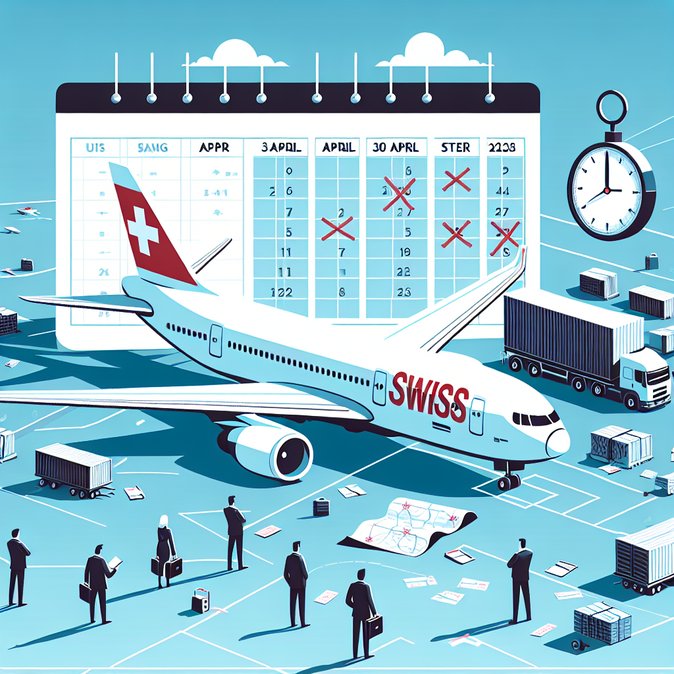
After Thursday’s fully booked Muscat–Zurich special flight, SWISS offered to operate a second evacuation rotation this weekend. According to an exclusive Blue News report published on the evening of 7 March, the FDFA declined to request the service, arguing that it had not logged enough new demand to justify the complex permit process needed to overfly restricted Gulf air-space. (bluewin.ch)
More than 4,000 Swiss nationals remain registered as wishing to leave the region, and critics accuse Bern of relying too heavily on ad-hoc commercial capacity. SWISS says it has a crisis team on standby and can mobilise wide-body aircraft within hours if the ministry secures landing rights, but stresses that air-space closures make advance scheduling “extremely challenging.” (bluewin.ch)
![No Green Light for Second Repatriation Flight as FDFA Cites ‘No Additional Demand’]()
The stalemate is causing frustration among business travellers whose projects in the Emirates and Saudi Arabia cannot be postponed indefinitely. Some have re-routed via Europe or booked seats on partially empty Edelweiss services that Swiss expatriates appear reluctant to use. Mobility consultants warn that fragmented evacuation planning may expose employers to negligence claims should staff become stranded. (bluewin.ch)
Travellers scrambling to re-route also face shifting visa requirements; VisaHQ’s Swiss platform (https://www.visahq.com/switzerland/) can cut through that complexity by giving real-time entry updates and fast application processing, ensuring passengers have the correct documents before any last-minute evacuation flight.
Practically, global employers are advised to monitor seat availability on third-country carriers, pre-clear emergency credit-card limits and brief employees on self-booking rules if FDFA-sanctioned flights fail to materialise. The episode also highlights the importance of embedding government liaison protocols into travel-risk frameworks long before crises erupt. (bluewin.ch)
More than 4,000 Swiss nationals remain registered as wishing to leave the region, and critics accuse Bern of relying too heavily on ad-hoc commercial capacity. SWISS says it has a crisis team on standby and can mobilise wide-body aircraft within hours if the ministry secures landing rights, but stresses that air-space closures make advance scheduling “extremely challenging.” (bluewin.ch)
The stalemate is causing frustration among business travellers whose projects in the Emirates and Saudi Arabia cannot be postponed indefinitely. Some have re-routed via Europe or booked seats on partially empty Edelweiss services that Swiss expatriates appear reluctant to use. Mobility consultants warn that fragmented evacuation planning may expose employers to negligence claims should staff become stranded. (bluewin.ch)
Travellers scrambling to re-route also face shifting visa requirements; VisaHQ’s Swiss platform (https://www.visahq.com/switzerland/) can cut through that complexity by giving real-time entry updates and fast application processing, ensuring passengers have the correct documents before any last-minute evacuation flight.
Practically, global employers are advised to monitor seat availability on third-country carriers, pre-clear emergency credit-card limits and brief employees on self-booking rules if FDFA-sanctioned flights fail to materialise. The episode also highlights the importance of embedding government liaison protocols into travel-risk frameworks long before crises erupt. (bluewin.ch)