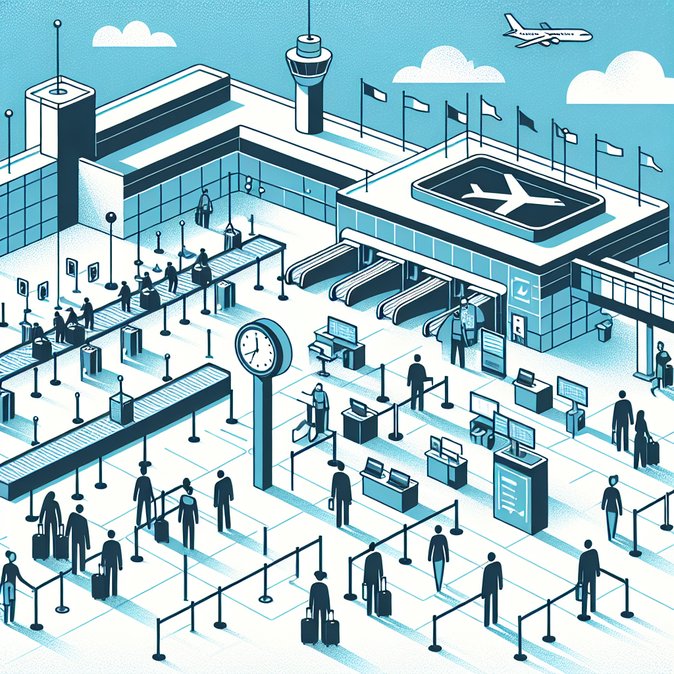
Waiting in an unpredictable airport queue may soon be a thing of the past—if U.S. airports agree to share data. In a Federal Register notice published on 6 March, the Transportation Security Administration (TSA) announced its intent to seek Office of Management and Budget approval for a new information collection dubbed the “Real-Time Wait-Time (RTWT) Dashboarding” program.
Under the proposal, participating airports would transmit aggregated wait-time metrics from each screening lane to TSA every 60 seconds via an API. The agency would ingest the data into an internal dashboard that can flag bottlenecks, redeploy officers and eventually push live estimates to the MyTSA app and digital signage in terminals. TSA argues the initiative will reduce the manual stopwatch sampling officers now perform—freeing staff for screening duties—and give travellers actionable intelligence before they even leave for the airport.
The scheme is voluntary, but TSA’s notice emphasises benefits for airports that join, including priority access to surge staffing and the ability to benchmark performance across hubs of similar size. The data feed contains no personally identifiable information, easing privacy concerns, and airports may use their existing people-counting sensors or third-party queue-management software to supply the numbers.
![TSA Proposes Real-Time Security-Line Dashboard That Airports Can Feed Every 60 Seconds]()
For international travellers, having the correct paperwork is just as important as breezing through security. VisaHQ’s online platform (https://www.visahq.com/united-states/) helps passengers quickly verify entry requirements and obtain visas or ESTA approvals, allowing them to coordinate documentation alongside real-time wait-time insights for a smoother journey.
For corporate travel managers the dashboard could be a game-changer. Integrating live security-line data into booking tools and mobile itineraries would allow travellers to adjust departure times and cut down on paid dwell time. Mobility teams should also watch for knock-on effects on CLEAR or PreCheck lanes if TSA starts publishing lane-level stats.
Comments on the information-collection request are due 45 days after publication. If approved, TSA hopes to pilot the feed at 25 airports before rolling it out nationwide ahead of the 2027 holiday peak.
Under the proposal, participating airports would transmit aggregated wait-time metrics from each screening lane to TSA every 60 seconds via an API. The agency would ingest the data into an internal dashboard that can flag bottlenecks, redeploy officers and eventually push live estimates to the MyTSA app and digital signage in terminals. TSA argues the initiative will reduce the manual stopwatch sampling officers now perform—freeing staff for screening duties—and give travellers actionable intelligence before they even leave for the airport.
The scheme is voluntary, but TSA’s notice emphasises benefits for airports that join, including priority access to surge staffing and the ability to benchmark performance across hubs of similar size. The data feed contains no personally identifiable information, easing privacy concerns, and airports may use their existing people-counting sensors or third-party queue-management software to supply the numbers.

For international travellers, having the correct paperwork is just as important as breezing through security. VisaHQ’s online platform (https://www.visahq.com/united-states/) helps passengers quickly verify entry requirements and obtain visas or ESTA approvals, allowing them to coordinate documentation alongside real-time wait-time insights for a smoother journey.
For corporate travel managers the dashboard could be a game-changer. Integrating live security-line data into booking tools and mobile itineraries would allow travellers to adjust departure times and cut down on paid dwell time. Mobility teams should also watch for knock-on effects on CLEAR or PreCheck lanes if TSA starts publishing lane-level stats.
Comments on the information-collection request are due 45 days after publication. If approved, TSA hopes to pilot the feed at 25 airports before rolling it out nationwide ahead of the 2027 holiday peak.