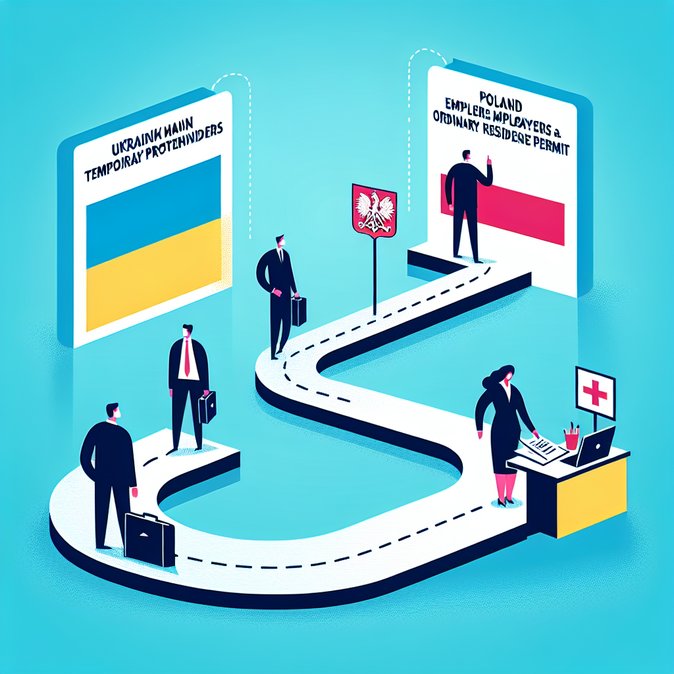
The Polish Ministry of the Interior confirmed on 5 March that Ukrainians who hold a PESEL-UKR number—the identifier created for persons under temporary protection—have exactly twelve months to apply for a standard temporary or permanent residence permit. After 4 March 2027 their war-time status will lapse and they will be treated like other third-country nationals.
Officials stress that the extension gives refugees legal certainty and time to gather documents, but they also caution that failure to regularise in time could jeopardise work rights and access to public services. Around one million Ukrainians currently live in Poland under the PESEL-UKR regime; adding those who arrived before 2022 brings the community to well over 1.5 million.
![Ukrainians in Poland get one year to switch from war-time status to regular residence]()
For employers the countdown means that HR files must be updated over the next year. Where staff intend to seek long-term residence, companies should plan for possible absences due to biometric appointments and be ready to issue amended employment contracts that meet standard permit criteria. Mobility specialists note that early filing is advisable because Poland’s migration offices face chronic backlogs.
To navigate these procedural hurdles, many individuals and companies are turning to VisaHQ, whose Poland portal (https://www.visahq.com/poland/) streamlines residence-permit applications with bilingual guidance, step-by-step checklists, and deadline reminders—helping applicants stay compliant while easing the administrative burden on HR teams.
Refugees will continue to enjoy healthcare on a contributory basis and children retain access to Polish schools, but social-benefit entitlements will narrow in step with the broader phase-out law. NGOs are rolling out information campaigns, yet language barriers and digital-signature requirements remain hurdles for many applicants.
Officials stress that the extension gives refugees legal certainty and time to gather documents, but they also caution that failure to regularise in time could jeopardise work rights and access to public services. Around one million Ukrainians currently live in Poland under the PESEL-UKR regime; adding those who arrived before 2022 brings the community to well over 1.5 million.

For employers the countdown means that HR files must be updated over the next year. Where staff intend to seek long-term residence, companies should plan for possible absences due to biometric appointments and be ready to issue amended employment contracts that meet standard permit criteria. Mobility specialists note that early filing is advisable because Poland’s migration offices face chronic backlogs.
To navigate these procedural hurdles, many individuals and companies are turning to VisaHQ, whose Poland portal (https://www.visahq.com/poland/) streamlines residence-permit applications with bilingual guidance, step-by-step checklists, and deadline reminders—helping applicants stay compliant while easing the administrative burden on HR teams.
Refugees will continue to enjoy healthcare on a contributory basis and children retain access to Polish schools, but social-benefit entitlements will narrow in step with the broader phase-out law. NGOs are rolling out information campaigns, yet language barriers and digital-signature requirements remain hurdles for many applicants.