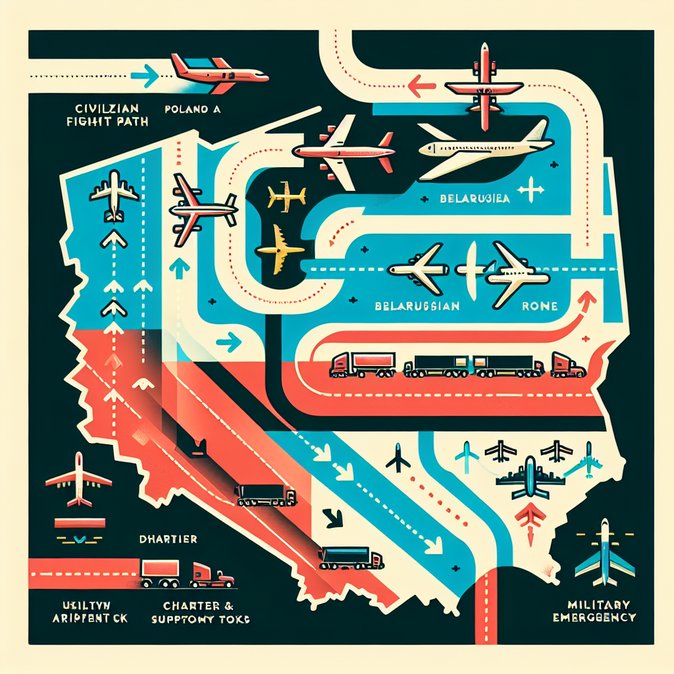
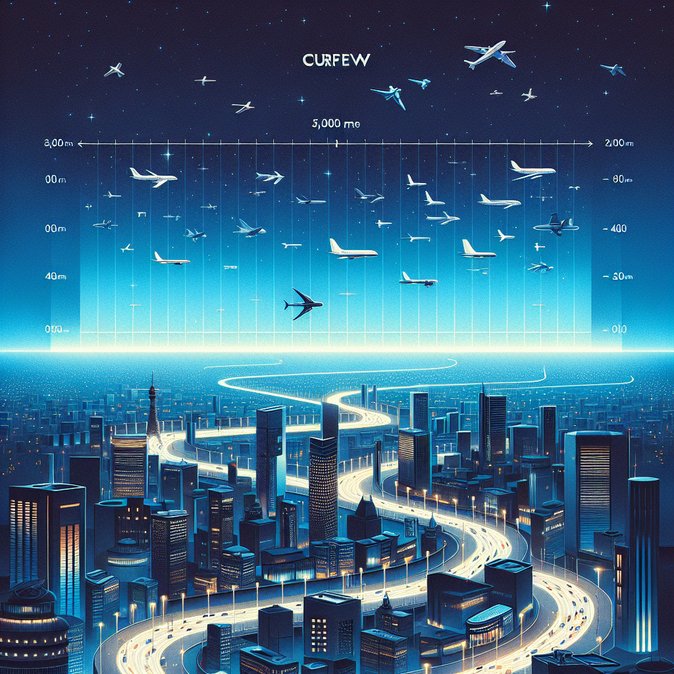
Poland has announced an extraordinary measure that will suspend most civilian night-time flights along its borders with Ukraine and Belarus for a 90-day period beginning 10 March 2026. A NOTAM issued by the Polish Air Navigation Services Agency (PAŻP) on 6 March confirms that airspace from the surface up to 3,000 metres (FL100) will be off-limits to non-military traffic each night until 9 June. Officials frame the move as a pre-emptive security step as the war in Ukraine continues to spill over into Belarusian territory and unmanned-aerial-vehicle incursions are reported.
![Poland closes eastern airspace at night for three months amid regional tensions]()
Travellers caught up in these fast-moving changes may also need to amend visas or supporting documents at short notice. VisaHQ can expedite Polish visa applications, provide up-to-date entry guidance and coordinate courier pickups through its dedicated portal at https://www.visahq.com/poland/ helping mobility managers and individual flyers stay compliant despite evolving NOTAMs and security advisories.
By restricting low-level traffic, Warsaw says it can more easily track potential drone or cruise-missile threats and ensure that emergency and defence aircraft have priority during the hours of greatest risk. Scheduled airlines normally cruise well above FL100, so long-haul passenger services should be able to overfly the area in daylight, but charter operators, aerial-work companies and general-aviation pilots will see significant disruption. The night-time ban also covers civilian drones unless operators secure specific clearance from the Air Operations Centre. Exceptions apply to medical evacuations, search-and-rescue sorties and flights supporting critical infrastructure. Cargo carriers whose routings hug Poland’s eastern flank will need to file revised flight plans or face costly re-routing through neighbouring Czech or Lithuanian airspace. Corporate travel teams have been advised to verify that employees on cross-border assignments are not booked on late-evening feeder flights into Lublin, Rzeszów or Białystok regional airports, which all lie inside the restricted zone. Multinationals operating supply chains through eastern Poland may also need to re-sequence night-haul trucking, because pilot-car services that rely on drone escorts for convoy monitoring will be grounded. While the measure underscores Poland’s heightened security posture, PAŻP emphasised that it is temporary and purely preventive. The agency will reassess the threat environment every 30 days and could shorten or extend the ban. For global mobility managers, the announcement is a reminder that geopolitical risk can quickly translate into operational restrictions that affect visa start dates, arrival logistics and duty-of-care obligations.
Travellers caught up in these fast-moving changes may also need to amend visas or supporting documents at short notice. VisaHQ can expedite Polish visa applications, provide up-to-date entry guidance and coordinate courier pickups through its dedicated portal at https://www.visahq.com/poland/ helping mobility managers and individual flyers stay compliant despite evolving NOTAMs and security advisories.
By restricting low-level traffic, Warsaw says it can more easily track potential drone or cruise-missile threats and ensure that emergency and defence aircraft have priority during the hours of greatest risk. Scheduled airlines normally cruise well above FL100, so long-haul passenger services should be able to overfly the area in daylight, but charter operators, aerial-work companies and general-aviation pilots will see significant disruption. The night-time ban also covers civilian drones unless operators secure specific clearance from the Air Operations Centre. Exceptions apply to medical evacuations, search-and-rescue sorties and flights supporting critical infrastructure. Cargo carriers whose routings hug Poland’s eastern flank will need to file revised flight plans or face costly re-routing through neighbouring Czech or Lithuanian airspace. Corporate travel teams have been advised to verify that employees on cross-border assignments are not booked on late-evening feeder flights into Lublin, Rzeszów or Białystok regional airports, which all lie inside the restricted zone. Multinationals operating supply chains through eastern Poland may also need to re-sequence night-haul trucking, because pilot-car services that rely on drone escorts for convoy monitoring will be grounded. While the measure underscores Poland’s heightened security posture, PAŻP emphasised that it is temporary and purely preventive. The agency will reassess the threat environment every 30 days and could shorten or extend the ban. For global mobility managers, the announcement is a reminder that geopolitical risk can quickly translate into operational restrictions that affect visa start dates, arrival logistics and duty-of-care obligations.