Brazilian travellers received welcome clarity this week after President Luiz Inácio Lula da Silva signed the decree that brings into force the amended short-stay visa-waiver agreement with the European Union. Published on 5 March 2026 as Decree No. 12.864, the accord technically changes only a few words—but they matter.
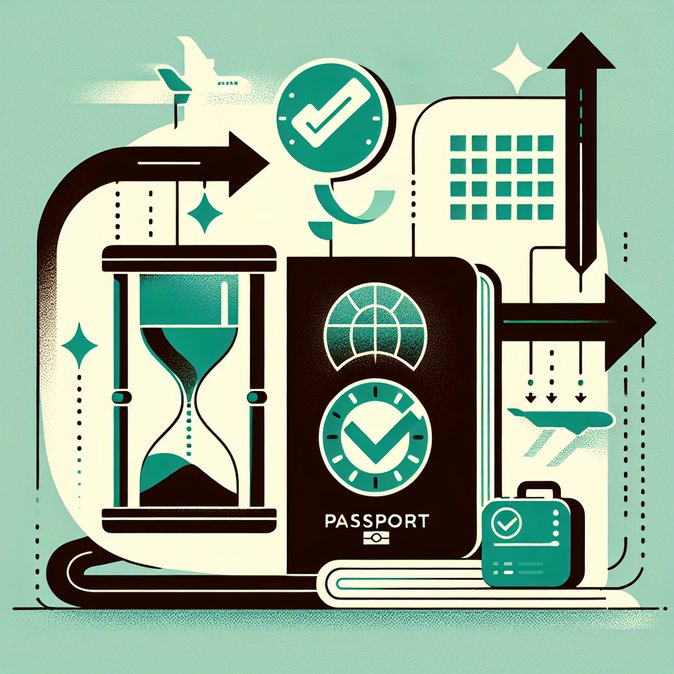
For decades the bilateral text spoke of a right to remain "three months in any six-month period". EU border guards have long interpreted that as 90 days in any rolling 180-day window, but many automated systems and some airlines continued to count calendar months, creating mismatches that occasionally left frequent Brazilian business travellers stranded or fined. By switching the wording to "90 days in any 180-day period", Brasília and Brussels align the legal text with how the rule already works inside the EU’s Visa Code.
Materially, nothing changes for holiday-makers or executives: Brazilian passport-holders keep visa-free access to the 29 Schengen states for up to 90 days of every 180. What does change is legal certainty. Compliance teams in multinational firms can now rely on a clear day-count rather than wrestling with variable-length months, and travel-management systems can automate alerts with less risk of false positives.
![Brazil and EU Formalize New 90-in-180 Rule for Schengen Stays, Preserving Visa-Free Travel]()
The decree also confirms reciprocity for EU citizens visiting Brazil, signalling continuity of Brazil’s open-door stance as the country courts foreign investment and conference business. Looking ahead, companies should plan for the launch of ETIAS, the EU’s electronic travel authorisation expected in Q3 2026. Although still visa-free, Brazilians will need to pre-register and pay a €20 fee before boarding Europe-bound flights—an administrative step that TMCs should build into employee-travel workflows.
Travellers who prefer a single portal to handle these evolving requirements may find VisaHQ’s Brazil desk helpful: the service offers step-by-step online applications, Schengen stay calculators and ETIAS updates tailored for Brazilian passport-holders, all accessible at https://www.visahq.com/brazil/
Immigration advisers recommend that travellers who frequently shuttle between Brazil and Europe start using dedicated 180-day calculators to avoid inadvertent overstays. With Brazil moving to introduce its own e-Visa platforms for selected nationalities, the harmonisation with the EU signals a broader trend: digitisation and data precision are quickly replacing legacy, paper-based border rules.
For decades the bilateral text spoke of a right to remain "three months in any six-month period". EU border guards have long interpreted that as 90 days in any rolling 180-day window, but many automated systems and some airlines continued to count calendar months, creating mismatches that occasionally left frequent Brazilian business travellers stranded or fined. By switching the wording to "90 days in any 180-day period", Brasília and Brussels align the legal text with how the rule already works inside the EU’s Visa Code.
Materially, nothing changes for holiday-makers or executives: Brazilian passport-holders keep visa-free access to the 29 Schengen states for up to 90 days of every 180. What does change is legal certainty. Compliance teams in multinational firms can now rely on a clear day-count rather than wrestling with variable-length months, and travel-management systems can automate alerts with less risk of false positives.

The decree also confirms reciprocity for EU citizens visiting Brazil, signalling continuity of Brazil’s open-door stance as the country courts foreign investment and conference business. Looking ahead, companies should plan for the launch of ETIAS, the EU’s electronic travel authorisation expected in Q3 2026. Although still visa-free, Brazilians will need to pre-register and pay a €20 fee before boarding Europe-bound flights—an administrative step that TMCs should build into employee-travel workflows.
Travellers who prefer a single portal to handle these evolving requirements may find VisaHQ’s Brazil desk helpful: the service offers step-by-step online applications, Schengen stay calculators and ETIAS updates tailored for Brazilian passport-holders, all accessible at https://www.visahq.com/brazil/
Immigration advisers recommend that travellers who frequently shuttle between Brazil and Europe start using dedicated 180-day calculators to avoid inadvertent overstays. With Brazil moving to introduce its own e-Visa platforms for selected nationalities, the harmonisation with the EU signals a broader trend: digitisation and data precision are quickly replacing legacy, paper-based border rules.