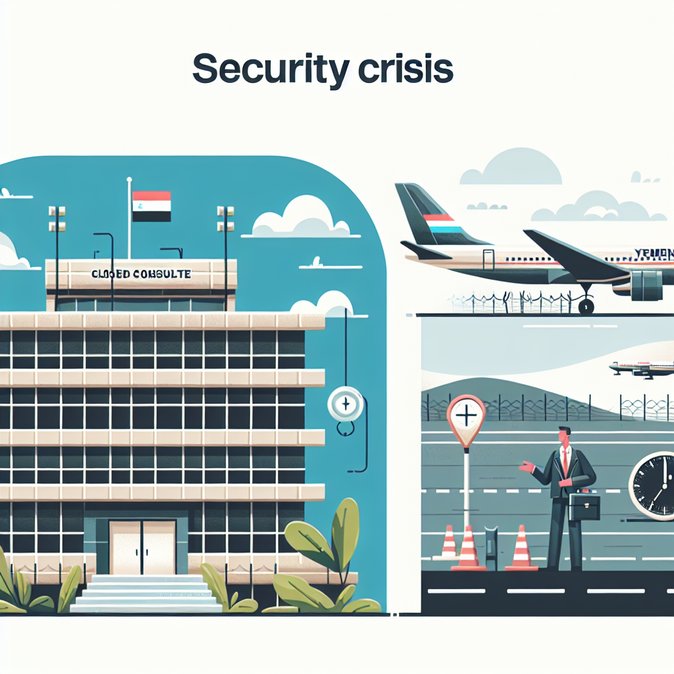
Escalating hostilities in the Middle East have triggered a cascade of U.S. mobility disruptions, according to a detailed legal advisory issued late on March 3. U.S. embassies in Israel, Lebanon, Kuwait and Bahrain have suspended routine visa services; staff in the UAE, Qatar and Saudi Arabia are under ordered-departure status, leaving only skeleton crews to handle emergency passports for evacuations.
The Federal Aviation Administration and EASA have issued “Do Not Fly” notices covering large swaths of regional airspace. Major carriers—from Emirates and Qatar Airways to United and Delta—have either cancelled routes outright or are rerouting intercontinental flights over Africa, adding as much as five hours to journey times between North America and Asia.
![Middle East Escalation Grounds Flights, Shuts US Consulates and Ends TPS for Yemen]()
For travelers suddenly confronted with rerouted flights, cancelled appointments, or the need to shift consular processing to a third country, VisaHQ can streamline the paperwork. Its platform monitors real-time embassy updates and can coordinate alternative U.S. visa or passport solutions through posts that remain operational; visit https://www.visahq.com/united-states/ for details on expedited support.
In the biggest policy move, DHS has terminated Temporary Protected Status (TPS) for Yemen effective May 4 2026. Roughly 1,700 Yemeni nationals in the United States must now find alternative visa categories or prepare to depart. F-1 students from Lebanon and Yemen also face the rollback of Special Student Relief measures that had allowed reduced course loads and expanded off-campus work hours.
Practical guidance from mobility counsel is blunt: 1) avoid business travel to the region, 2) expect indefinite visa-appointment cancellations, 3) register with the Smart Traveler Enrollment Program, and 4) document any travel disruptions to defend future abandonment-of-residency claims. Companies with project teams on the ground are activating contingency plans, including third-country visa processing (e.g., Madrid or Singapore) and remote-work carve-outs until conditions stabilise.
The Federal Aviation Administration and EASA have issued “Do Not Fly” notices covering large swaths of regional airspace. Major carriers—from Emirates and Qatar Airways to United and Delta—have either cancelled routes outright or are rerouting intercontinental flights over Africa, adding as much as five hours to journey times between North America and Asia.
For travelers suddenly confronted with rerouted flights, cancelled appointments, or the need to shift consular processing to a third country, VisaHQ can streamline the paperwork. Its platform monitors real-time embassy updates and can coordinate alternative U.S. visa or passport solutions through posts that remain operational; visit https://www.visahq.com/united-states/ for details on expedited support.
In the biggest policy move, DHS has terminated Temporary Protected Status (TPS) for Yemen effective May 4 2026. Roughly 1,700 Yemeni nationals in the United States must now find alternative visa categories or prepare to depart. F-1 students from Lebanon and Yemen also face the rollback of Special Student Relief measures that had allowed reduced course loads and expanded off-campus work hours.
Practical guidance from mobility counsel is blunt: 1) avoid business travel to the region, 2) expect indefinite visa-appointment cancellations, 3) register with the Smart Traveler Enrollment Program, and 4) document any travel disruptions to defend future abandonment-of-residency claims. Companies with project teams on the ground are activating contingency plans, including third-country visa processing (e.g., Madrid or Singapore) and remote-work carve-outs until conditions stabilise.