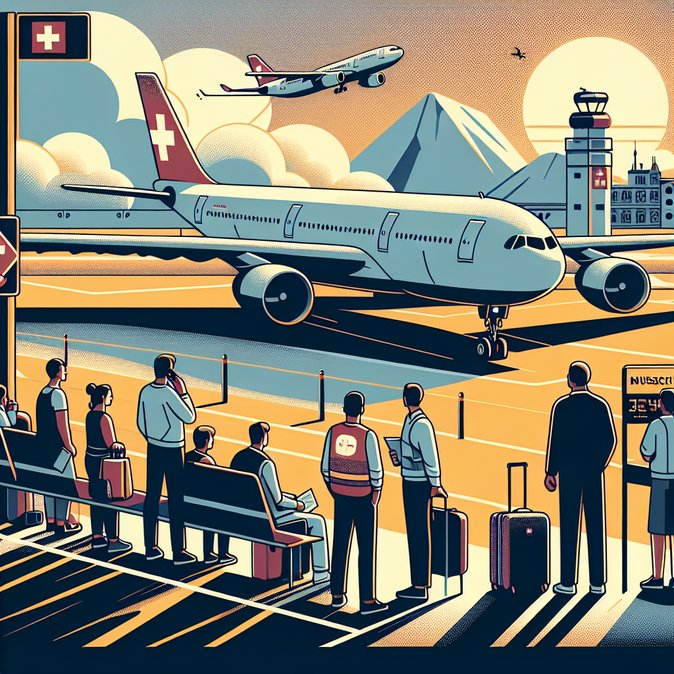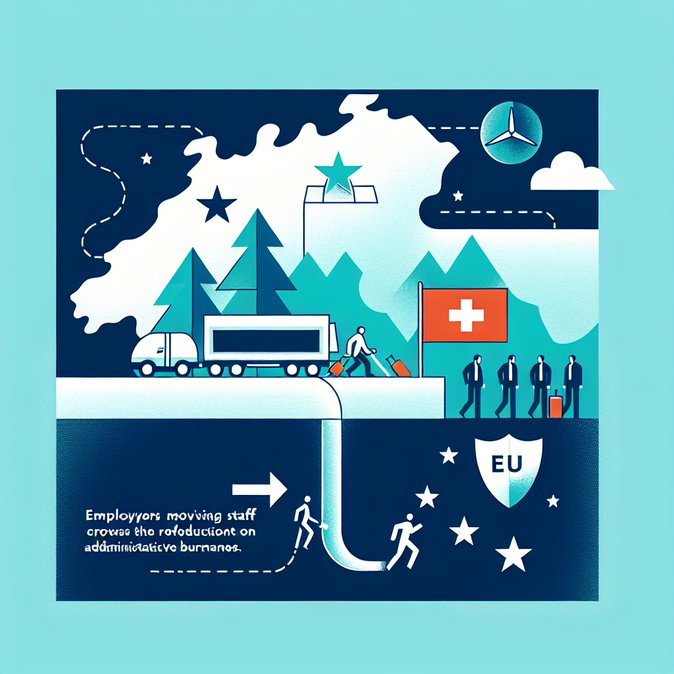
The European Commission and the Swiss Federal Council signed a far-reaching bundle of agreements on 4 March that will modernise existing pacts on air transport, land transport and the Free Movement of Persons while adding new accords on electricity, health, food safety and space cooperation. The package, finalised by Commission President Ursula von der Leyen and Swiss President Guy Parmelin, aims to create “frictionless access” for people and goods between the EU’s 27 member states and Switzerland’s economy of 8.9 million. For global-mobility managers the headline is legal certainty. Updated dispute-resolution clauses and dynamic alignment with future EU legislation should reduce red tape for work-permit holders, medical-device technicians, road-freight operators and cross-border commuters alike.
![EU–Switzerland mega-package promises smoother cross-border mobility]()
Whether you’re arranging short-term technical visits or multi-year strategic assignments, VisaHQ’s Switzerland portal (https://www.visahq.com/switzerland/) can streamline the entire visa and permit process. The platform consolidates the latest entry rules, document checklists and processing timelines, and offers hands-on assistance to ensure employees remain compliant as the new EU-Swiss accords roll out—saving mobility teams time and avoiding costly delays.
A new financial-contribution protocol will fund Switzerland’s participation in cohesion programmes, easing political resistance to labour mobility in neighbouring member states. The deal also unlocks Swiss participation in Erasmus+, Digital Europe and EU4Health, which is expected to streamline intra-company trainee assignments and mutual recognition of professional qualifications. On the infrastructure side, mutual recognition of conformity assessments should simplify the temporary import of specialised equipment for client projects on both sides of the border. Swiss companies must, however, prepare for more stringent state-aid and level-playing-field provisions embedded in the accords. Global-mobility teams should review assignment cost projections and social-security coordination rules as the land-transport and people-movement annexes transition to EU standards. Ratification still needs approval in Bern and Brussels, but observers expect provisional application in key areas as early as 2027—giving multinationals a clear timeline to adapt relocation policies, shadow-payroll setups and posted-worker notifications.

Whether you’re arranging short-term technical visits or multi-year strategic assignments, VisaHQ’s Switzerland portal (https://www.visahq.com/switzerland/) can streamline the entire visa and permit process. The platform consolidates the latest entry rules, document checklists and processing timelines, and offers hands-on assistance to ensure employees remain compliant as the new EU-Swiss accords roll out—saving mobility teams time and avoiding costly delays.
A new financial-contribution protocol will fund Switzerland’s participation in cohesion programmes, easing political resistance to labour mobility in neighbouring member states. The deal also unlocks Swiss participation in Erasmus+, Digital Europe and EU4Health, which is expected to streamline intra-company trainee assignments and mutual recognition of professional qualifications. On the infrastructure side, mutual recognition of conformity assessments should simplify the temporary import of specialised equipment for client projects on both sides of the border. Swiss companies must, however, prepare for more stringent state-aid and level-playing-field provisions embedded in the accords. Global-mobility teams should review assignment cost projections and social-security coordination rules as the land-transport and people-movement annexes transition to EU standards. Ratification still needs approval in Bern and Brussels, but observers expect provisional application in key areas as early as 2027—giving multinationals a clear timeline to adapt relocation policies, shadow-payroll setups and posted-worker notifications.