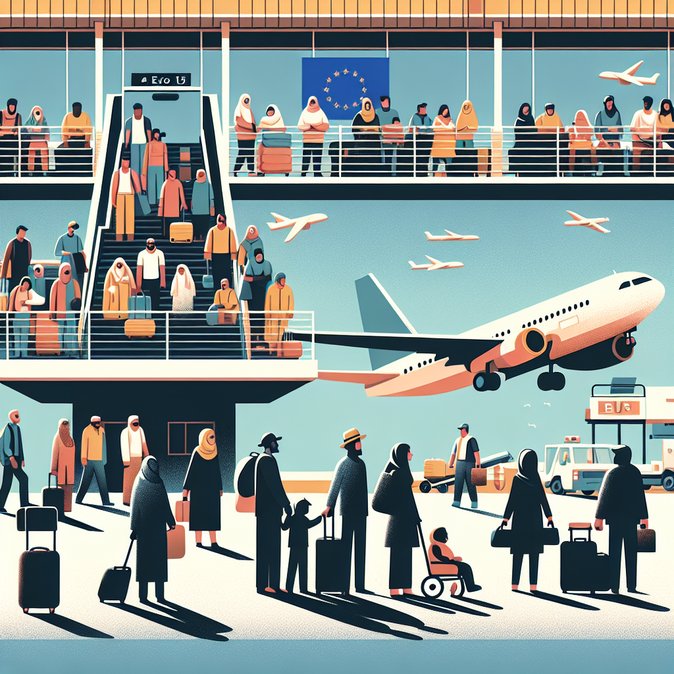
Prime Minister Donald Tusk told reporters after a cabinet meeting on 3 March 2026 that Poland is “logistically ready” to evacuate nationals from the Middle East should the regional security situation deteriorate further. Government aircraft have been reserved exclusively for potential rescue flights and coordination cells are liaising with EU partners on possible multi-country extraction operations. According to Tusk, more than 480 Polish tourists have already departed Israel, Jordan and Lebanon with assistance from tour operators and embassy teams.
![Poland puts evacuation assets on standby as 480 citizens leave conflict hotspots in Middle East]()
For Poles who may still need to update travel documents, secure emergency visas, or arrange alternative routing, VisaHQ offers swift online processing and expert guidance. The platform’s Poland portal (https://www.visahq.com/poland/) connects users with real-time requirements for destinations worldwide and can coordinate last-minute paperwork—support that becomes invaluable when flight options narrow and embassy access is limited.
Roughly 14,000 Polish citizens remain in the United Arab Emirates—by far the largest Polish community in the Gulf—and several hundred are scattered across Thailand and Vietnam after long-haul itineraries were up-ended by the closure of transit hubs such as Dubai. The prime minister stressed that any large-scale airlift would require a “viable landing destination and a clearly identified group of passengers at the right airport at the right time.” He urged travellers to register journeys through the Odyseusz system and to heed Level-3 advisories against non-essential travel to seven Gulf states issued a day earlier by the foreign ministry. For global-mobility managers the developments underscore the need for real-time traveller-tracking and pre-arranged muster points. Companies should confirm that employee profiles in HRIS systems include next-of-kin contacts and passport copies to speed up consular processing if an evacuation order is given. While officials reiterated there is “currently no direct threat” to Poles remaining in the UAE, insurers have begun to impose war-risk premiums on policies covering Bahrain, Qatar and Saudi Arabia—costs likely to trickle down to corporate travel budgets.

For Poles who may still need to update travel documents, secure emergency visas, or arrange alternative routing, VisaHQ offers swift online processing and expert guidance. The platform’s Poland portal (https://www.visahq.com/poland/) connects users with real-time requirements for destinations worldwide and can coordinate last-minute paperwork—support that becomes invaluable when flight options narrow and embassy access is limited.
Roughly 14,000 Polish citizens remain in the United Arab Emirates—by far the largest Polish community in the Gulf—and several hundred are scattered across Thailand and Vietnam after long-haul itineraries were up-ended by the closure of transit hubs such as Dubai. The prime minister stressed that any large-scale airlift would require a “viable landing destination and a clearly identified group of passengers at the right airport at the right time.” He urged travellers to register journeys through the Odyseusz system and to heed Level-3 advisories against non-essential travel to seven Gulf states issued a day earlier by the foreign ministry. For global-mobility managers the developments underscore the need for real-time traveller-tracking and pre-arranged muster points. Companies should confirm that employee profiles in HRIS systems include next-of-kin contacts and passport copies to speed up consular processing if an evacuation order is given. While officials reiterated there is “currently no direct threat” to Poles remaining in the UAE, insurers have begun to impose war-risk premiums on policies covering Bahrain, Qatar and Saudi Arabia—costs likely to trickle down to corporate travel budgets.