U.S. Customs and Border Protection (CBP) has issued a final rule establishing the new Gordie Howe International Bridge between Detroit, Michigan and Windsor, Ontario as a Class A port of entry for immigration purposes and a full customs facility within the Port of Detroit. The rule, published in the Federal Register on 30 January 2026, takes effect on 2 March 2026, clearing the regulatory path for border officers to staff the crossing once construction is finished. The 1.5-mile cable-stay bridge—jointly financed by the Windsor-Detroit Bridge Authority and multiple U.S. and Canadian agencies—will add much-needed capacity to one of North America’s busiest commercial corridors.
![Gordie Howe International Bridge Becomes Class A U.S. Port of Entry, Effective 2 March 2026]()
For travelers and companies coordinating cross-border assignments, online visa and passport platform VisaHQ can streamline the paperwork side of the journey. Its U.S. portal (https://www.visahq.com/united-states/) offers real-time visa requirement checks, application preparation tools, and corporate dashboards that simplify compliance for employees shuttling between Detroit and Windsor or onward to third-country destinations.
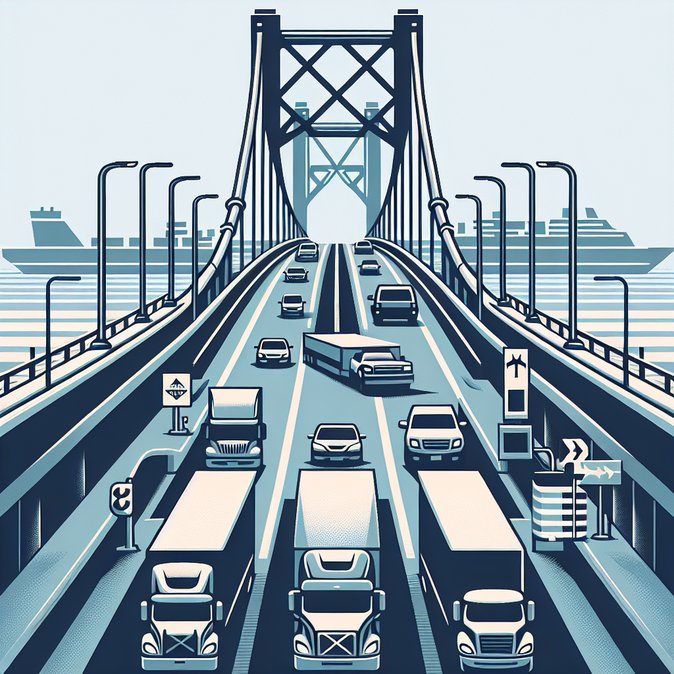
CBP noted that Class A status allows processing of “all aliens,” meaning cars, trucks, buses, and pedestrians can use the span rather than being diverted to the sometimes-congested Ambassador Bridge or Detroit–Windsor Tunnel. For corporate mobility managers, the designation promises faster, more predictable cross-border movements for employee assignments and just-in-time supply chains. About US $250 billion in goods already cross the Detroit-Windsor trade corridor annually; CBP projects the new bridge will reduce average crossing times by up to 30 percent once fully operational, saving logistics and relocating staff both time and money. The rule also underscores Washington’s wider push to modernize land-border infrastructure. CBP said the facility will be equipped with unified primary booths, RFID license-plate readers, and expanded Trusted Traveler lanes for NEXUS and FAST members—features designed to “enhance national security while facilitating lawful trade and travel.” Construction crews are in the final year of work, with the bridge deck now over 90 percent complete. CBP will publish a separate notice when the span opens to the public—anticipated in late 2026—but companies can already begin incorporating the new port into assignment cost projections and vendor contracts.

For travelers and companies coordinating cross-border assignments, online visa and passport platform VisaHQ can streamline the paperwork side of the journey. Its U.S. portal (https://www.visahq.com/united-states/) offers real-time visa requirement checks, application preparation tools, and corporate dashboards that simplify compliance for employees shuttling between Detroit and Windsor or onward to third-country destinations.
CBP noted that Class A status allows processing of “all aliens,” meaning cars, trucks, buses, and pedestrians can use the span rather than being diverted to the sometimes-congested Ambassador Bridge or Detroit–Windsor Tunnel. For corporate mobility managers, the designation promises faster, more predictable cross-border movements for employee assignments and just-in-time supply chains. About US $250 billion in goods already cross the Detroit-Windsor trade corridor annually; CBP projects the new bridge will reduce average crossing times by up to 30 percent once fully operational, saving logistics and relocating staff both time and money. The rule also underscores Washington’s wider push to modernize land-border infrastructure. CBP said the facility will be equipped with unified primary booths, RFID license-plate readers, and expanded Trusted Traveler lanes for NEXUS and FAST members—features designed to “enhance national security while facilitating lawful trade and travel.” Construction crews are in the final year of work, with the bridge deck now over 90 percent complete. CBP will publish a separate notice when the span opens to the public—anticipated in late 2026—but companies can already begin incorporating the new port into assignment cost projections and vendor contracts.