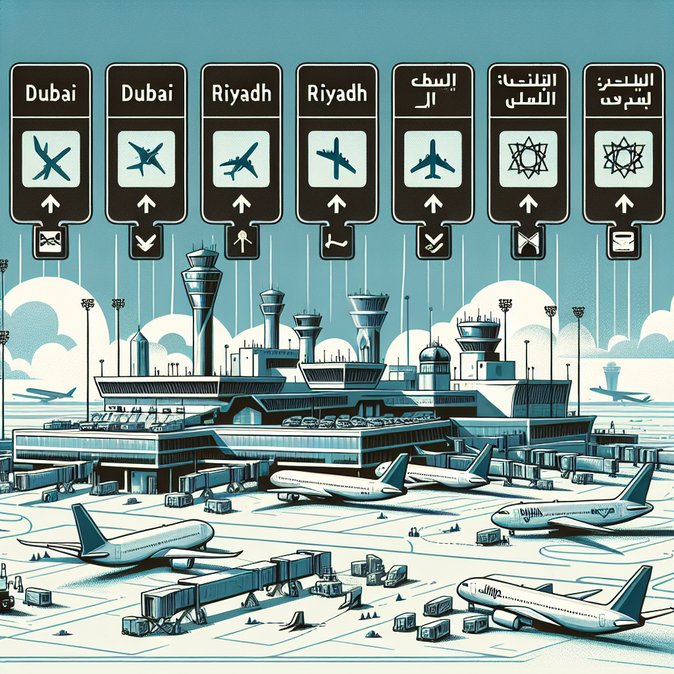
National carrier **LOT Polish Airlines grounded its entire Middle-East programme on Monday**, cancelling Warsaw rotations to Dubai until 4 March, Riyadh until 8 March and Tel Aviv until 15 March. A spokesman said the airline acted on guidance from the European Union Aviation Safety Agency after multiple Gulf states shut their airspace in the wake of the Iran strikes. The decision has immediate consequences for corporate itineraries.
![LOT Polish Airlines suspends Dubai, Riyadh and Tel Aviv services amid regional air-space closures]()
For travellers suddenly needing to revise itineraries, the visa implications can be just as disruptive. VisaHQ, an online visa and passport service, can fast-track new travel documents or secure replacement entry permits for Poland-based employees rerouting through alternative hubs. Its dedicated Poland page (https://www.visahq.com/poland/) provides up-to-date requirements for more than 200 destinations, giving mobility teams a quick way to adapt plans while the airspace situation evolves.
Dubai is a critical connection point for Polish energy, construction and IT firms operating in Africa and South-East Asia, while Riyadh has become a growth market for Polish defence exporters. LOT is offering free re-booking or refunds, but seat availability on alternative carriers—many of which have also pulled flights—remains tight. Average journey times between Poland and key Asian destinations have already lengthened by up to three hours as aircraft divert around the Strait of Hormuz, adding fuel costs that will ultimately be passed on to travellers. Mobility managers should budget for higher airfares in the coming weeks and consider re-routing staff through Istanbul, Athens or European hubs with spare capacity. For assignees still in the region, the airline’s move underscores the importance of contingency planning. Companies should confirm whether their travel insurance covers “acts of war” exclusions and whether staff can draw on company-arranged charter options if commercial networks remain disrupted. Employers with frequent flyers on LOT corporate contracts will need to renegotiate performance clauses tied to on-time operation and minimum capacity guarantees. Long-term, analysts expect LOT to seek code-share solutions with partners in the Star Alliance to rebuild connectivity, but the crisis also spotlights Warsaw Chopin Airport’s limited long-haul network depth. Diversification of carriers and hub strategies will be a key theme for Polish corporates in 2026.

For travellers suddenly needing to revise itineraries, the visa implications can be just as disruptive. VisaHQ, an online visa and passport service, can fast-track new travel documents or secure replacement entry permits for Poland-based employees rerouting through alternative hubs. Its dedicated Poland page (https://www.visahq.com/poland/) provides up-to-date requirements for more than 200 destinations, giving mobility teams a quick way to adapt plans while the airspace situation evolves.
Dubai is a critical connection point for Polish energy, construction and IT firms operating in Africa and South-East Asia, while Riyadh has become a growth market for Polish defence exporters. LOT is offering free re-booking or refunds, but seat availability on alternative carriers—many of which have also pulled flights—remains tight. Average journey times between Poland and key Asian destinations have already lengthened by up to three hours as aircraft divert around the Strait of Hormuz, adding fuel costs that will ultimately be passed on to travellers. Mobility managers should budget for higher airfares in the coming weeks and consider re-routing staff through Istanbul, Athens or European hubs with spare capacity. For assignees still in the region, the airline’s move underscores the importance of contingency planning. Companies should confirm whether their travel insurance covers “acts of war” exclusions and whether staff can draw on company-arranged charter options if commercial networks remain disrupted. Employers with frequent flyers on LOT corporate contracts will need to renegotiate performance clauses tied to on-time operation and minimum capacity guarantees. Long-term, analysts expect LOT to seek code-share solutions with partners in the Star Alliance to rebuild connectivity, but the crisis also spotlights Warsaw Chopin Airport’s limited long-haul network depth. Diversification of carriers and hub strategies will be a key theme for Polish corporates in 2026.